As developers scramble to craft these smart agents, the whole AI world seems to be splitting along a key divide: should we push for a standard way for LLMs to link up with the outside world, or lean harder into those vendor-tied integrations? Enter the Model Context Protocol (MCP), which is making a strong case for a universal, secure setup for tools—one that goes head-to-head with the locked-in “Skill” worlds from folks like OpenAI, Microsoft, and various frameworks. And this? It’s more than tech talk; it’s a real crossroads that could lock in how portable, safe, and even cost-effective tomorrow’s AI apps turn out to be.
Quick Take
- Summary: Right now, the AI developer crowd is wrestling with a make-or-break call on how to architect agents that actually use tools. On one side, there’s the Model Context Protocol (MCP)—an open standard from Anthropic, designed for a portable, secure, and cross-compatible bridge between LLMs and external tools. On the flip side, we’ve got the proprietary or framework-bound AI Agent “Skills”, think OpenAI’s Function Calling or Microsoft’s Copilot Skills, which deliver tight-knit performance but risk trapping you in one vendor’s garden.
- What happened: Agent frameworks like LangChain have been around for a while, letting folks define “tools” in various shapes. But things are getting more structured these days. MCP steps in with a clear client-server setup that pulls tools away from the LLM itself, turning them into discoverable, permission-controlled services. Meanwhile, the big model makers are beefing up their built-in “Skill” or “Tool” features—making them quicker, steadier, and more embedded in their own systems, which builds these strong but isolated bubbles.
- Why it matters now: Ever wondered what it takes to move past basic chatbots into these intricate, step-by-step agents that plug into business systems? It demands solid, secure connections to APIs and data sources that you can actually manage. The patchwork methods we’re using today? They’re fragile, and they open doors to security headaches. Picking between a broad protocol like MCP or a slick, integrated Skills setup isn’t just about tech—it’ll steer agent designs, from how fast devs can build to how enterprises handle rules and oversight.
- Who is most affected: The platform engineers, solution architects, and CTOs are right in the thick of it, having to pick sides on what pays off down the line. Security and compliance pros feel the heat too—since something like MCP could streamline checks and rule-setting, while scattered Skills setups turn monitoring into a tangled mess.
- The under-reported angle: A lot of chatter treats this like a straightforward tech pick. But from what I’ve seen, it’s really about the full picture: total cost of ownership and the risks you can’t ignore. Those integrated “Skills” might get you up and running quicker at first, sure—but then come the sneaky expenses in upkeep, switching vendors, and dealing with silos that pile up as real headaches and lock you in. MCP dangles the carrot of cheaper operations over time via standards, though it means sinking more effort upfront into something that’s still finding its feet.
Deep Dive
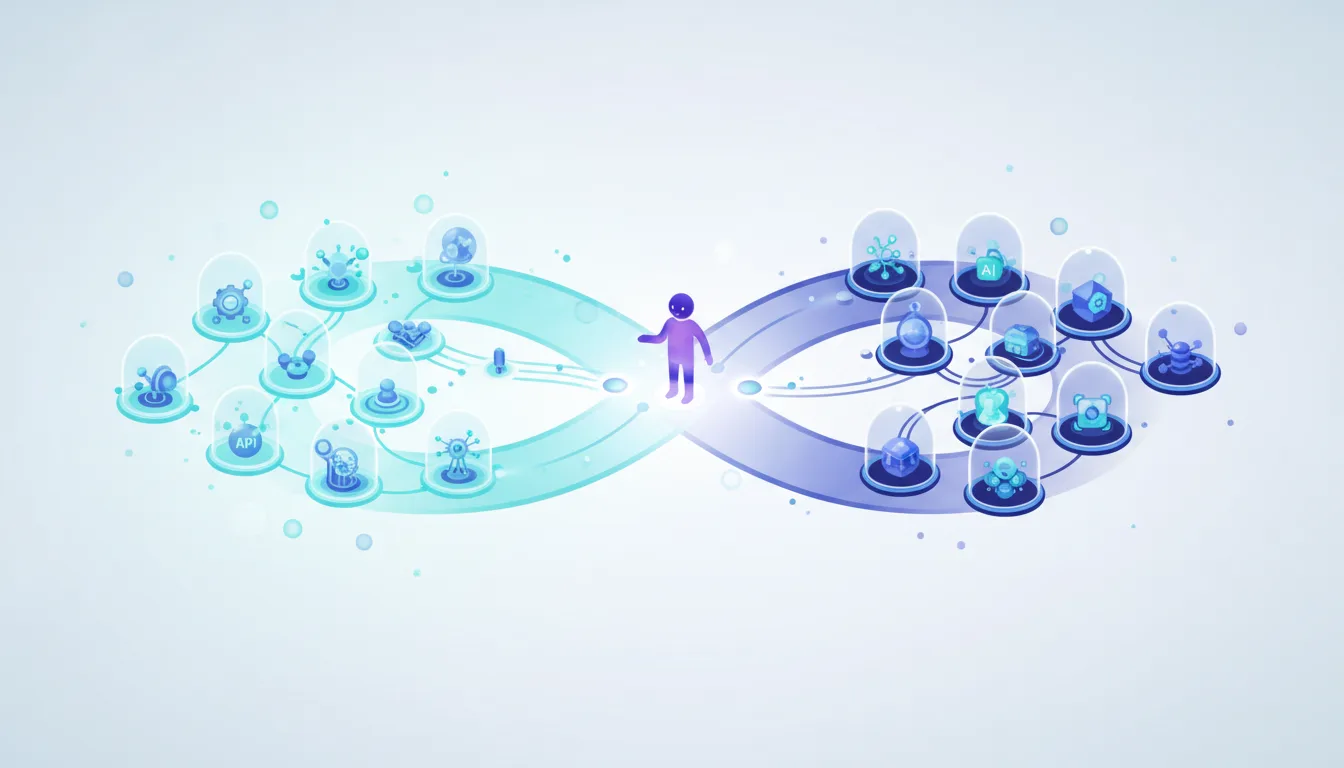
Have you paused to think about how an LLM’s real power hinges on reaching out to the real world? Without tools, data, or APIs to lean on, it’s basically just a fancy word-spinner. Yet the way we make those links is turning into the big showdown in AI’s infrastructure battles. Developers today find themselves at this crossroads, weighing two paths for crafting effective AI agents: the route of the Protocol, and the pull of the integrated Skill.
Take the protocol side, led by the Model Context Protocol (MCP)—a neutral spec from Anthropic that’s vendor-agnostic. It lays out a proper client-server setup where tools aren’t these basic functions tucked into your code; they’re robust network services instead. Your LLM app plays the client role, scouting out and chatting securely with MCP servers that dish up tools, resources, and even prompt guides. The upside? Huge. You build a tool server once—say, for your firm’s CRM—and any MCP-ready LLM or framework can tap in. It separates the agent’s thinking from its doing, which opens doors to real portability and a freer ecosystem.
Over here, though, are the snugly woven Agent Skills (or “Tools”) from giants like OpenAI, Google, Microsoft, and even wrapped up in things like LangChain. These usually show up as functions in your code, sketched out via JSON Schema, and fed straight into the model’s API. Why does it pack a punch? That close coupling lets you tweak for stuff like running functions side-by-side or dialing in model quirks. If you’re mostly in one camp—say, OpenAI with Azure—it’s the easy win, with top-notch speed and a workflow that just flows.
But here’s the thing—this fork in the road hits security and governance hard, areas where agent building still feels a bit like the untamed frontier. Piecemeal tool hookups make it tough to audit, handle consents, or stick to minimal access rules. MCP tackles that head-on, weaving in security basics like scoped tokens and clear approval steps right into the protocol. Vendor Skills are layering on protections too, no doubt—but a protocol-led method gives compliance folks a shared baseline to build on, unlike juggling a bunch of custom security setups from different players.
In the end, it circles back to that timeless engineering dilemma: standardize for the long haul, or optimize for right now? Are you all-in on MCP’s dream of a connected, safe, movable AI tool network—even if the scene’s a tad green? Or do you grab the ready-made punch of native Skills to push products out faster, risks of being stuck notwithstanding? We don’t have the hard numbers yet—no solid, neutral tests pitting MCP’s latency and costs against, say, a straight OpenAI Tool call. So architects are navigating by gut, placing wagers that could define their AI foundations for the foreseeable future. Plenty to chew on there, really.
Stakeholders & Impact
| Stakeholder / Aspect | Impact | Insight |
|---|---|---|
| AI / LLM Providers | High | Players like Anthropic are pushing MCP to level the field with an open setup—no moats in sight. Meanwhile, OpenAI and Microsoft thrive on their “Skill” integrations, which keep users hooked and loyal to their platforms. |
| Platform Engineering & DevOps | High | This picks your whole infrastructure vibe. MCP means handling spread-out servers and a service-heavy build—sketchy at first, but Skills? They’re quicker to roll out, though they brew up maintenance woes and tough shifts later on. |
| Enterprise Security & Compliance | Significant | MCP could set a benchmark for tracking tool actions, consents, and data flows—making life easier. But with “Skills” all over the map, you’re stuck crafting custom watches for each vendor or tool, ramping up the exposure. |
| Application Developers | Medium | Skills often feel friendlier out of the gate—better docs, smoother tools. MCP? It pledges easier tool handling long-term by splitting things up, but you’ll need to climb the curve on the protocol and server wrangling. |
About the analysis
Researched and written with AI assistance under the editorial responsibility of the i10X News team. The title image is an AI-generated illustration. Read our AI Use Policy. Spotted an error? Request a correction.
This piece pulls together an independent look at where AI agent architecture stands, drawing from protocol docs, vendor guides, and tech posts aimed at devs. I’ve shaped it for engineering leads, solution architects, and CTOs who are knee-deep in plotting their org’s AI direction—striving for that clear-eyed view amid the buzz.
i10x Perspective
From what I’ve observed, the MCP-Skills clash goes beyond what devs might like; it’s a tussle over who shapes the web’s meaning-making core. If an open protocol like MCP takes the crown, picture AI agents that glide between models and tools in an open expanse—truly flexible. But if closed-off Skills rule, we’re headed toward app-store vibes: mighty systems, sure, but fenced in by vendors. The big ask for the coming half-decade? Does the industry crave that deep openness enough to shake off the draw of tuned-to-perfection, one-stop agent worlds?