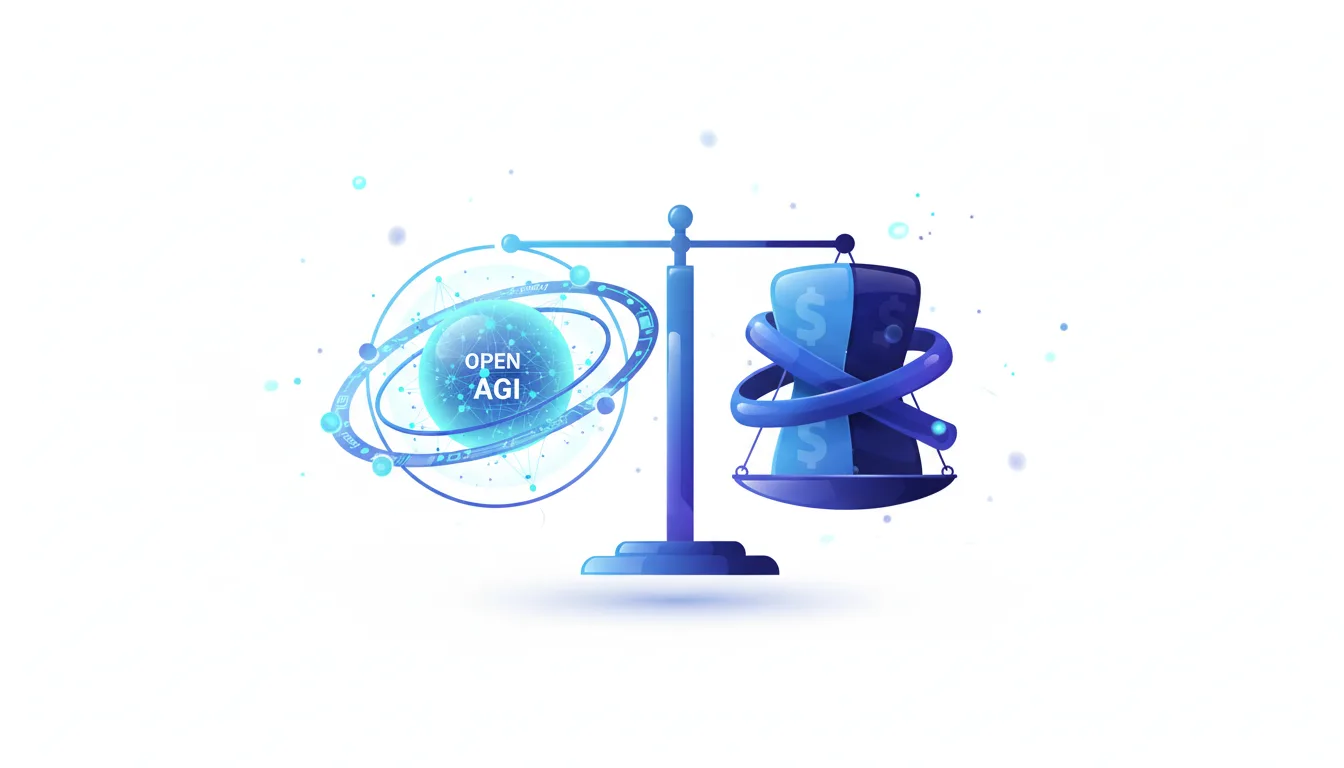
Musk v. OpenAI: April 27 Trial to Test “Capped-Profit” Governance
⚡ Quick Take
A California judge has scheduled an April 27 trial date in Elon Musk’s lawsuit against OpenAI and CEO Sam Altman. This isn’t just a billionaire feud; it’s the first major legal challenge to the hybrid corporate structures designed to govern advanced AI, putting the very definition of “for the benefit of all humanity” on the stand.
Have you ever wondered if the big promises behind AI startups hold up under real pressure? That’s the heart of this story.
Summary
The legal battle between Elon Musk and OpenAI has a key milestone: an April 27 trial date. Musk alleges OpenAI breached its founding, nonprofit agreement by prioritizing profit and its partnership with Microsoft over its mission to create safe, open AGI. This case will force a judicial review of the novel “capped-profit” model that underpins the world’s leading AI lab. From what I’ve seen in similar tech disputes, these kinds of reviews often uncover tensions that were buried deep from the start.
What happened
A judge has set a firm timeline for the dispute to proceed to trial – no more delays, really. Musk’s core claims center on breach of contract and fiduciary duty, arguing that OpenAI’s pivot to a closed-source, for-profit-driven entity violates the original charter he helped fund. That said, OpenAI is expected to argue its structure is a necessary evolution to fund its capital-intensive mission, one that couldn’t be ignored in today’s funding crunch.
Why it matters now
The outcome could set a powerful precedent for the entire AI industry – think of it as a blueprint for how these labs navigate the tightrope between ideals and dollars. A ruling against OpenAI might force radical changes to its governance, its relationship with Microsoft, or even the open-sourcing of its models. It scrutinizes the viability of “public benefit” claims in an industry defined by intense capital competition and a race for market dominance, and honestly, that race feels more frenetic by the day.
Who is most affected
OpenAI’s leadership, its key partner Microsoft, and employees are directly in the line of fire, facing uncertainty that hits close to home. Competitors like Anthropic, which use similar public-benefit corporate structures, will be watching closely – perhaps with a mix of relief and worry. The ruling will have ripple effects for investors, regulators, and the open-source AI community, pulling everyone into the conversation.
The under-reported angle
While most coverage frames this as a clash of personalities, the real story is the institutional stress test, one that tests the limits of lofty goals against hard realities. This lawsuit drags the esoteric governance models of AI labs out of whitepapers and into a courtroom. It forces a legal accounting of whether a mission to build AGI for humanity can coexist with a multi-billion dollar commercial partnership – a question that’s lingered in the background for years, if you ask me.
🧠 Deep Dive
Ever feel like the rules of the game change just when you’re getting the hang of it? That’s where the AI world finds itself as April 27 looms on the calendar for Musk vs. OpenAI. This trial isn’t merely a legal spat; it’s a referendum on the soul of an industry racing toward something transformative. Filed by OpenAI co-founder Elon Musk, the lawsuit cuts past personal gripes to probe the core setup of the organization crafting the planet’s most cutting-edge AI. Musk claims that by morphing into what he calls a “de-facto closed-source subsidiary of Microsoft,” OpenAI and its leaders broke the founding pact to stay nonprofit, focused on humanity’s gain rather than shareholder windfalls.
But here’s the thing at the center: OpenAI’s shift from a straightforward nonprofit to a capped-profit limited partnership – a setup that’s as clever as it is complicated. This was devised to tackle a real headache, how to pull in the billions required for massive AI work without handing the reins fully to profit chasers. OpenAI will probably defend it as the sole practical path forward for their grand aims. Yet Musk’s side sees it as outright betrayal, a switcheroo that rerouted nonprofit-born ideas into a profit machine. Now the court has to unpack this fresh corporate twist and what it promised – or didn’t.
This fight stands in for the bigger war over AI’s future steering. Its echoes reach well beyond OpenAI’s San Francisco digs. Places like Anthropic, with their Public Benefit Corporation (PBC) framework and that “long-term benefit trust,” have grappled with the same push-pull between purpose and profits. If Musk wins big, it might torpedo the capped-profit idea altogether, sparking a shake-up at OpenAI and a wary hush across other AI boardrooms. We’re talking potential demands for more openness – maybe even open-sourcing tech – that could flip the competitive field on its head.
The fixes on the table sound straight out of a drama. A total teardown? Probably not in the cards. Still, the court might slap on limits to curb OpenAI’s business moves, tweak the board’s makeup, or push back toward open-source for key pieces. For Microsoft, with its $13 billion stake and tight weave into OpenAI’s tech for business plays, this is no small threat – legal headaches and business wobbles both. And as the case unfolds, it’ll spit out a public trail of facts that watchdogs in regulation, already hovering, will pick over for ages to come.
📊 Stakeholders & Impact
| Stakeholder / Aspect | Impact | Insight |
|---|---|---|
| AI Labs & Providers (OpenAI, Anthropic) | High | A ruling against OpenAI could legally invalidate the “capped-profit” model, forcing a radical restructuring of its governance and commercial strategy. It sets a precedent for all AI entities claiming a public benefit mission – one that might make folks think twice about bold structures. |
| Infrastructure & Partners (Microsoft) | High | Microsoft’s exclusive cloud partnership and deep product integrations are central to Musk’s claims. The trial creates legal and narrative risk, potentially complicating its control over and access to OpenAI’s technology, especially when deals this big are in play. |
| Regulators & Policy | Significant | The trial will generate a public, evidence-based record dissecting AI lab governance. This will become foundational source material for legislators in the U.S. and E.U. drafting future AI regulations on transparency and corporate responsibility – material that’s gold for policy wonks. |
| AI Developers & Researchers | Medium-High | A forced opening of OpenAI’s models or research could be a massive boon for the open-source community. Conversely, instability at the industry’s leading platform could disrupt the entire developer ecosystem that relies on its APIs, leaving projects in limbo. |
✍️ About the analysis
Researched and written with AI assistance under the editorial responsibility of the i10X News team. The title image is an AI-generated illustration. Read our AI Use Policy. Spotted an error? Request a correction.
This comes from an independent i10x look at things, drawing on public court docs, bits from competitor reports, and our steady dive into AI governance setups. I’ve put it together for tech heads, planners, and coders who want the real undercurrents in AI, not just the surface buzz.
🔭 i10x Perspective
What if this trial turns out to be the pivot point we’ve all been waiting for? It’s no mere distraction; it’s the spotlight on stage. As governments chew over vague AI safety ideas, a California courtroom is gearing up to judge what “benefiting humanity” actually means in black-and-white terms. This suit marks the first real pressure test for those inventive corporate wrappers meant to harness AGI’s wild commercial spark. It boils down to the key puzzle of our tech era: can a drive to shape intelligent futures endure arm-in-arm with a $3 trillion giant?
Whatever the call, it’ll sketch the power map of AI for the decade ahead – a map we’ll all have to navigate.