Musk’s AI Endgame: Inside the Plan to Merge SpaceX and xAI into an Intelligence Infrastructure Leviathan
Reports suggest Elon Musk is exploring a merger between SpaceX and his AI startup, xAI, a move designed to forge a vertically integrated giant that combines satellite infrastructure, social data, and proprietary LLMs. More than just a corporate roll-up, this is the architectural blueprint for a new kind of company—one that owns the physical distribution network, the data firehose, and the intelligence layer, creating a direct challenge to the cloud-centric AI empires of Google, Amazon, and Microsoft.
Summary
Early-stage talks are underway to merge SpaceX with xAI, consolidating Elon Musk’s key assets—including Starlink, the Grok AI model, and its data relationship with X (formerly Twitter)—under a single corporate umbrella. The move is widely seen as a precursor to a landmark IPO, creating a complex but potentially formidable entity.
What happened
Have you caught wind of those whispers in the tech world lately? Sources across major financial news outlets (Bloomberg, Reuters, WSJ) confirm that discussions are taking place to combine the aerospace and AI ventures. The goal is to create a unified company that leverages synergies between Starlink’s global satellite network, X’s real-time data stream, and xAI’s Grok large language model – a setup that feels both inevitable and audacious, really.
Why it matters now
This signals a fundamental shift in the AI infrastructure race – one that’s got me thinking about how quickly the ground is shifting under our feet. While major AI players like OpenAI and Anthropic are symbiotically tied to hyperscale clouds (Azure, AWS, GCP), Musk is building a sovereign stack. This entity would control everything from the satellite in orbit to the AI model that processes information on it, reducing dependence on third-party infrastructure and creating a powerful competitive moat. It’s the kind of move that could redefine who calls the shots in AI, don’t you think?
Who is most affected
The ripple effects will touch every corner of the tech landscape, and that’s no small thing. Investors will face a complex but compelling IPO. Competing AI labs and cloud providers will confront a new, vertically integrated rival. And regulators worldwide will be forced to grapple with a company that blends communications, space, data, and AI in unprecedented ways – leaving us all to wonder how they’ll keep up with the pace.
The under-reported angle
Beyond the financial engineering, the real story is the collision of two monumental challenges: the technical feasibility of constellation compute (running AI inference at the edge on a global satellite network) and the unprecedented regulatory maze this entity would have to navigate across antitrust, data privacy, communications, and national security jurisdictions. It’s easy to get lost in the headlines, but these layers? They’re where the true intrigue lies, and they’ve barely scratched the surface in most reports.
Deep Dive
Ever wonder what it would look like if someone tried to knit together the cosmos and code into one unbreakable thread? The rumored SpaceX–xAI merger is less a simple consolidation and more the assembly of a full-stack intelligence engine. Where competitors rent compute from the cloud, Musk’s vision appears to be owning the entire value chain: the physical network (Starlink), the real-time data corpus (X’s firehose), and the reasoning layer (xAI’s Grok). This structure aims to create a flywheel where Starlink provides global, low-latency distribution for AI services, while X’s data continuously trains and refines the models that run on that network – a self-sustaining loop that could hum along for years.
The core technical promise lies in the concept of “AI at the edge” on a planetary scale. Instead of routing all queries to massive, ground-based data centers, a combined entity could perform AI inference directly on Starlink satellites or user terminals. This “constellation compute” would enable real-time, on-device intelligence for Starlink users, from autonomous vehicles to remote sensors, potentially operating with greater privacy and less latency than cloud-dependent systems. However – and here’s the thing – the engineering challenge of deploying, managing, and updating sophisticated AI models across a fleet of thousands of orbiting satellites is immense and largely unproven, something I’ve noticed gets glossed over in the excitement.
From a business perspective, the merger is a classic roll-up strategy designed to package disparate but synergistic assets into a single, compelling narrative for an IPO. By bundling the high-growth, high-margin potential of AI and satellite internet with SpaceX’s established launch business, the resulting company could command a colossal valuation. The structure would likely involve a complex holding company with dual-class shares, ensuring Musk retains super-voting control over the entire empire, a governance model that will surely attract scrutiny from institutional investors – and rightly so, given the stakes.
The most significant hurdle, however, isn’t financial or technical—it’s regulatory. This proposed leviathan would sit at the intersection of nearly every major regulatory body. In the U.S. alone, the FTC and DoJ would probe for antitrust concerns (tying satellite service to AI features), the FCC would scrutinize spectrum and communications licensing, and CFIUS would review the national security implications of a privately controlled, globally dominant intelligence network. In parallel, the EU would deploy its Digital Markets Act (DMA) and AI Act to govern data usage between X and xAI and ensure algorithmic transparency, creating a multi-front compliance battle that could delay or reshape the entire venture. From what I’ve seen in similar cases, these battles can drag on, testing even the boldest visions.
Stakeholders & Impact
| Stakeholder / Aspect | Impact | Insight |
|---|---|---|
| AI / LLM Providers (OpenAI, Anthropic, Google) | High | Creates a formidable, vertically integrated rival with exclusive access to a global distribution network (Starlink) and a unique real-time data source (X), challenging the dominant cloud-dependent AI development model. |
| Infrastructure (Cloud & Satellite) | High | Blurs the line between communications provider, cloud company, and AI developer. Directly competes with Amazon’s Project Kuiper and its integrated AWS strategy, potentially forcing a new wave of infrastructure consolidation. |
| Regulators & Policy (FTC, FCC, EU) | Significant | Presents a novel case that defies existing regulatory silos. Agencies must create a new playbook to analyze the convergence of space, data, AI, and communications under a single entity with geopolitical influence. |
| Investors | High | The IPO would offer a high-risk, high-reward bet on a complex, founder-controlled entity. A sum-of-the-parts valuation will be challenging, balancing proven launch revenue with speculative AI and data synergies. |
| Users & Customers (X, Starlink) | Medium | Potential for novel AI-powered features integrated into X and Starlink services. However, it also raises questions about data privacy, content moderation, and the potential for service bundling. |
About the analysis
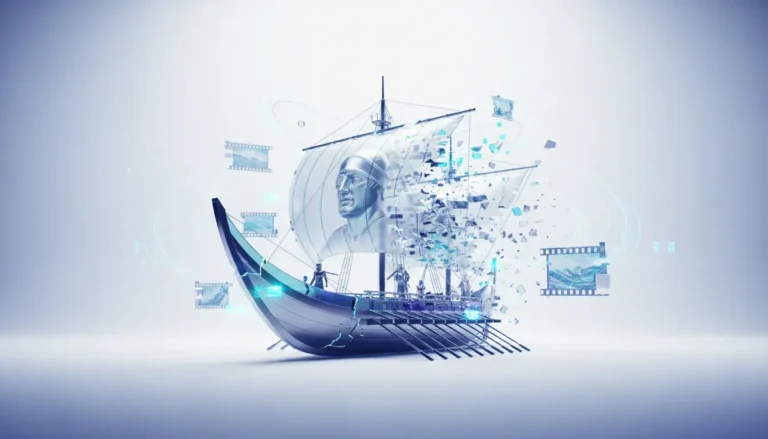
Researched and written with AI assistance under the editorial responsibility of the i10X News team. The title image is an AI-generated illustration. Read our AI Use Policy. Spotted an error? Request a correction.
This is an independent i10x analysis based on public reports from financial news outlets, competitor analysis, and an evaluation of the technical and regulatory frameworks governing the AI, space, and communications sectors. It is written for technology leaders, strategists, and investors seeking to understand the second-order effects of major shifts in the AI infrastructure landscape – or, put another way, the quiet waves that could reshape how we all connect and think.
i10x Perspective
What if the future of intelligence isn’t locked in server farms but scattered across the stars? This merger is not just business; it’s a thesis on how global intelligence will be built and controlled in the 21st century. It bets against the centralized, terrestrial cloud and in favor of a decentralized, orbital infrastructure stack. If successful, it would create an “intelligence utility” with unprecedented reach and autonomy. The fundamental tension to watch over the next decade is whether this vertical integration accelerates global innovation or becomes a sovereign power unto itself—an unregulatable black box that operates beyond the effective reach of any single nation-state. As AI moves from the cloud to the constellation, the world’s regulators are left looking at the ground, trying to apply last-century rules to a company that operates in orbit – and that mismatch, I suspect, will define the debates ahead.