Musk’s In‑House Chip Push and the AI Compute Crunch
⚡ Quick Take
Elon Musk’s push to build chips in-house for Tesla & SpaceX isn’t simply about tightening the vertical integration screws; it’s a sharp reaction to the worldwide squeeze on AI hardware. With GPUs in short supply and foundries stretched thin, Musk’s laying out a no-nonsense plan to lock down the silicon that keeps his AI dreams, self-driving tech, and space ventures humming. All this shifts the AI showdown into something bigger—a fight over who really calls the shots in making the stuff that powers it all, clashing head-on with the raw demands of physics, geopolitics, and the semiconductor grind.
Summary
Elon Musk has laid out plans for in-house chip manufacturing, targeting a steady stream of custom semiconductors tailored for Tesla and SpaceX alike. The goal here is to cut ties with outside suppliers like Nvidia and TSMC, pulling key hardware design and production right into Musk’s orbit to speed up breakthroughs in AI, autonomous driving, and aerospace.
What happened
Word is out on this pivot toward deeper vertical integration in the chip world, building on what Tesla’s already doing with its Full Self-Driving (FSD) and Dojo AI training chips. But this feels wider-reaching, maybe covering all sorts of custom silicon—from powerhouse AI accelerators to niche control and comms chips for cars and rockets.
Why it matters now
Right now, the AI scene is all about this nagging compute crunch. Getting your hands on top-tier GPUs and AI accelerators? That’s the main roadblock when it comes to training massive models or rolling out AI at full throttle. Musk’s in-house manufacturing play looks like a way to dodge that mess, carving out a personal supply line to push xAI forward, ramp up Tesla’s robotaxi fleet, and keep SpaceX’s Starlink constellation growing.
Who is most affected
This shakes up the foundry players (think TSMC, Samsung, Intel Foundry) and the big AI chip makers (Nvidia, AMD). For folks investing in Tesla and SpaceX, it’s a huge cash outlay staring them down, packed with real risks in pulling it off. And across the auto and aerospace worlds, it could spark a trend toward standing on your own supply chain feet.
The under-reported angle
Sure, the headlines hit on the big reveal, but the meat of it lies in the nuts-and-bolts choices ahead—really, three big forks in the road: sinking billions into a brand-new fab, teaming up for a lighter-touch “fab-lite” setup, or snapping up an established outfit. Those sky-high costs, the hunt for top talent, and the tangle of logistics—from grabbing ASML‘s lithography gear to lining up substrates—those are the make-or-break pieces that could turn this into genius vision or a money pit disaster.
🧠 Deep Dive
Have you ever wondered what it takes to break free from the hardware chains holding back innovation? Elon Musk’s step into chip manufacturing feels like the natural, though brutally tough, next chapter in vertical integration—and it’s rooted in that nagging ache of the AI age: total reliance on others for the basics. For a while now, Tesla’s been crafting its own silicon for FSD and the Dojo AI training chips, sure, but production’s always leaned on places like Samsung and TSMC. This latest push hints at owning the whole shebang, from blueprint to factory floor—a feat only a few giants like Intel and Samsung have pulled off at any real scale.
But here’s the thing: the real puzzle isn’t so much what chips he’ll chase, but how on earth he’ll make it happen. That “build, partner, or buy” crossroads? It’s as clear-cut as it gets. Starting from zero with a cutting-edge foundry means a 10-year slog, easily topping $20 billion, complete with sprawling cleanrooms, those hard-to-get lithography machines from ASML, and a small army of process pros. Risks pile up fast—yields that flop, timelines that drag—potentially leaving his outfits lapped by the competition. A smarter short-term bet might stick to the “fabless” or “fab-lite” route: keep designing those custom chips, but lock in reserved slots at existing foundries through close-knit deals, maybe even co-financed, fine-tuned for the rugged silicon Musk needs in cars and space gear.
From what I’ve seen in the industry, scope is another layer here—it’s easy to fixate just on AI accelerators gunning for Nvidia’s H100, but that’s too narrow a view. The demands span a lot:
- AI Training & Inference: Upgraded Dojo variants for xAI and Tesla’s self-driving brains, calling for the latest nodes and fancy packaging like TSMC’s CoWoS.
- Automotive MCUs & Control Systems: Those mission-critical microcontrollers for vehicles—safety-first stuff that’s already choking supply lines across the board in autos.
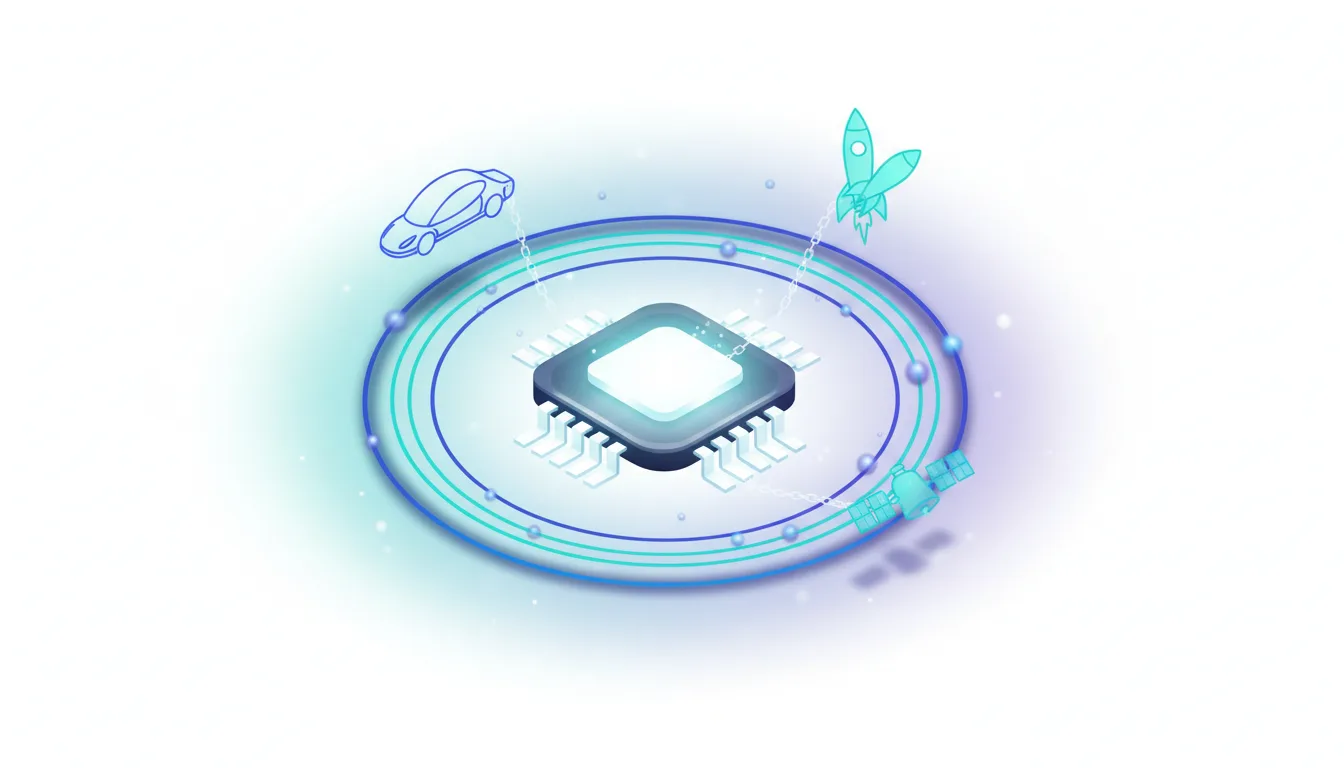
- Avionics & RF Chips: Tough, radiation-proof parts for SpaceX’s launches and the swarm of Starlink satellites, all wrapped in tight regs like ITAR (International Traffic in Arms Regulations).
Throw in the mix of processes, materials, and standards for each, and a do-it-all factory starts looking like a pipe dream. Geopolitics amps it up further—a U.S.-based fab might snag CHIPS Act bucks, but it’d tangle with export rules, especially for space tech. Musk’s whole approach will push the edges of how governments play industrial favorites, weighing U.S. priorities against a spread-out global chain that’s messier but maybe safer. In the end, this goes beyond one man’s project; it’s a real-world trial run for the semiconductor web and what it truly costs to forge your own path to smart tech.
📊 Stakeholders & Impact
| Stakeholder / Aspect | Impact | Insight |
|---|---|---|
| AI Companies (Tesla, xAI) | Very High | Unlocks Roadmap: A dedicated silicon pipeline could wipe out the top hurdle in scaling up models and nailing true autonomy, handing over a serious edge in the race. |
| Foundries (TSMC, Intel, Samsung) | High | Disruption & Opportunity: Losing Musk as a steady client stings, but it opens doors for tight partnerships—maybe even jointly running a custom fab tailored to his automotive and aerospace specs. |
| Chip Designers (Nvidia, AMD) | Significant | Long-Term Threat: If Musk nails an in-house AI chip, it spawns a fresh rival and shows big AI outfits can ditch Nvidia’s grip, likely nudging others to jump ship too. |
| Regulators & Governments (US) | High | Industrial Policy Test: This turns into a key proving ground for the CHIPS Act, juggling private funding with big-picture security needs like ITAR and keeping manufacturing stateside. |
| Investors & Markets | Very High | Massive CAPEX Risk: Dropping tens of billions on a fab upfront pulls funds from elsewhere and layers on heavy execution worries that could drag on Tesla’s share price. |
✍️ About the analysis
Researched and written with AI assistance under the editorial responsibility of the i10X News team. The title image is an AI-generated illustration. Read our AI Use Policy. Spotted an error? Request a correction.
This breakdown comes from our independent take at i10x, pulling together public news with our own digs into the semiconductor chains, AI setups, and policy angles. We’ve layered in facts on foundry costs, gear wait times, and how rivals stack up—to give strategists, tech folks, and investors a solid, grounded look at the AI hardware landscape.
🔭 i10x Perspective
Ever feel like the ground rules of tech are shifting under your feet? Musk’s chip-making drive marks a bold thumb-down to the fabless way that’s shaped silicon smarts for the past 30 years. It’s wagering that in AI’s spotlight, the real win isn’t just the smartest design—it’s holding the keys to the plant that spits them out.
That said, this ramps up the AI scramble from code battles and brain hunts into a gritty fight over factories and raw output. Win or lose, Musk’s dragging everyone to face a tough pill: tomorrow’s smarts might hinge more on mastering sand, juice, and H2O than on slick code. No longer just whether the tech behemoths turn industrial—it’s about who makes it through the shake-up intact.