Natively Adaptive Interfaces (NAI) — i10x Analysis
⚡ Quick Take
Have you ever wondered what it would be like if your apps just… understood you, shifting on the fly without you lifting a finger? Google AI has unveiled Natively Adaptive Interfaces (NAI), an agentic framework powered by Gemini that enables user interfaces to adapt in real-time based on multimodal user context. From what I’ve seen in emerging tech like this, it marks a fundamental shift from static, one-size-fits-all design to dynamic, personalized HCI—positioning the LLM not just as a content generator, but as a real-time UI orchestration engine.
Summary: Google introduced Natively Adaptive Interfaces (NAI), a system that uses the Gemini family of models to perceive a user’s needs through voice, vision, and touch, then dynamically modifies an application’s interface for better accessibility. Instead of relying on pre-coded accessibility settings, NAI acts as an intelligent agent, observing user context and rewriting the UI on the fly to resize text, increase contrast, or even add new buttons—tweaks that make a real difference in the moment.
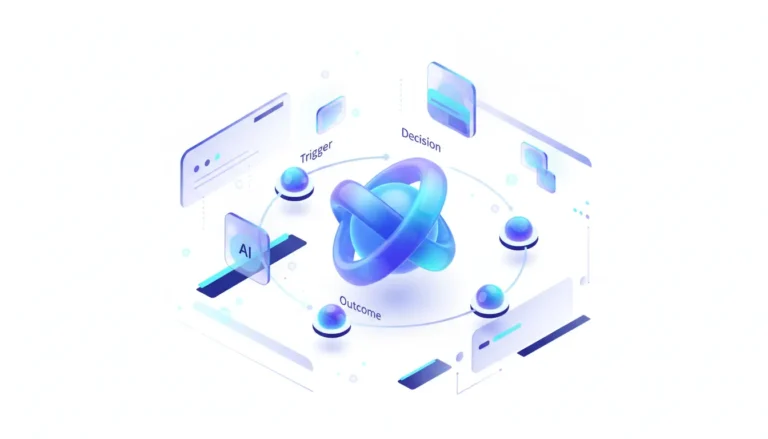
What happened: Google AI published a research paper and blog posts detailing NAI, a framework built on Gemini. It operates as an agentic pipeline: multimodal inputs feed into Gemini, which reasons about the user’s implicit and explicit needs against a set of “policies” and then generates commands to adapt the live UI components. This moves beyond simple API calls to a continuous loop of perception, reasoning, and action directly within the user experience—a loop that’s always running, quietly in the background.
Why it matters now: NAI represents a major evolution in Human-Computer Interaction (HCI) and a new frontier for LLM deployment. It signals a move from generative AI for content to agentic AI for interfaces, making software itself fluid and responsive, almost like it’s breathing with you. As AI models become more capable and integrated into operating systems, this approach could become the default—challenging decades of static UI design principles that we’ve all taken for granted.
Who is most affected: Developers, UX/UI designers, and product managers are immediately impacted, as NAI introduces a new paradigm of “policy authoring” over pixel-perfect design—it’s like trading a blueprint for a living sketch. Accessibility professionals gain a powerful new tool, but also face new challenges in validation. For enterprises, this reframes accessibility and personalization from a compliance checklist to a dynamic, AI-driven capability that evolves with the user.
The under-reported angle: While initial coverage focuses on the accessibility benefits, the real story—at least from my perspective—is the underlying governance and engineering challenge. Shipping a UI that is never the same twice creates immense hurdles for quality assurance, privacy, and user control; it’s a double-edged sword. The true innovation required for NAI to succeed isn’t just the AI model, but the development of robust testing frameworks, privacy-preserving data pipelines, and fail-safe mechanisms that ensure the user always has ultimate agency—because without that trust, what’s the point?
🧠 Deep Dive
Ever felt bogged down by clunky settings that never quite fit your needs just right? Google’s introduction of Natively Adaptive Interfaces (NAI) is more than an accessibility update; it’s a declaration that the era of static user interfaces may be ending—or at least, evolving into something far more intuitive. Powered by the multimodal reasoning of its Gemini models, NAI treats the UI not as a fixed canvas but as an intelligent agent. This agent constantly perceives the user’s environment and behavior—a hand tremor here, a squint there, a verbal command tossed in—and autonomously adapts the interface to assist them. This leapfrogs traditional accessibility features, which require users to navigate complex settings menus that can feel like a maze. With NAI, the software adapts to you, not the other way around—a subtle but game-changing reversal.
The core mechanism is an agentic pipeline running on Gemini. Unlike a simple API that might toggle a high-contrast mode and call it a day, NAI ingests a rich stream of data and reasons about the “why” behind a user’s struggle—weighing the context, really. This allows for nuanced interventions, like slightly increasing button size for a user showing motor difficulty, or reflowing a paragraph of text when the device’s camera detects a low-light reading environment. This is the LLM acting as a real-time UX orchestrator, a far more complex and embedded role than generating text in a chat window—it’s orchestration, not just output. The promise, as outlined in Google’s research, is a scalable way to deliver hyper-personalized assistance without massive engineering overhead for every possible use case; still, I’ve noticed how these grand visions often hit snags in the details.
But here’s the thing—this vision exposes a significant gap between a compelling demo and a shippable, enterprise-grade product. The current web coverage, focused on the launch, largely overlooks the monumental engineering challenges that keep me up at night thinking about implementation. How does a developer write a “policy” for an adaptive UI, anyway? How do you benchmark latency and energy consumption on-device, where these adaptations must happen in milliseconds—no room for lag? The most critical unanswered question revolves around privacy and agency. An always-on multimodal system that watches and listens to users creates significant data privacy risks. Google’s emphasis on on-device inference is a necessary first step, but a full privacy-by-design architecture—with transparent data flows, clear consent UX, and robust user overrides—is non-negotiable for adoption; otherwise, it’s all potential without payoff.
Ultimately, NAI forces the industry to confront the governance stack for agentic interfaces. Existing compliance frameworks like WCAG and ADA were not designed for UIs that change unpredictably based on AI inference—they assume stability, after all. This new paradigm demands an entirely new toolkit for developers and auditors, including evaluation harnesses to scorecard accessibility outcomes, red-teaming procedures to identify potential harms, and fail-safe patterns that guarantee a user can always revert an AI-driven change. The future of NAI depends less on Gemini’s raw intelligence and more on building the ecosystem of trust, control, and verification around it—a foundation that’s as crucial as the tech itself.
📊 Stakeholders & Impact
| Stakeholder / Aspect | Impact | Insight |
|---|---|---|
| AI / LLM Providers | High | Establishes the LLM as a core UI orchestration engine, opening a new market beyond content generation. Success here makes Gemini (or a competitor) a fundamental layer of the HCI stack, reshaping how apps are built. |
| Developers & Designers | High | Shifts the skillset from designing static layouts to authoring dynamic “policies,” creating demand for new tools for testing, debugging, and governing non-deterministic UIs—tools that haven’t fully caught up yet. |
| Users / Accessibility Community | High | Offers potential for radically personalized and effective assistance that could level the playing field. Also introduces risks of lost agency, unpredictable behavior, and privacy intrusion if not implemented with robust user controls. |
| Regulators & Policy | Significant | Challenges existing accessibility standards (WCAG, ADA), pushing boundaries that demand fresh frameworks to certify and audit AI-driven interfaces that lack a single, static state for compliance testing. |
✍️ About the analysis
Researched and written with AI assistance under the editorial responsibility of the i10X News team. The title image is an AI-generated illustration. Read our AI Use Policy. Spotted an error? Request a correction.
This is an independent analysis by i10x based on Google’s initial research preprint, technical blogs, and early journalistic coverage. Our report is written for the engineers, product managers, and technology leaders building the next generation of AI-native applications, focusing on the practical implementation gaps and strategic implications that other reporting overlooks—gaps that matter most when you’re in the trenches.
🔭 i10x Perspective
What if the interface of tomorrow isn’t a screen at all, but a silent collaborator? NAI is a trojan horse for the post-static interface, plain and simple. While framed through the critical lens of accessibility, the underlying technology—an agentic LLM that rewrites UI in real time—is a blueprint for all future human-computer interaction. Today, it adapts for motor impairments; tomorrow, it will adapt for cognitive load, user expertise, or situational context like driving—the possibilities branch out endlessly.
This move positions Google to own the emerging “agentic UI” layer, turning the operating system itself into a partner in task completion, not just a backdrop. The great unresolved tension is not whether this is possible, but whether it can be deployed without sacrificing user agency and privacy. The next decade of UX will be defined by the battle to balance autonomous assistance with transparent user control, a tug-of-war that could redefine how we interact with our devices.