Open Claw AI: Early Read on a Privacy-First Assistant
⚡ Quick Take
As the AI assistant market saturates around general-purpose chatbots from tech giants, the emergence of Open Claw AI signals a strategic shift towards specialized value propositions. Its success will test whether a privacy-first, agentic workflow model can carve out a meaningful niche against the raw scale of incumbents like OpenAI and Google.
Summary: Have you ever wondered if the next big AI tool could actually stand apart in this sea of sameness? A new personal AI assistant, Open Claw, has been announced, positioning itself as a direct competitor to established players like ChatGPT and Gemini. From what I’ve seen in early announcements, current information is limited to a basic news release – but the market context demands new entrants compete on more than just raw LLM capability, you know?
What happened: Open Claw AI has been introduced as a personal AI assistant designed for tasks like chatting, planning, and summarization. The initial announcement frames it as an alternative to the dominant assistants, but it lacks technical details, benchmarks, or a clear business model right now. It’s all a bit vague, really – like the outline of something promising, but not quite fleshed out.
Why it matters now: But here’s the thing: the AI assistant space is incredibly crowded these days. For a new player to succeed, it must solve for gaps left by the big providers – and those gaps aren’t small. The key battlegrounds are no longer just model intelligence, but privacy, cost-efficiency, on-device capabilities, and the ability to execute complex, multi-step tasks (agentic workflows). Open Claw’s viability hinges on delivering on these fronts, or it risks fading into the background noise.
Who is most affected: Developers, product managers, and enterprise IT leaders evaluating new AI tools – they’re the ones who’ll feel this most directly. They need to determine if Open Claw offers tangible advantages in security, workflow automation, or developer experience that justify moving away from the well-documented ecosystems of GPT-4o and Gemini 1.5. It’s a tough call, especially when switching costs feel so high.
The under-reported angle: That said, beyond being just “another ChatGPT rival,” the real story – the one that keeps me up at night thinking about it – is whether Open Claw represents a new wave of AI products built for specific operator needs. The critical unanswered questions revolve around its architecture: Is it truly privacy-first with on-device processing? How robust is its tool-use and planning framework? Without transparent benchmarks and security audits, it remains a concept, not a contender – and that’s where the intrigue really lies.
🧠 Deep Dive
Ever catch yourself scrolling through yet another AI launch and thinking, “Okay, but what’s different this time?” The arrival of Open Claw AI enters a market where the definition of “assistant” is bifurcating – splitting into paths that weren’t so clear even a year ago. On one side are the generalist, cloud-first models from Google (Gemini), OpenAI (ChatGPT), and Anthropic (Claude), which excel at broad knowledge tasks, no question. On the other is a growing demand for specialized, secure, and autonomous agents that operate with a higher degree of trust and control. Open Claw, by its very name, suggests an ambition to be open and extensible – but its initial launch leaves the core value proposition almost entirely to the imagination, which feels like a missed step already.
I’ve noticed how the biggest challenge and opportunity for Open Claw lies in addressing the content gaps left wide open by its minimalist announcement. Competitors are evaluated on performance benchmarks, privacy policies, integration ecosystems, and pricing – all of which are currently missing here. For Open Claw to be taken seriously, it must move beyond marketing claims and publish quantitative data – things like latency and accuracy metrics against standard industry datasets (a MMLU or HumanEval equivalent, say). Plus, a detailed whitepaper on its data handling and retention policies (specifying cloud vs. on-device processing), and transparent pricing tiers. Without that, it’s hard to build any real momentum.
This information vacuum points to a crucial angle, one that’s often overlooked: privacy and security as a competitive moat. While major LLMs offer enterprise-grade security, user trust remains fragile – one data breach headline away from cracking. A tool that can verifiably process data locally, offer end-to-end encryption by default, and provide clear data-deletion pathways could win over users and organizations in sensitive sectors like healthcare, finance, and legal. The semantic map of related concepts – SOC 2, GDPR, and HIPAA – highlights that this isn’t a consumer feature but a core enterprise requirement, plenty of reasons to tread carefully. Open Claw’s success may depend less on its model’s creativity and more on its verifiable compliance and security architecture, if they’re playing their cards right.
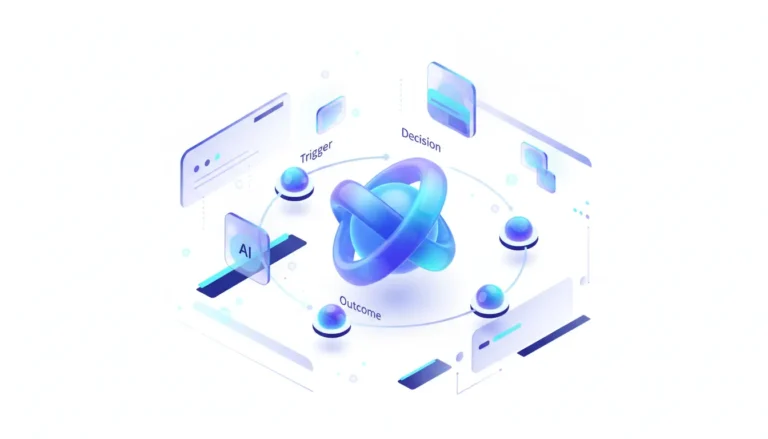
Ultimately – and this is where it gets exciting, I think – the future of AI assistants will be defined by their ability to execute tasks, not just answer questions. The true test for Open Claw will be its agentic capabilities: the framework for planning, using tools (like calendars, email, and APIs), and completing multi-step workflows autonomously. If Open Claw offers a superior developer experience for building and governing these agents, with robust function calling, an extensible API/SDK, and clear audit logs, it could attract a powerful community of builders creating specialized solutions that incumbents are too generalized to support effectively. That potential – it’s what makes me optimistic, even amid the uncertainty.
📊 Stakeholders & Impact
| Stakeholder / Aspect | Impact | Insight |
|---|---|---|
| AI / LLM Providers | Low to Medium | Introduces niche competition, potentially forcing incumbents to be more transparent about their own privacy and agentic workflow roadmaps. The pressure is more reputational than commercial at this stage – but it’s building, slowly. |
| Developers & Builders | High | A potential new platform with a developer-centric focus on APIs, SDKs, and agentic frameworks could unlock novel applications, assuming the ecosystem is robust and well-documented. From what I’ve seen, that’s the hook that could draw them in. |
| Enterprise & Pro Users | High | Presents a potential alternative for users with high security needs or those seeking to automate complex, repeatable workflows beyond simple chat. The key is whether it can demonstrate a clear ROI in time saved or risk reduced – otherwise, why switch? |
| Regulators & Policy | Low | While not a direct target, a privacy-first AI assistant contributes to the market’s response to data governance regulations like GDPR and CCPA, providing compliant-by-design alternatives. It’s a quiet win for the bigger picture. |
✍️ About the analysis
Researched and written with AI assistance under the editorial responsibility of the i10X News team. The title image is an AI-generated illustration. Read our AI Use Policy. Spotted an error? Request a correction.
This analysis is an independent i10x evaluation based on publicly available information and a competitive assessment of the current AI assistant market. It benchmarks Open Claw’s announcement against the features, privacy standards, and developer ecosystems of leading LLMs to inform CTOs, product leaders, and engineers about its potential strategic value – you know, the kind of insight that helps cut through the hype.
🔭 i10x Perspective
What if the real evolution in AI isn’t about bigger models, but smarter, more tailored ones? The emergence of tools like Open Claw AI marks the beginning of the post-hype era for AI assistants – a shift that’s long overdue, in my view. The first wave was a race for scale and general intelligence, all flash and no fine print. This next wave will be a campaign fought on the specialized fronts of trust, autonomy, and cost-efficiency. Open Claw is a signal that the market is maturing beyond a monolithic “one-LLM-to-rule-them-all” model – and that’s refreshing. The critical question over the next five years is whether these specialized players can build sustainable ecosystems or will be absorbed or out-competed by the sheer gravitational pull of the large-scale incumbents’ platforms. Either way, it’s going to be a fascinating ride.