Quick Take
OpenAI is no longer just selling the engine for AI agents; it’s now building the entire armored vehicle. The latest evolution of its Agents SDK moves beyond simple APIs to offer a secure, durable runtime, signaling a strategic play to own the full stack of agentic AI development and directly challenging the open-source frameworks that built the first wave of agent applications.
Summary
OpenAI has unveiled a significant evolution of its Agents SDK, introducing two foundational features: native sandbox execution for secure tool use and a model-native harness for building durable, long-running agents. This shifts the SDK from a basic connector to a production-grade runtime environment designed to solve core security and reliability problems that have plagued agent development. From what I’ve seen in the field, it’s like finally getting a sturdy framework under all that experimental wiring.
What happened
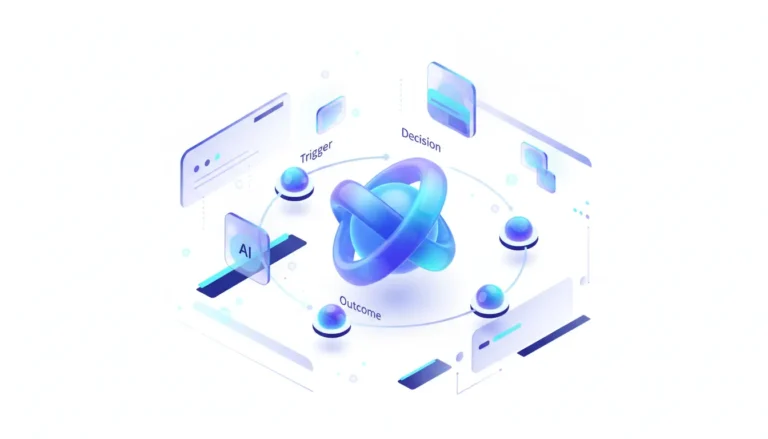
The update gives developers a built-in, isolated environment to run agent-generated code and external tools, preventing risky operations like unrestricted file access or network calls. At the same time – and this is key – the new “model-native harness” standardizes the complex logic of agent loops, from planning and tool execution to state management and error handling, with built-in support for checkpoints and retries thrown in for good measure.
Why it matters now
Have you ever watched an AI agent crash mid-task and wondered how it’ll ever scale to real work? This is a crucial step toward moving AI agents from experimental prototypes to reliable enterprise applications. By baking security and durability directly into the platform, OpenAI is addressing the primary blockers to widespread adoption: the risk of autonomous systems causing harm and their tendency to fail during long, complex tasks. Plenty of reasons, really, why this feels like a turning point.
Who is most affected
AI developers gain a powerful, integrated toolset that simplifies building robust agents – something that’s bound to save hours of headache. Enterprises and their security teams get a clearer, more governable path to deploying agentic workflows. That said, the update also puts significant pressure on third-party agent frameworks like LangChain, AutoGen, and CrewAI, whose core value proposition has been to provide this exact orchestration and safety layer. It’s a shake-up, no doubt.
The under-reported angle
This isn’t just a feature release; it’s a strategic move to capture the agent orchestration layer. By offering a first-party, deeply integrated runtime, OpenAI is aiming to become the default “operating system” for its models, creating a powerful platform moat and challenging the model-agnostic, open-source approach that has dominated the ecosystem until now. And honestly, it makes you think about where the real power lies in this space.
Deep Dive
Ever tried piecing together an AI agent and felt like you were juggling knives on a tightrope? Until now, building sophisticated AI agents has been just that – a high-wire act for developers. They’ve had to stitch together LLM calls with custom Python scripts and open-source libraries like LangChain or LlamaIndex to manage state, execute tools, and handle errors. This approach, while flexible (and let’s face it, that’s its charm), created a minefield of security vulnerabilities and operational fragility. An agent granted the ability to execute code could easily access sensitive files or APIs, while a single transient network error could derail a multi-hour task – with no easy way to recover, leaving everything in a frustrating heap.
OpenAI’s new SDK directly confronts these issues by pulling the runtime environment into its own platform. The native sandbox execution stands out as the security centerpiece here. It provides a managed, ephemeral environment where an agent can run code, install dependencies, or call external tools without posing a threat to the host system. Developers can now define explicit policies – controlling network egress, file system access, and resource consumption – turning the agent from an unpredictable black box into a governable actor operating within clear, auditable guardrails. This is the answer to every CISO’s nightmare about LLM-powered tools going rogue; I’ve noticed how it eases that constant worry in team discussions.
Alongside security, the model-native harness tackles the reliability crisis head-on. It provides a standardized structure for the agent’s lifecycle, including robust mechanisms for checkpoints and retries. This means a long-running agent designed to conduct a complex data analysis or execute a multi-step workflow can now save its state periodically (think of it as hitting save in a marathon document). If it fails, it can be resumed from the last checkpoint instead of starting from scratch – a game-changer for keeping things moving. This concept, well-understood in the world of Site Reliability Engineering (SRE), is now a first-class citizen in the world of AI agents, making durable, autonomous workflows a practical reality rather than a distant dream.
This evolution poses a direct existential question to the vibrant ecosystem of agent-building frameworks – one that’s worth pausing over. Tools like LangGraph, AutoGen, and CrewAI have thrived by providing the very security and orchestration logic that OpenAI is now integrating into its core platform. Developers must now weigh the benefits of a tightly integrated, secure, first-party solution against the flexibility and model-agnosticism of open-source alternatives. While OpenAI’s SDK offers a compelling “batteries-included” experience, the gaps highlighted by researchers – the need for independent performance benchmarks, compliance mappings for HIPAA/SOC2, and advanced chaos testing – are where the broader ecosystem will likely continue to innovate, pushing the boundaries further.
Stakeholders & Impact
| Stakeholder / Aspect | Impact | Insight |
|---|---|---|
| AI Developers | High | They gain a powerful, integrated runtime that simplifies building secure and reliable agents, but may face a trade-off between first-party convenience and the open-source flexibility that’s kept things innovative so far. |
| Agent Frameworks (LangChain, AutoGen, etc.) | High | These face a major competitive threat as OpenAI internalizes their core value proposition – it’s like the rug being pulled out from under them. They must now differentiate on multi-model support, specialized tooling, or advanced orchestration patterns not yet covered by the base SDK. |
| Enterprises & Security Teams | Significant | They receive a much-needed toolkit for governing and auditing AI agents, with the native sandbox and explicit permissions making it feasible to deploy agentic systems in regulated environments – and with notably reduced risk, which is huge for compliance folks. |
| OpenAI | High | This deepens its platform moat by moving up the stack from a model API provider to a full-fledged agent platform provider, increasing developer dependency and capturing more value from the AI application layer in ways that feel strategically smart. |
About the analysis
Researched and written with AI assistance under the editorial responsibility of the i10X News team. The title image is an AI-generated illustration. Read our AI Use Policy. Spotted an error? Request a correction.
This analysis draws from OpenAI’s official technical documentation, related announcements, and a close look at the current AI developer ecosystem – including those established agent frameworks that have shaped so much of this space. It’s crafted for developers, engineering managers, and CTOs who are designing, building, and deploying agentic AI systems; the goal is to help make sense of the shifting strategic landscape, one informed step at a time.
i10x Perspective
What if this SDK update kicks off the “Runtime Wars” in AI? It certainly signals a fundamental shift from providing models-as-a-service to offering managed, secure intelligence runtimes as the core product. By integrating security and durability, OpenAI isn’t just improving a tool; it’s defining the terms of engagement for production-grade AI, compelling competitors like Google and Anthropic to follow suit – or risk getting left behind. The central tension for a generation of AI developers will now be the choice between the walled garden of a highly-capable, secure, but proprietary runtime and the open, flexible (though more complex) world of model-agnostic frameworks. This decision will shape how intelligent applications are built for the next decade.