OpenAI just open-sourced Euphony, a browser-based visualization tool for debugging the complex, multi-step reasoning of AI agents. While seemingly a niche developer utility, Euphony represents a critical maturation point for the entire AI ecosystem, signaling the shift from simple prompt-and-response scripts to production-grade, observable AI systems.
Quick Take
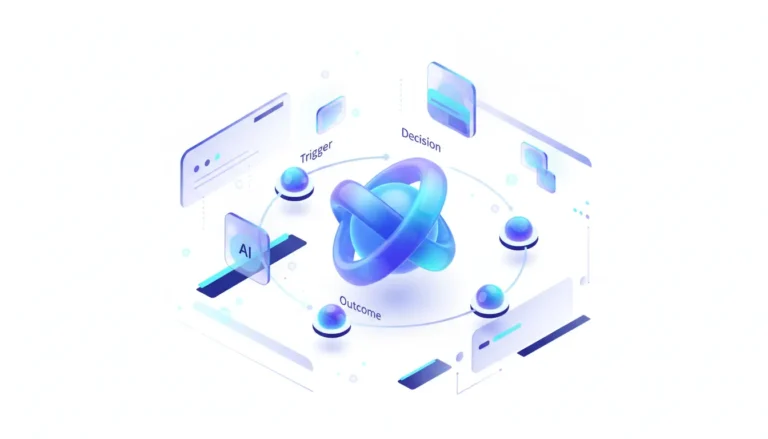
- Summary: OpenAI has released Euphony, its internal tool used for visualizing and debugging complex AI agents. It transforms opaque Harmony chat data and Codex session logs into an interactive, browser-based timeline, making the agent’s step-by-step behavior understandable.
- What happened: Ever tried sifting through endless raw JSON logs, only to feel like you’re hunting for a needle in a haystack? Instead of that, developers can now use Euphony to visually trace an agent’s conversational turns, tool calls, and internal reasoning steps. This “time-travel debugging” approach centralizes disparate data sources into a single, cohesive view – dramatically simplifying root-cause analysis for agent failures.
- Why it matters now: As AI agents become more sophisticated – chaining tools, managing long-term memory, and collaborating with other agents – debugging them with traditional methods has become nearly impossible. The industry is hitting a complexity wall, and Euphony is one of the first purpose-built solutions to emerge, establishing a new bar for AI developer experience (DevEx). From what I’ve seen in building these systems, it’s a game-changer that finally lets us breathe a bit easier.
- Who is most affected: AI and ML engineers building agentic workflows, developers of agent frameworks like LangChain, and enterprise teams trying to move complex AI assistants from experimental prototypes to reliable, production-ready applications. Plenty of reasons why these folks stand to gain the most, really.
- The under-reported angle: This isn’t just another debugging tool; it’s the beginning of a standardized observability stack for AI. Just as OpenTelemetry provided a common language for tracing in microservices, the concepts in Euphony – prompt/response lineage, tool call tracing, and session replay – lay the groundwork for the “Datadog for Agents” era. That said, it’s worth pondering where this standardization might lead next.
Deep Dive
Have you ever built an AI agent that seemed promising in tests, only to watch it unravel in unpredictable ways once deployed? The core challenge in building advanced AI agents isn’t just getting the prompting right; it’s understanding what went wrong when the system inevitably fails. Today’s agents are complex, non-deterministic systems where a single user query can trigger a dozen tool calls and internal thought processes. For developers, this creates an observability nightmare – forcing them to manually piece together clues from scattered logs, a process that is slow, error-prone, and fundamentally unscalable.
OpenAI’s Euphony directly attacks this pain point. By ingesting chat transcripts (from its Harmony data model) and session logs (from Codex), it renders a complete, traversable timeline of the agent’s execution. This allows developers to move beyond guesswork and perform systematic analysis, asking precise questions like: “At what step did the agent misinterpret the user’s intent?” or “Which tool call returned the data that sent the chain of reasoning off course?” This is time-travel debugging, a concept familiar in advanced software engineering, now purpose-built for the unique challenges of LLM-based agents. I’ve noticed how this kind of visibility can turn frustration into real progress, almost like flipping on a light in a dark room.
This release signals a much larger trend: the professionalization of AI engineering. The market is rapidly moving beyond the initial “wow” phase of LLMs and into a mature phase that requires the same rigor as traditional software development. Euphony is effectively a first-party endorsement of the need for an AIOps or “LLM-observability” layer in the modern AI stack. It elevates the conversation from prompt engineering to full-lifecycle systems management, encompassing debugging, performance monitoring, and auditability. But here’s the thing – as we weigh the upsides, we can’t ignore the hurdles.
However, a tool that visualizes conversational logs immediately raises critical questions about data governance and privacy – a gap in the initial conversations around the tool. For Euphony or any similar tool to see enterprise adoption, robust PII redaction, access control, and secure data handling are non-negotiable prerequisites. An agent’s logs can contain highly sensitive user or proprietary data, and making that data easily shareable for debugging creates significant security risks if not managed properly. It’s a reminder that innovation treads carefully in sensitive territory.
While Euphony is currently tied to OpenAI’s internal data formats, its true impact will be felt across the ecosystem. It sets a benchmark for what agent frameworks and MLOps platforms must provide. The key question now is whether the industry will converge on an open standard for agent tracing, akin to OpenTelemetry for cloud-native apps, or if the AI landscape will fragment into proprietary, walled-garden observability tools from each major model provider. Euphony is the first move in a battle for the AI developer’s workflow – one that could shape how we build for years to come.
Stakeholders & Impact
| Stakeholder / Aspect | Impact | Insight |
|---|---|---|
| Agent Developers | High | Drastically reduces the “prompt-run-debug” cycle by making agent behavior transparent. Moves debugging from guesswork to systematic analysis – a real relief in the daily grind. |
| Agent Frameworks (e.g., LangChain) | Medium | Sets a precedent for what first-class observability should look like. Creates pressure to integrate or build similar tooling for their ecosystems, pushing the whole field forward. |
| Enterprise AI Teams | High | Unlocks the ability to operationalize complex agents. Provides a path for audit trails, compliance, and reproducible error analysis, de-risking production use in ways that build confidence. |
| AI Observability Startups | Significant | Validates the market for “Datadog for LLMs.” Establishes a feature-set benchmark (session replay, timeline visualization) that competitors must now address – exciting times ahead. |
About the analysis
Researched and written with AI assistance under the editorial responsibility of the i10X News team. The title image is an AI-generated illustration. Read our AI Use Policy. Spotted an error? Request a correction.
This is an independent analysis by i10x, based on OpenAI’s open-source release and the emerging needs of the AI developer ecosystem. This article is written for AI engineers, product managers, and CTOs navigating the shift from simple LLM calls to complex, production-grade agentic systems. It’s meant to spark those practical thoughts as you tackle the next project.
i10x Perspective
What if the real turning point in AI isn’t bigger models, but better ways to see inside them? Euphony is more than a tool; it’s a cultural marker. It signals that building with AI is finally graduating from a craft of creative prompting into a discipline of robust software engineering. For years, the core infrastructure of intelligence has been focused on models and compute, but now the developer experience layer is becoming the critical battleground. The unresolved tension is whether this new observability layer will become an open, interoperable standard or a set of proprietary moats, defining developer loyalty for the next decade of AI. Either way, it’s a shift worth watching closely.