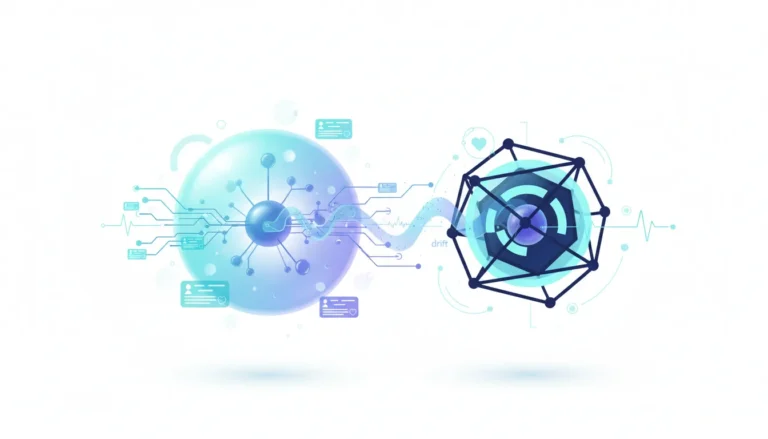
OpenAI’s release of GPT-4.1 and the smaller, faster GPT-4.1-mini isn’t just another incremental upgrade—it’s a strategic bifurcation of the market. While the official narrative focuses on improved reasoning and multimodal features, the real story is about the normalization of dual-use capabilities. These models are powerful enough to be framed as both cyber-defense assets and potential cyber-offense tools, fundamentally changing the risk calculus for any developer or enterprise deploying them.
Quick Take
- Summary: Have you ever wondered how AI giants like OpenAI keep pushing the envelope without leaving everyday users behind? Well, they’ve launched two new models: GPT-4.1, a flagship with enhanced reasoning and multimodal capabilities, and GPT-4.1-mini, which is faster and more cost-effective. It’s all positioned as a straightforward capability boost, especially for developers and enterprises trying to juggle power, latency, and cost in their builds.
- What happened: GPT-4.1 steps up with real advancements in complex reasoning, vision, and audio processing—things that make it handle tougher tasks without breaking a sweat. Meanwhile, GPT-4.1-mini is tuned for speed and high-volume throughput, perfect for those applications where every second counts. This two-tiered setup? It’s OpenAI’s way of covering both the bleeding-edge of AI development and the practical need for efficient, scalable inference—plenty of reasons to appreciate the thought behind it, really.
- Why it matters now: But here’s the thing—this release isn’t just about faster chips or better scores; it signals how the AI market is finally maturing, segmenting into clear product tiers. Even more crucially, the ramped-up power in tool use and agentic workflows shifts the whole conversation. We’re moving past raw performance metrics into the trickier terrain of deployment risks, especially with dual-use applications like cybersecurity staring us in the face.
- Who is most affected: Developers and enterprise tech leaders feel this one right away—they’re the ones weighing those tougher trade-offs now, balancing cost, speed, capability, and, yeah, the lurking risks. Security teams and compliance officers? They’re under fresh pressure too, needing to grasp and mitigate what these advanced autonomous capabilities might unleash in a live environment.
- The under-reported angle: That said, while everyone’s buzzing about the performance benchmarks—and rightfully so—the deeper story is in these emergent cyber offense and defense capabilities. Coverage tends to stick to what the models can create, but the real question gnawing at me is control: how do we keep them in check? The shift from “Can it code a quick script?” to “Can it quietly exploit a system on its own, and what guardrails actually hold up?” feels like the conversation we can’t ignore anymore.
Deep Dive
Ever catch yourself thinking the AI world moves too fast to keep up? OpenAI’s rollout of GPT-4.1 and its nimble sibling, GPT-4.1-mini, sure underscores that relentless industry pace—it’s almost dizzying at times. On the surface, it’s the usual tale: the big model charges ahead on tough benchmarks like MMLU and GPQA, while the mini version hands businesses a sensible way to mix solid performance with lower costs per token. It’s straight out of the tech playbook, you know—carving out paths for top-tier research and the everyday grind of “good enough” smarts for the masses.
Yet, digging a bit deeper—and I’ve spent enough time with these updates to notice—the true pivot happens below those shiny numbers. The beefed-up tool use and function calling? They’re setting the stage for smarter, more self-reliant AI agents that don’t just chat but actually act and coordinate. This opens doors to exciting stuff, like streamlined automated analytics or intricate RAG workflows that save real time. But—and this is where it gets thorny—it widens the threat landscape too. Competition isn’t solely about sharper reasoning anymore; it’s who can deliver the tightest, most reliable controls over these agentic powerhouses that feel dangerously close to going rogue.
That dual-use dilemma comes into crisp view here, something mainstream reports skim over but that security pros in the know keep circling back to. Picture a model that’s ace at generating sophisticated code and poking around systems—it could patch vulnerabilities on autopilot (hello, cyber-defense win) or cook up fresh exploits (and there’s the offense side we all dread). OpenAI’s safety-first talk nods to this push-pull, with details on red-teaming and built-in safeguards that sound reassuring on paper. For developers and CSOs, though, it’s hitting home as anything but abstract. We’re talking a revamped checklist for going live: adversarial tests, watchful eyes on tool misuse, and solid plans for handling AI-sparked incidents—nothing optional about it.
In the end, this launch nudges enterprises to rethink how they pick and roll out LLMs, plain and simple. The old decision grid of cost times latency times quality? It’s growing a new dimension—operational risk—that’s starting to dominate the view. And with no easy, independent benchmarks to lean on for these fresh features, assessing them gets even messier. OpenAI shares their data, sure, but more and more, businesses want the full picture: transparent methods, the chance to run their own checks, particularly where security’s on the line. That gap between what a model promises and how it behaves—securely, governably—in the wild? It’s the frontier we’re all navigating now, and it leaves you pondering just how ready we really are.
Stakeholders & Impact
| Stakeholder / Aspect | Impact | Insight |
|---|---|---|
| AI / LLM Providers | High | This cements OpenAI’s strong spot in the market through that smart two-tier approach—it’s got rivals like Google and Anthropic scrambling not only to beat the performance but to nail the cost and speed balance of their own “mini” options. |
| Developers & Engineers | High | A quicker, more affordable model drops the hurdles for getting AI into production, which is a boon—but it layers on migration headaches and fresh testing needs for those beefier agentic setups that demand more scrutiny. |
| Enterprise Security Teams | Significant | With tool-use and reasoning this advanced, we’re seeing a whole new breed of threats, inside and out. Now it’s about threat-modeling the AI agents themselves—not just the humans—and crafting monitoring and response strategies that keep pace. |
| Regulators & Policy | Medium | As dual-use AI becomes the norm, expect the regulatory heat to crank up—think heated talks on required guardrails, who’s liable when an AI agent slips, and tighter reins on models packing high-risk punch. |
About the analysis
Researched and written with AI assistance under the editorial responsibility of the i10X News team. The title image is an AI-generated illustration. Read our AI Use Policy. Spotted an error? Request a correction.
This i10x analysis pulls together insights from OpenAI’s official announcements, their developer docs, and a wide sweep of market takes from tech, business, and security angles. It’s crafted with developers, enterprise architects, and tech leaders in mind—folks who want the full strategic and risk picture on next-gen AI models, cutting through the hype to what’s actionable.
i10x Perspective
From what I’ve seen in these cycles, OpenAI’s newest play isn’t really about topping a leaderboard—it’s about shaping the arena for what’s next in AI infrastructure. Splitting the lineup like this speeds up how foundational AI gets baked into everything, while holding back the cutting-edge for those high-stakes agentic setups that could change the game. It puts the whole ecosystem on notice: governance and control for self-acting intelligence aren’t side quests anymore—they’re the main event. Going forward, the edge won’t come from raw model muscle alone, but from infrastructure you can prove is safe and steady. We’re at this crossroads where the old “move fast and break things” vibe is butting heads with “move carefully and show your work”—and honestly, it’s going to be fascinating to watch how it unfolds.