Quick Take
A new benchmark for “everyday math” reveals a critical flaw in today’s leading AI chatbots, showing they produce wrong answers nearly 40% of the time. This isn’t just about flawed models; it signals a fundamental shift in AI architecture, pushing the industry from building all-knowing LLMs to reasoning engines that must rely on external tools to be trusted.
Summary:
Ever wonder why your AI assistant fumbles a simple budget calculation? The Omni Research on Calculation in AI (ORCA) benchmark put that to the test with chatbots like Google’s Gemini, OpenAI’s ChatGPT, Anthropic’s Claude, xAI’s Grok, and DeepSeek on practical, everyday math problems. From what I’ve seen in these results, the overall failure rate is surprisingly high – it really exposes a core weakness in how LLMs handle numerical computation, you know?
What happened:
Researchers at OmniCalculator crafted the ORCA benchmark to gauge AI performance in real-world areas like finance, health, and physics, zeroing in on everyday calculations instead of abstract symbolic math. DeepSeek came out on top among the bunch, but even the leaders showed real unreliability – plenty of reasons to pause there.
Why it matters now:
With enterprises scrambling to weave LLMs into key workflows for finance, engineering, and data analysis, this benchmark hits like a reality check you can’t ignore. That high error rate underscores a big risk when numerical precision is make-or-break, prompting a fresh look at whether these models are truly ready for hands-off roles.
Who is most affected:
Developers and product managers crafting AI-powered apps feel this the most – the findings basically demand adding verification layers and tool-use features right from the start. Enterprises, too, are in the line of fire, staring down potential financial hits and operational snags from leaning on these shaky “calculators.”
The under-reported angle:
But here’s the thing – the real story isn’t that LLMs are just “bad at math,” plain and simple. No, it’s that they struggle without tools. ORCA’s key takeaway? The huge leap in performance when you pair a raw LLM with something as basic as a calculator. This drives home that reliable AI’s future lies in smarter systems that pull in deterministic tools, not just beefier models.
🧠 Deep Dive
Have you ever trusted an AI to crunch numbers for your monthly expenses, only to second-guess the output? The ORCA benchmark slices right through the buzz about Large Language Models’ reasoning smarts, delivering a wake-up call: on the math we encounter daily, they’re surprisingly shaky. Averaging close to 40% failure rates, heavy-hitters from Google, OpenAI, and Anthropic keep slipping up in everything from personal finance to health calcs. And it’s not fancy algebra gone wrong – these are basic arithmetic flubs and rounding mishaps that chip away at trust, bit by bit.
Those errors? They’re no accident. They bubble up from the probabilistic heart of LLMs – unlike a trusty calculator sticking to fixed rules, these models guess the next word or number based on likelihood. That setup leaves them prone to inventing figures out of thin air, bungling rounding cues, or letting one slip snowball into a mess across steps. From the technical breakdowns I’ve followed to sharper critiques in spots like The Register, the consensus is clear: banking on an LLM as your go-to calculator? That’s a shaky bet at best.
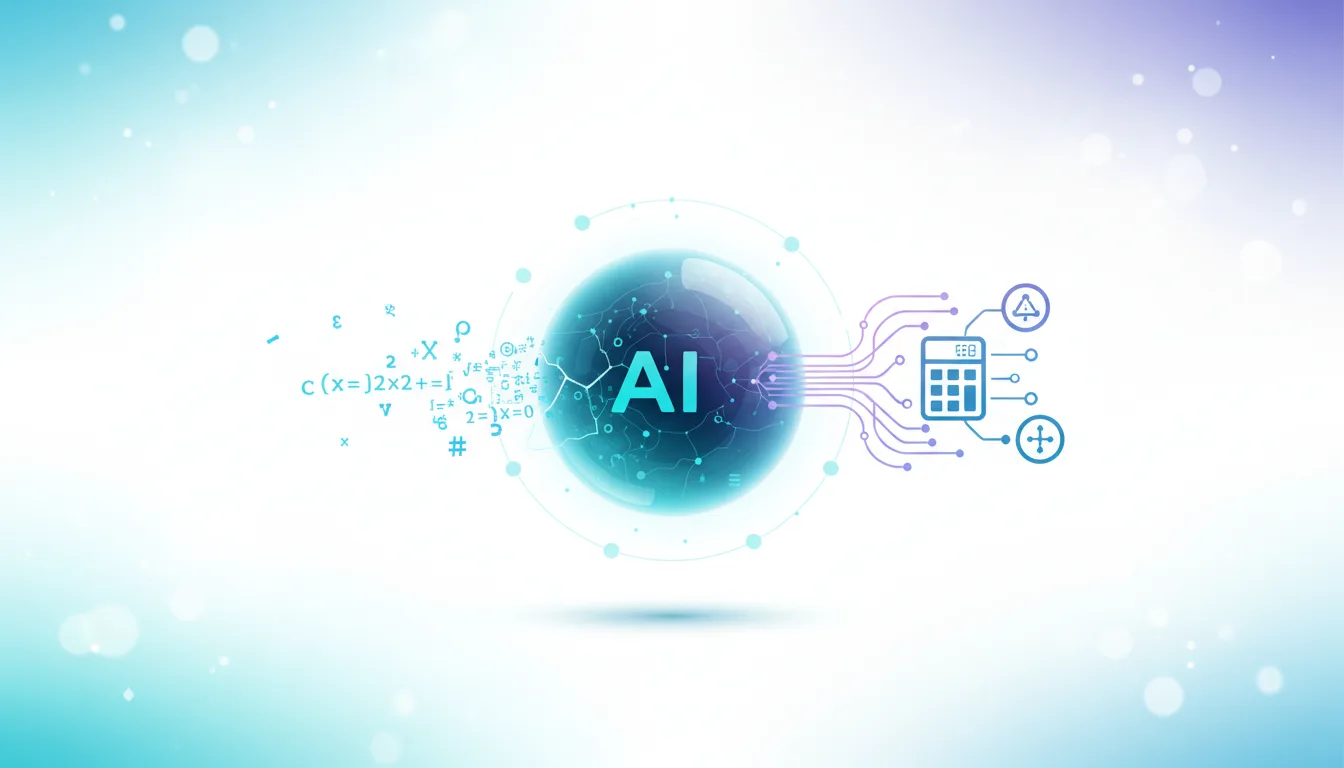
That said, the real eye-opener – and what ORCA’s numbers lay bare – is that gap between a standalone LLM and one hooked up to tools. Give it access to an external calculator (something Anthropic and OpenAI are baking in these days), and accuracy shoots up dramatically on those same tasks. Suddenly, the LLM isn’t sweating the sums; it’s figuring out the sequence, plugging in the right figures, and letting the tool do the heavy lifting. In essence, it becomes a sharp operator, not the machine itself – a subtle but game-changing shift.
This all nudges the AI world toward a vital redesign in how we build these systems. The focus isn’t solely on cranking out ever-larger models anymore; it’s on crafting solid setups for “tool use.” Value’s drifting from the all-in-one behemoth to agentic setups that break down problems, tap the fitting API – be it a calculator, database pull, or code runner – and weave it all back together. ORCA pretty much buries the notion of the LLM as a solo genius, locking in its spot as the conductor of precise, purpose-built tools instead. And honestly, from where I stand, that’s a healthier path forward.
📊 Stakeholders & Impact
| Stakeholder / Aspect | Impact | Insight |
|---|---|---|
| AI / LLM Providers (OpenAI, Google, Anthropic) | High | This benchmark’s pushing them to move beyond hyping raw smarts toward proving out tool-use and agentic setups for real reliability. The edge in competition? It might boil down to who orchestrates tools most smoothly – something worth watching closely. |
| Enterprise Developers & CTOs | High | It’s a straightforward wake-up: skip raw LLMs for number-crunching without checks or built-in tool calls, period. This layers on fresh must-haves for safe, dependable AI builds inside organizations. |
| End Users (Consumers, Students) | Medium | Everyday folks need to approach AI numbers with a healthy dose of doubt and get into the habit of double-checking. For those raised alongside AI helpers, it underscores why brushing up on basic math still matters – no shortcuts there. |
| Regulated Industries (Finance, Healthcare) | Significant | Where math slip-ups carry legal or money weight, ORCA’s takeaways could brake the rush to full AI autonomy, doubling down on keeping humans in the oversight loop for any data-driven calls. |
✍️ About the analysis
Researched and written with AI assistance under the editorial responsibility of the i10X News team. The title image is an AI-generated illustration. Read our AI Use Policy. Spotted an error? Request a correction.
This i10x analysis draws from an independent read of the public ORCA benchmark data, blended with early takes from media roundups. It’s geared toward developers, enterprise architects, and AI product leads – folks who need to grasp how LLM shortcomings shape strategies for tomorrow’s apps, without the fluff.
🔭 i10x Perspective
What if the ORCA benchmark isn’t slamming LLMs, but sketching the roadmap for AI’s next chapter? It shows chasing a single, do-it-all model is a dead end for precision work. Instead, the smart play for intelligence setups is hybrid approaches, where LLMs handle the thinking and hand off the crunching to rock-solid tools.
The biggest trap for AI decision-makers? Not the math goofs themselves, but skipping the safeguards so users don’t bet the farm on faulty outputs – that’s where the real stakes lie.