Perplexity’s Comet: An AI-Native Browser Deep Dive
⚡ Quick Take
Perplexity has officially entered the browser wars with Comet, a Chrome-based browser that embeds an AI assistant directly into the web experience. This isn’t just about adding a chatbot to a sidebar; it’s a strategic move to redefine the browser as an active, agentic partner, shifting the core internet user interface from a search-and-click model to a conversational, task-oriented workflow.
Summary
Perplexity has released Comet, an AI-native browser featuring a “sidecar” assistant for on-page tasks and a premium “background assistant” for more complex, multi-tab operations. By making the core browser free, Perplexity aims to rapidly acquire users and challenge the dominance of established players like Chrome and Edge. I’ve noticed how these kinds of bold pricing plays can really shake things up – it’s a smart way to hook people in without the usual barriers.
What happened
Comet integrates Perplexity’s AI directly into the browsing experience, allowing users to summarize pages, synthesize information across tabs, and automate repetitive tasks using natural language prompts. This moves the “answer engine” from a destination website into a persistent assistant that travels with the user across the web. Have you ever wished your browser could just… get things done for you, instead of making you chase links? That’s the idea here, and it feels like a natural next step.
Why it matters now
This launch signifies a critical escalation in the battle for the next-generation user interface. While Google and Microsoft are retrofitting their browsers with AI, Perplexity is building an experience from an AI-first perspective – weighing the upsides against the risks, you might say. This puts pressure on incumbents to go beyond simple summarization and embrace deeper, more agentic integrations, potentially disrupting the traditional search paradigm. But here’s the thing: in a world moving this fast, staying ahead means rethinking everything from the ground up.
Who is most affected
Knowledge workers, researchers, and students stand to benefit most from Comet’s productivity features – think of it as a quiet revolution in how we handle daily overloads. However, incumbent browser vendors—Google (Chrome), Microsoft (Edge), and Brave (Leo)—are now forced to compete on a new axis defined by AI agency, not just speed or privacy. It’s a wake-up call, really, for those who’ve grown comfortable with the status quo.
The under-reported angle
Beyond the feature demos, the critical questions remain unanswered – plenty of reasons to tread carefully, I suppose. There is little clarity on Comet’s privacy model (on-device vs. cloud processing), its performance and battery impact (especially on Android), or its compatibility with the vast Chrome extension ecosystem. Furthermore, its lack of enterprise-grade admin and security controls makes it a non-starter for corporate environments for now. One can’t help but wonder if these gaps will get filled quickly enough to keep the momentum going.
🧠 Deep Dive
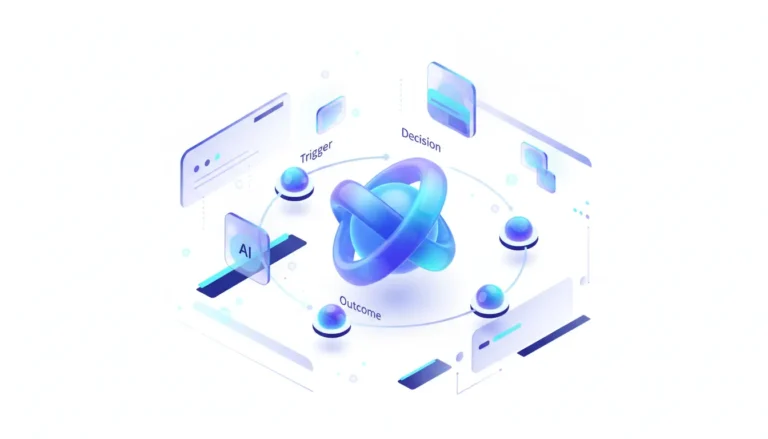
Have you ever stared at your browser tabs piling up, feeling like you’re drowning in information rather than mastering it? Perplexity’s Comet isn’t just a new browser; it’s a physical manifestation of the company’s bet to shift the web from a repository of documents you pull from, to a dynamic workspace where an AI agent works alongside you – almost like having a sharp colleague right there in your workflow. While competitors like Microsoft Edge bolt on Copilot and Brave integrates its Leo assistant, Comet is designed around the core premise that the browser itself should be the primary interface for AI interaction. Its “sidecar” assistant handles reactive tasks like summarizing a YouTube video or explaining a complex paragraph, a feature common across AI-augmented browsers, nothing earth-shattering on its own.
The real differentiation lies in the concept of agentic browsing, embodied by the Background Assistant available to Perplexity Max users. This feature aims to execute multi-step, multi-tab tasks—like comparing product specs from three different reviews or planning a trip based on flight and hotel availability. This moves beyond simple Q&A and into the realm of workflow automation, which is where things get truly exciting – or tricky, depending on the day. While existing coverage showcases impressive demos, it glosses over the fundamental challenge of reliability and the need for robust human-in-the-loop controls for when these automations inevitably fail or misinterpret user intent. From what I’ve seen in similar tools, that’s often the make-or-break point.
That said, for a tool promising to be a primary interface, Comet’s launch is marked by significant blind spots – gaps that could trip up even the most eager adopters. Built on a Chrome-based architecture, it inherits a familiar foundation but also raises immediate questions about performance. Current analysis lacks any benchmarks on memory usage, startup speed, or battery drain, particularly for its new Android version—critical adoption factors for power users. This gap is telling; for a productivity tool, performance isn’t a feature, it’s a prerequisite, plain and simple.
The most critical unaddressed tensions are privacy and security, and they’re the ones that keep me up at night when thinking about these launches. Perplexity’s official blog posts talk about a commitment to privacy, but provide no technical specifics on the data flow. Which tasks are processed on-device versus in the cloud? How does Comet’s DOM manipulation interact with security-focused Chrome extensions like password managers or ad blockers? For enterprises, the browser is a major security surface. Without clear documentation on SOC 2 compliance, single sign-on (SSO) integration, or mobile device management (MDM) policies, Comet remains a consumer-grade experiment, not a viable enterprise tool. This missing “enterprise readiness” module is a major content gap and a significant barrier to widespread corporate adoption – one that future updates will need to tackle head-on, I suspect.
📊 Stakeholders & Impact
| Stakeholder / Aspect | Impact | Insight |
|---|---|---|
| AI/LLM Providers (Perplexity) | High | Secures a powerful distribution channel and user data flywheel, reducing dependence on being a web destination. This is a direct play to own the AI-native web experience – like staking a claim in uncharted territory. |
| Incumbent Browsers (Chrome, Edge, Arc) | High | Forces an accelerated-feature race focused on “agentic” capabilities, not just search summarization. Puts pressure on Google to integrate Gemini more deeply, risking its core ad model, and that’s no small thing to balance. |
| Users (Knowledge Workers, Students) | Medium-High | Potential for significant productivity gains in research and task management. However, users assume new risks related to automation errors, privacy, and data handling – worth it for some, a gamble for others. |
| Enterprises & IT Admins | Low (Currently) | The lack of administrative controls, compliance documentation, and a clear security model makes Comet currently undeployable in managed corporate environments. This is a major market segment left untapped, but one that could change with time. |
✍️ About the analysis
Researched and written with AI assistance under the editorial responsibility of the i10X News team. The title image is an AI-generated illustration. Read our AI Use Policy. Spotted an error? Request a correction.
This analysis is an independent i10x editorial piece, produced by synthesizing data from official product announcements, hands-on user reviews, and competitor news coverage. It is written to provide developers, product managers, and CTOs with a strategic perspective on the shifting browser and AI agent landscape – something practical to chew on amid all the hype.
🔭 i10x Perspective
Ever wonder if the browser we use every day is on the verge of becoming something entirely new? Perplexity’s Comet is a bold declaration that the browser is the next operating system for personal AI agents. This isn’t just a new app; it’s a fundamental challenge to how users interact with the internet, pushing boundaries in ways that feel both inevitable and a bit daunting. The battle for the future of the web won’t be won by the company with the smartest LLM alone, but by the one who solves the complex trifecta of agentic capability, user trust, and seamless integration first – a tall order, no doubt.
This move puts Google in a strategic bind: Does it fully commit to transforming Chrome into a proactive Gemini-powered agent, potentially cannibalizing its search-ad empire? Or does it cede the future of the AI-native web to nimbler innovators like Perplexity and Arc? The next 24 months will reveal whether the browser becomes a dumb client for a cloud-based AI or a powerful, on-device agent in its own right. The outcome will define how intelligence is distributed and controlled on the web for the next decade, and it’s fascinating – if a little unpredictable – to watch it unfold.