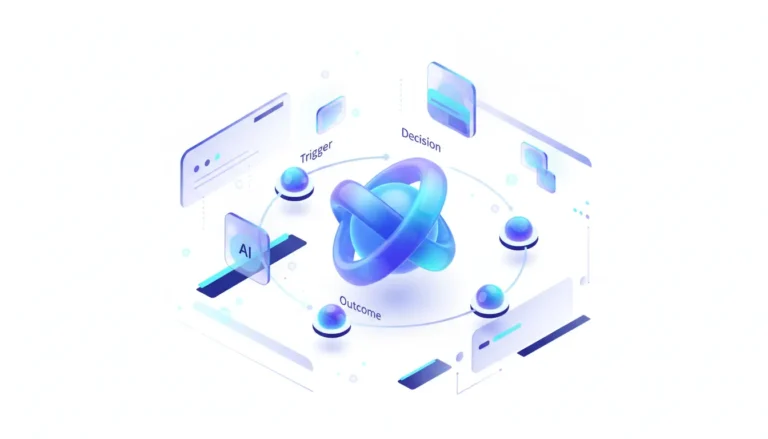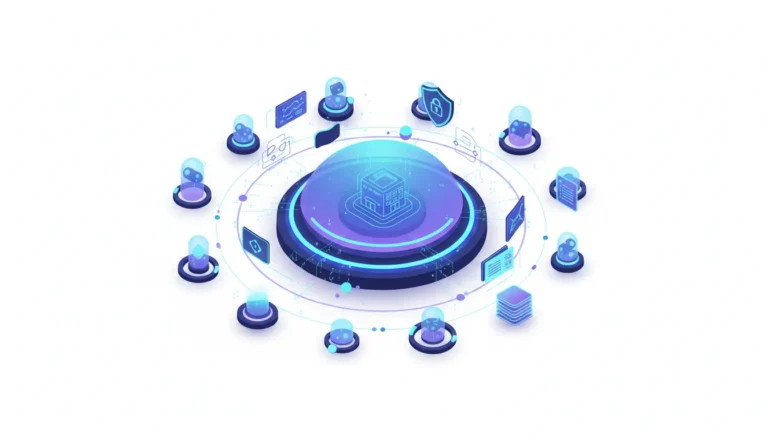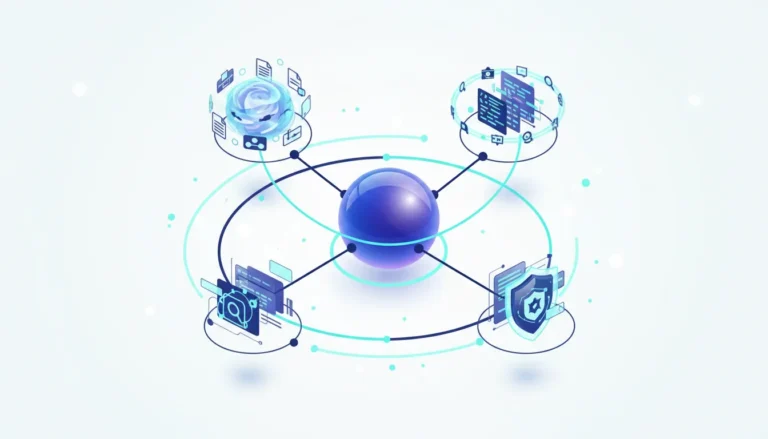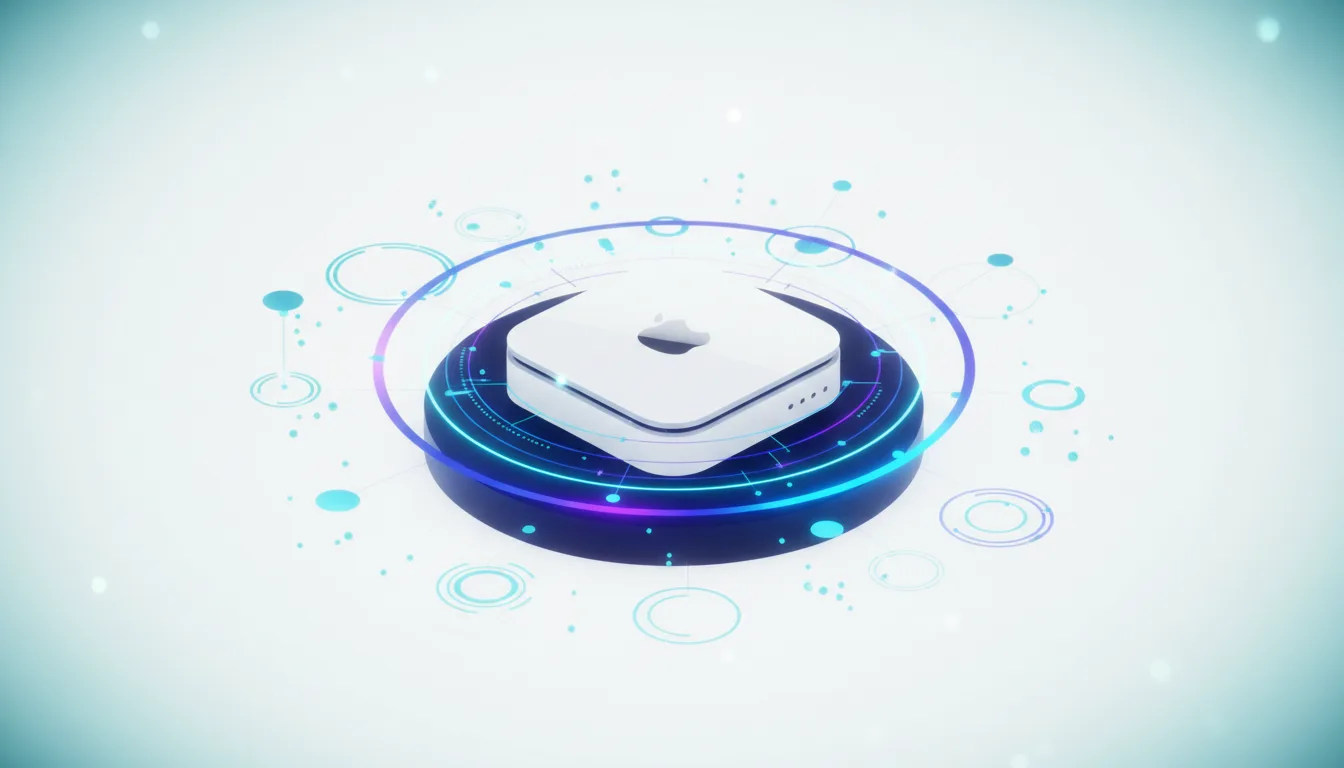
Have you ever wondered if AI could move beyond endless chats and actually run your team’s workflows on something as straightforward as a desktop? Perplexity has launched its> Personal Computer, an agentic AI software platform that runs on Mac minis, signaling a strategic pivot in the AI industry from cloud-centric chatbots to locally-deployed, auditable automation hubs. This move directly challenges competitors like Anthropic’s Claude Cowork by betting on a dedicated hardware “appliance” model to solve enterprise needs for governance, privacy, and predictable performance—trust me, it’s a shift that’s worth watching closely.
Quick Take
- Summary: : Perplexity announced the “Personal Computer,” a software platform designed to turn Apple’s Mac mini into a dedicated hub for agentic automation. Instead of simple chat, it enables users to build, schedule, and run multi-step AI workflows involving browsing, research, and tool use, with a strong emphasis on team collaboration and governance. From what I’ve seen in similar launches, this kind of focus on structure could really change how teams handle daily tasks.
- What happened: : The platform is deployed on-site using Mac mini hardware, leveraging Apple Silicon for on-device execution of agentic tasks. This allows teams to automate complex research and reporting while keeping data processing and audit logs within a controlled environment, moving beyond the limitations of purely cloud-based AI assistants. It’s that on-device angle, really, that makes it feel like a practical step forward—contained, traceable, and ready for real-world use.
- Why it matters now: : This launch sharpens the definition of “agentic AI” and draws a new competitive battlefront focused on deployment models. By tying its software to a specific, local hardware footprint, Perplexity is challenging the default cloud-first paradigm, arguing that trust, control, and operational reliability are the next frontiers for enterprise AI adoption. And here’s the thing: in an era where data breaches make headlines, this could tip the scales toward more grounded solutions.
- Who is most affected: : Enterprise IT leaders, data security teams, and business units evaluating AI automation are the primary audience. The move directly impacts teams at startups and large companies exploring how to graduate from ad-hoc AI prompting to reliable, repeatable, and auditable automated processes. If you’re in one of those roles, weighing the upsides might just reshape your strategy for the better.
- The under-reported angle: : Beyond the feature-for-feature race with Claude Cowork, the core story is Perplexity’s bet on the AI appliance concept. The choice of the Mac mini isn’t incidental; it’s a strategic move to position a familiar, accessible piece of hardware as the go-to server for trustworthy team-level AI, bypassing the complexities and data residency concerns of the public cloud. It’s almost like repurposing something you already know—smart, if it pans out in the long run.
Deep Dive
Ever felt the frustration of AI tools that promise the world but leave you guessing about data trails and reliability? Perplexity’s launch of its “Personal Computer” platform is more than a product release; it’s a thesis about the future of applied AI. By architecting its agentic software to run on dedicated Mac mini hardware, Perplexity is framing the next evolution of AI interaction not as a better chatbot, but as a reliable, governable automation engine that lives within an organization’s own perimeter. This model directly addresses the primary pain points holding back enterprise adoption of agentic AI: a lack of transparency, data security risks, and the inability to operationalize AI outputs reliably—issues I’ve noticed crop up time and again in client discussions.
The strategic decision to use the Mac mini as an “AI appliance” is the key differentiator. While competitors focus on cloud-based solutions, Perplexity is offering a tangible, on-premise hub for AI workflows. This leverages the performance of Apple Silicon for on-device processing and provides a clear answer to CIO and CISO questions about data flow, privacy, and auditability. The platform is designed to transform manual, repetitive research—like market analysis or competitive monitoring—into scheduled, autonomous workflows with logs that prove what the agent did, which data it accessed, and what tools it used. That said, it’s the logging part that really builds confidence; without it, these systems can feel a bit like shooting in the dark.
This move ignites a new competitive dynamic in the nascent agentic platform market, pitting Perplexity’s edge-first, hardware-coupled approach directly against more cloud-native offerings like Anthropic’s Claude Cowork. While current news coverage correctly identifies the rivalry, it often frames it as a simple feature comparison. The real battle is over the architecture of trust. Perplexity is betting that enterprises will favor a model they can physically control and audit over a black-box cloud service, even if it requires managing on-site hardware— a trade-off that’s equal parts clever and challenging.
However, the launch also surfaces the next layer of challenges that the PR glosses over: operational dependability. The true test of an agentic platform lies not in its ability to run a workflow once, but in its capacity to do so reliably, with robust error handling, retries, and human-in-the-loop oversight for exceptions. While Perplexity’s emphasis on scheduling and logging is a strong start, prospective buyers should push on the deeper questions of observability, alert triggers for failed runs, and patterns for safe human review and intervention. This is the gap between a powerful demo and a production-grade system, and it’s where the agentic AI market will mature next—leaving plenty of room for evolution, don’t you think?
Stakeholders & Impact
| Stakeholder / Aspect | Impact | Insight |
|---|---|---|
| AI / LLM Providers | High | Escalates the race to define the “agentic platform” category, shifting focus from model-centric chat to workflow orchestration and governance. Perplexity’s edge model creates a new architectural front against cloud-native players like Anthropic and OpenAI—it’s forcing everyone to rethink their plays. |
| Hardware & IT Teams | High | Re-introduces the concept of on-premise appliances for AI workloads. IT and DevOps teams will need to evaluate, deploy, and manage Mac minis as critical infrastructure, considering TCO, scalability, and lifecycle management; a bit like dusting off old server racks, but with a modern twist. |
| Enterprise & Prosumer Users | High | Empowers users to move from manual prompting to building automated, scheduled AI systems. This requires a shift in mindset from “asking” an AI to “designing and managing” an AI workflow—rewarding, once you get past the learning curve. |
| Regulators & Policy | Medium | The platform’s on-device processing and auditable logs directly address regulatory pressures for data sovereignty, privacy, and AI transparency. This model could become a blueprint for compliance-sensitive industries, easing some of those thorny compliance headaches. |
About the analysis
Researched and written with AI assistance under the editorial responsibility of the i10X News team. The title image is an AI-generated illustration. Read our AI Use Policy. Spotted an error? Request a correction.
This is an independent i10x analysis based on a synthesis of official product announcements, competitor benchmarks, and enterprise buyer guides. It’s written for technology leaders, product strategists, and enterprise architects evaluating how to move from experimental chatbots to production-grade agentic automation—drawn from patterns I’ve observed in the field, with an eye toward what’s practical.
i10x Perspective
What if the future of AI isn’t in the cloud, but right there on your desk? Perplexity’s “Personal Computer” is the first mainstream attempt to commercialize the “AI appliance”—a dedicated, governed compute node for intelligent automation. This signals that the next war in AI will not just be fought over model capabilities, but over the deployment architecture and the locus of control. From my vantage point, it’s a refreshing push toward something more tangible.
This move pressures the entire ecosystem. Will OpenAI, Google, and Meta respond with their own hardware-coupled offerings to guarantee enterprise-grade governance? The unresolved tension is whether a repurposed consumer device like the Mac mini can truly satisfy enterprise standards for reliability, security, and scalability. This launch is a bold experiment to determine if the “AI appliance” can bridge the chasm between prosumer ambition and enterprise reality— one that could redefine the game if it sticks.