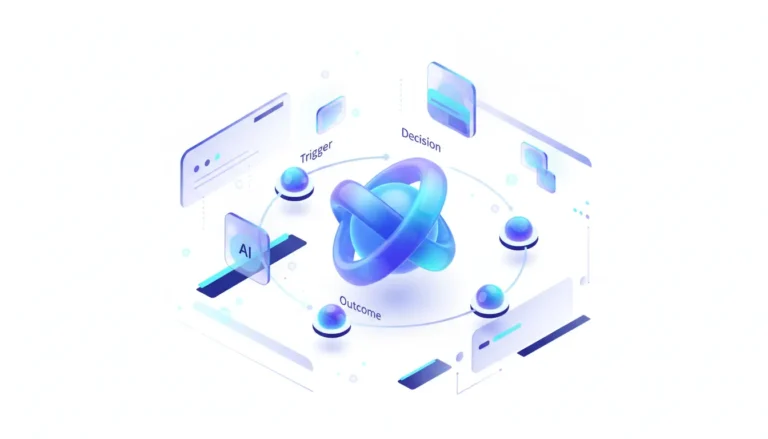
Have you sensed the ground shifting under the feet of software companies lately? The era of seat-based, feature-driven SaaS is winding down. AI isn’t merely tacking on another tool to the shelf; it’s reshaping the whole operation, igniting what’s being called the ‘SaaSpocalypse‘—a total reimagining of how software gets built, marketed, and priced. At its heart, this means moving from hawking individual features to delivering seamless, automated results.
Quick Take
- Summary: These days, autonomous AI systems—think agents—are stepping in to handle full-blown business tasks, from customer support to sales outreach. It’s unraveling the classic Software-as-a-Service (SaaS) setup, the one built on per-user fees and steady feature rollouts. As AI takes over what users used to do, the whole value story and economic model of SaaS start to crumble, really.
- What happened: We’ve already got some telling early signs, like AI agents running on models such as Claude Code, tackling intricate workflows that once demanded whole teams juggling a stack of SaaS apps. Picture this: instead of shelling out for 100 support agent “seats” spread across three tools, a business deploys one AI setup—and gets the same output, or even sharper results.
- Why it matters now: Here’s the kicker—this wave is hitting right at the core defenses, profit edges, and sky-high valuations of the established SaaS world. When features become easy pickings for advanced foundation models, that old edge in product uniqueness fades fast. For anyone starting up or investing, the strategies that minted software behemoths over the last ten years? They’re yesterday’s news now.
- Who is most affected: Front and center are the SaaS founders, day-to-day operators, and those steering sales and marketing—they’re watching pricing leverage slip away and customers bail. Venture capitalists have to scrub their portfolios for AI vulnerabilities. On the flip side, enterprise leaders like CIOs and CFOs spot a chance to streamline vendors and slash costs, while teams in support, sales, or finance brace for a pivot: less hands-on doing, more guiding from above.
- The under-reported angle: Sure, plenty of chatter circles the raw disruption. But the real gap—and what keeps me up at night—is the roadmap forward. We’re talking outcome-based pricing, fresh takes on automation economics, and blueprints for crafting truly defensible “AI-native” offerings. Founders and investors ought to be wrestling with these, pronto.
Deep Dive
What if the software you rely on started running itself, end to end? The ‘SaaSpocalypse‘ label isn’t empty buzz—it’s spot-on for the earthquake rumbling through enterprise tech. For about 20 years, SaaS boomed by leasing out features seat by seat. Yet when AI agents step into those seats and do the work, the whole framework buckles. This goes beyond slapping an AI summary gadget onto your CRM; imagine an agent owning your sales pipeline outright—from hunting leads to booking meetings—making that per-seat CRM fee feel like a dusty artifact.
From what I’ve observed in the trenches, this change is smashing through the barriers that once protected software firms. A polished interface, some standout capability, or even a solid brand? They’re tough to hold onto when a foundation model can mimic the essentials in days. Those agent workflow prototypes we’ve seen—they’re proof the fight’s moving from bells and whistles to real-world results. Your rivals aren’t just fellow SaaS players anymore; they’re the big AI engines like OpenAI, Anthropic, Google, plus the nimble AI-first outfits layering on top.
So, for the old-guard SaaS players and fresh ventures alike, it’s time to scrap the standard strategy guide. Start with pricing: ditch “per-user” for per-outcome. Charge by resolved support tickets, qualified leads, or cranked-out reports—whatever delivers clear bang for the buck. That demands real proof of impact, shifting the game from peddling code to promising—and backing up—tangible wins, complete with service guarantees.
Old defenses vanished? Fine—erect new ones. I’ve noticed how the strongest AI-native setups lean on three mainstays: closed-loop proprietary data, tight integration into daily ops, and killer ways to spread. It’s not about grabbing any off-the-shelf model; it’s engineering a loop where each task sharpens a bespoke dataset, building an edge that snowballs. And forget bolt-on apps—these become woven into the heart of operations and data flows, so sticky and pricey to uproot.
Buyers are fueling this fire, too. CIOs and CFOs—worn out by sprawling tech piles and climbing subs—finally see a path to simplicity. They’re flipping from tool-buying to efficiency-hunting, leaning toward one-stop providers who automate whole functions (say, the full revenue ops suite) instead of juggling ten specialists. That squeezes incumbents to merge and mesh their offerings, while flinging doors wide for AI platforms born ready for this streamlined, results-first landscape.
Stakeholders & Impact
SaaS Incumbents
Impact: High
Insight: They’re staring down squeezed margins and loyalty leaks—time to swing from seat-tied features to AI-powered outcomes, or fade into irrelevance.
AI-Native Startups
Impact: High
Insight: What a runway: slim teams automating big chunks, prying apart the giants. But staying ahead means nailing what makes them irreplaceable.
Enterprise Buyers (CIO/CFO)
Impact: High
Insight: Big wins in trimming costs and boosting output via fewer vendors and smarter automation—now they hold the cards, buying results over headcounts.
LLM & Platform Providers
Impact: Significant
Insight: Stepping up as the new backbone, scooping up value streams. How well their models run and stay safe? That sets the disruption’s tempo.
The Workforce
Impact: Medium–High
Insight: Expect a tilt from grunt work—like fielding queries or chasing prospects—to higher-level stuff: sizing up AI outputs, catching edge cases, tweaking the bots.
About the analysis
Researched and written with AI assistance under the editorial responsibility of the i10X News team. The title image is an AI-generated illustration. Read our AI Use Policy. Spotted an error? Request a correction.
Drawing this together feels like piecing a puzzle from fresh signals—this is an independent i10x take on bubbling market moves, the aches operators face daily, and the pivots in product thinking. It stems from sifting through nascent launches, VC outlooks, and real-talk sessions among builders, all geared to steady founders, product heads, and backers through the leap from SaaS norms to AI-rooted models.
i10x Perspective
Ever wonder if this shake-up is more purge than peril? The SaaSpocalypse strikes me as an essential reset, clearing space for a sharper, smarter software landscape. Power’s redistributing: AI bases snag the foundational layers, pushing app creators to shine on concrete business gains.
The real showdown over the coming half-decade? It won’t hinge on flashy screens, but on who masters the richest data cycles and slickest “agentic workflows.” Keep an eye out—a fresh crop of software titans is rising, powered by small crews wielding AI for outsized impact, ditching the heavy hierarchies and shaky math of old-school SaaS. It’s not a question of whether automation hits your stack—if you’re the one pulling the strings.