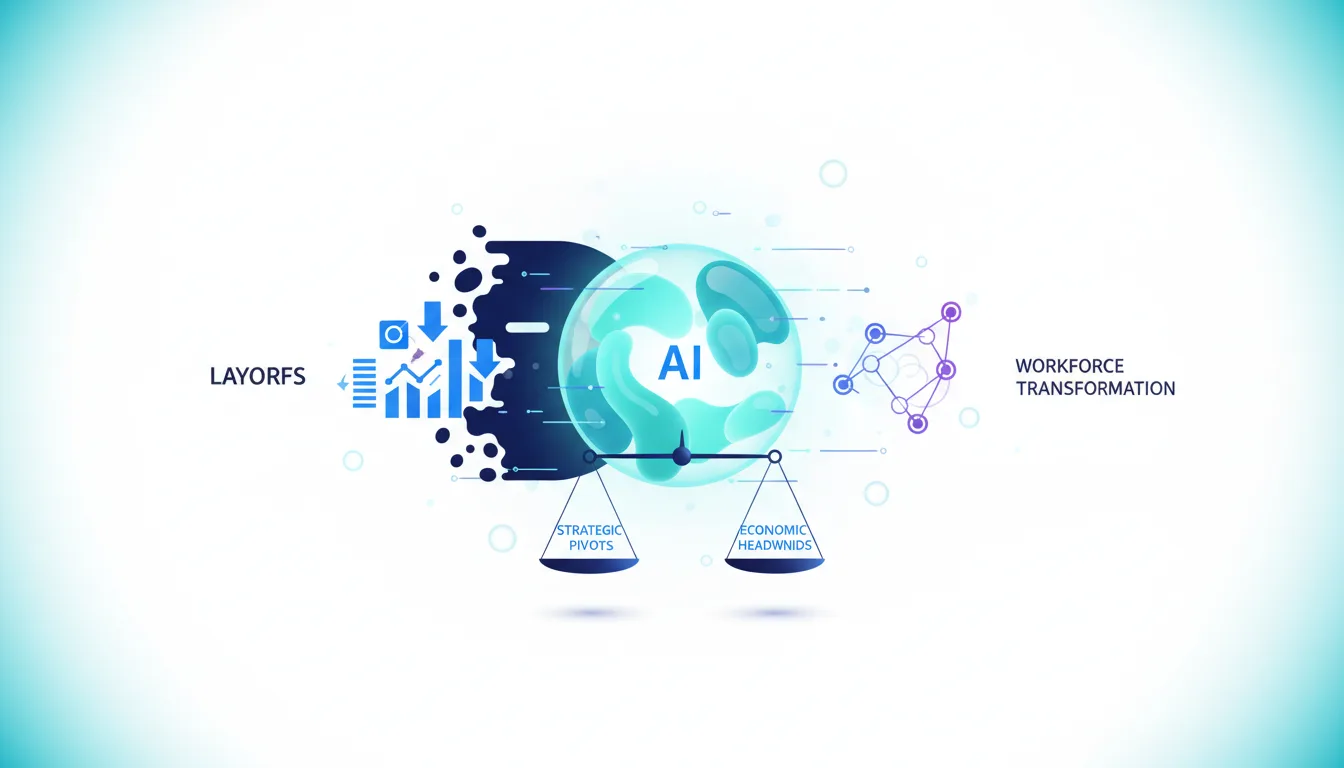
Sam Altman’s recent critique of tech companies using AI as a scapegoat for mass layoffs isn’t just a soundbite—it’s a strategic move to reframe the narrative on AI’s role in the economy. By calling out lazy attribution, Altman is forcing a conversation about corporate accountability, distinguishing between the inevitable march of technology and the immediate consequences of business cycles and management decisions.
Quick Take
- Summary: : OpenAI CEO Sam Altman publicly criticized tech companies for blaming mass layoffs on artificial intelligence. He argues that this narrative is an oversimplification, masking underlying business issues, macroeconomic headwinds, and executive decisions that are the true drivers of workforce reductions—or at least, that’s the clearer picture he’s pushing for.
- What happened: : In public forums, Altman pushed back against the growing trend of attributing layoffs to AI integration. He urged for a more nuanced discussion, placing the responsibility on corporate leaders to be transparent about their reasoning, whether it’s poor unit economics, post-pandemic over-hiring, or strategic pivots. From what I’ve seen in these kinds of exchanges, it’s a reminder that leaders like him aren’t afraid to stir the pot when the story starts veering off course.
- Why it matters now: : Have you ever wondered how a single comment from someone like Altman could shift an entire industry’s focus? As AI adoption moves from pilot to production, the narrative surrounding its impact on employment is becoming a critical battleground. Altman’s intervention aims to decouple the technology’s potential—productivity and augmentation—from the negative public relations fallout of layoffs, shifting the burden of proof onto the companies making the cuts.
- Who is most affected: : Tech executives and HR leaders are now under increased pressure to justify workforce changes with concrete data rather than vague references to AI. Tech workers gain a clearer lens to understand the forces affecting their careers—plenty of reasons, really, beyond just the tech hype—and regulators are given a signal to look past the “AI” label to the underlying economic and corporate drivers.
- The under-reported angle: : This is a calculated act of narrative control. By positioning “AI” as an excuse used by other companies, Altman is protecting the brand of foundational model providers like OpenAI. It frames their technology as a tool for augmentation and growth, while positioning poorly managed layoffs as a failure of corporate strategy, not a direct consequence of the AI itself. That said, it’s the kind of subtle positioning that keeps the bigger picture in play.
Deep Dive
Ever feel like the tech world sometimes hides behind buzzwords to dodge the real talk? Sam Altman’s recent statements are a direct challenge to the tech industry’s emerging consensus for explaining away mass layoffs. By calling the “blame AI” narrative a cop-out, he’s forcing an uncomfortable but necessary distinction between technological progress and corporate accountability. For months, the specter of AI has provided convenient cover for workforce reductions driven by far more mundane factors: the end of zero-interest-rate-fueled hiring sprees, investor demands for profitability, and the simple correction of post-pandemic bloat. Altman’s pushback reframes the conversation from “AI is taking jobs” to “Executives are using AI to explain firing people”—and honestly, I’ve noticed how that shift can cut through a lot of the noise.
This “AI scapegoating” masks a deeper management failure, one that’s worth weighing carefully. The true impact of today’s AI, particularly LLMs, is primarily on tasks, not entire jobs. The opportunity—and the challenge—is not blunt-force headcount reduction but strategic workforce transformation. Companies that succeed will redesign roles, redeploy talent, and leverage AI for productivity gains that fuel growth, a process often described as “augmentation” rather than “automation.” Layoffs are often the result of an inability or unwillingness to engage in this complex work, opting instead for the simple math of cutting payroll costs. But here’s the thing: that shortcut rarely builds the kind of trust that lasts.
The decision to publicly cite AI as the cause for layoffs is also a high-risk communications strategy—one that can backfire if not handled right. Without clear evidence mapping AI implementation to role redundancy, companies open themselves to legal and reputational damage. It can be perceived as a disingenuous attempt to avoid responsibility for strategic missteps or to create an atmosphere of technological inevitability that silences dissent. As labor regulators and unions become more attuned to AI’s impact—and they will, given the pace of things—unsubstantiated claims could attract unwanted scrutiny and undermine employee trust. It’s a tightrope, really.
Ultimately, this moment serves as a preview of the much more complex labor transitions to come. The current wave of layoffs is largely a story of market cycles and financial discipline, not AI-driven obsolescence. However, it sets a precedent for how companies will communicate about workforce changes as AI becomes more capable. The core challenge Altman has thrown down is for leaders to build a playbook for responsible AI adoption—one that prioritizes reskilling, internal mobility, and transparent change management over a simplistic narrative of human-machine replacement. And as we move forward, that playbook will matter more than ever.
Stakeholders & Impact
| Stakeholder / Aspect | Impact | Insight |
|---|---|---|
| AI / LLM Providers | High | Strategically distances their platforms from the negative PR of layoffs. Frames their technology as a tool for productivity and augmentation, shifting the accountability for job losses to the companies adopting it— a smart way to keep the focus on growth. |
| Tech Executives & HR | High | Increased pressure to justify layoffs with concrete business metrics (e.g., unit economics, market shifts) instead of leaning on the vague “AI” explanation. The “AI did it” excuse is now publicly discredited by a top voice in AI, which changes the game for how they communicate. |
| Tech Workers & Labor | Medium–High | Provides clarity that job loss may stem from market cycles or management strategy, not just inevitable technological displacement. This could fuel demands for transparent communication and robust reskilling programs, giving workers a stronger voice in the conversation. |
| Regulators & Policy | Medium | Altman’s distinction is critical for policymaking. It encourages regulators to differentiate between true AI-driven job displacement—which may require systemic responses—and standard corporate restructuring cloaked in AI terminology, helping to guide more targeted oversight. |
About the analysis
Researched and written with AI assistance under the editorial responsibility of the i10X News team. The title image is an AI-generated illustration. Read our AI Use Policy. Spotted an error? Request a correction.
This i10x piece draws from recent executive statements, fresh market data on tech layoffs, and time-tested frameworks for workforce transformation. I’ve woven together reporting with a bit of strategic interpretation here, aiming to offer tech leaders, product managers, and strategists a sharper view of how AI ripples through organizations and the broader market—nothing groundbreaking, but hopefully useful.
i10x Perspective
What if the real story isn’t about AI stealing jobs, but about how we choose to tell it? This isn’t merely a debate over layoff memos; it’s a battle for the soul of the AI narrative. By separating the technology from its application, Altman is positioning OpenAI and its peers as neutral enablers of progress, placing the ethical burden of workforce transition squarely on the shoulders of the companies deploying it. This is a critical move to ensure that public and regulatory backlash against layoffs doesn’t stall the development and adoption of AI itself. The industry is setting a poor precedent for the day when AI is powerful enough to be the real cause—and we’ll all be watching how that unfolds.