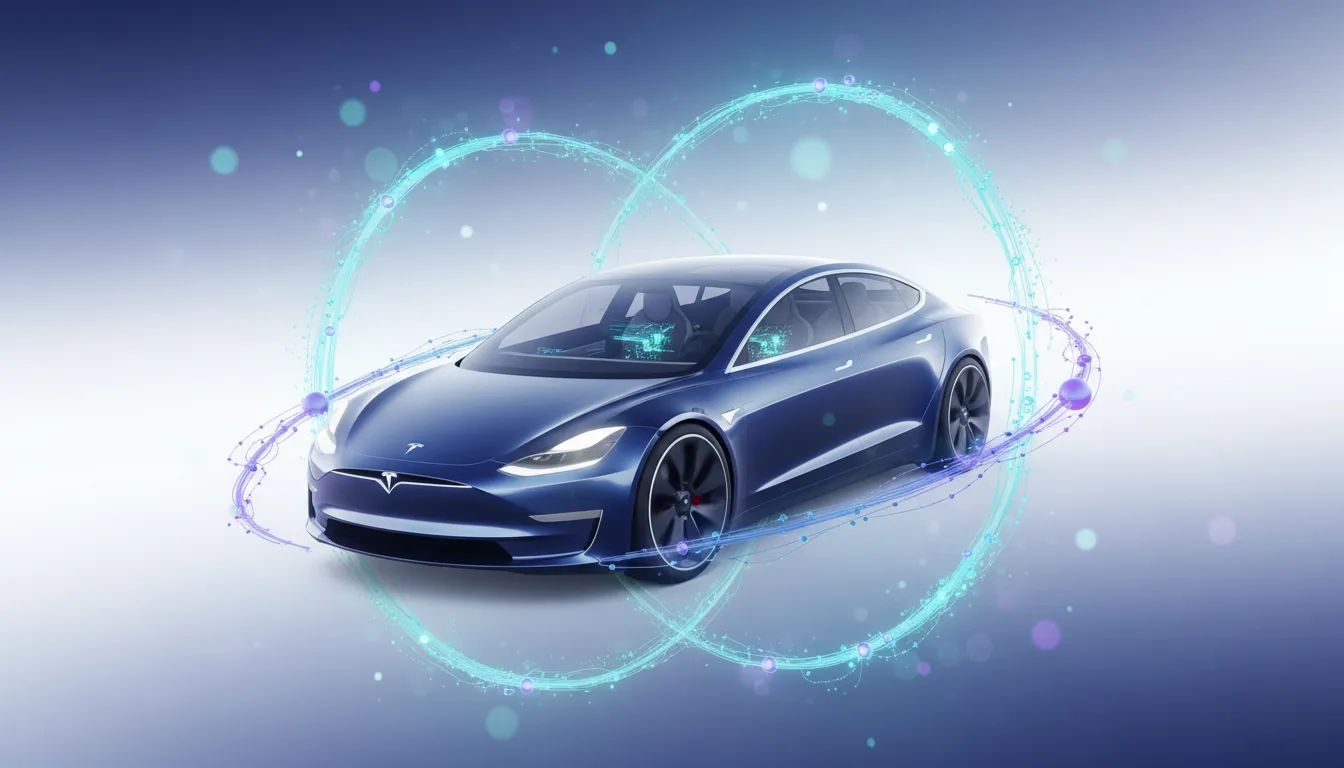
Tesla’s latest software update (2026.14) introduces a “Hey Grok” wake word, signaling a pivotal shift from generic voice commands to a branded, in-car LLM experience powered by xAI. While framed as a routine infotainment upgrade with music and weather enhancements, the update lays the foundation for a vertically integrated AI ecosystem, turning millions of vehicles into endpoints for Elon Musk’s intelligence stack.
Quick Take
- Summary: Tesla has begun rolling out its Spring 2026 update (2026.14), which notably includes a “Hey Grok” wake word for its voice assistant. This marks the first major deployment of the Grok LLM brand within the Tesla fleet, moving beyond simple vehicle commands and toward a more capable, conversational AI.
- What happened: Ever wonder how a small change in voice tech could ripple through an entire industry? The update bundles standard user-facing features like improved music queuing and a refreshed weather interface. But here’s the thing – the introduction of the hands-free “Hey Grok” trigger is the key strategic development, activating the in-car microphone to listen for the prompt, similar to “Hey Siri” or “Hey Google.”
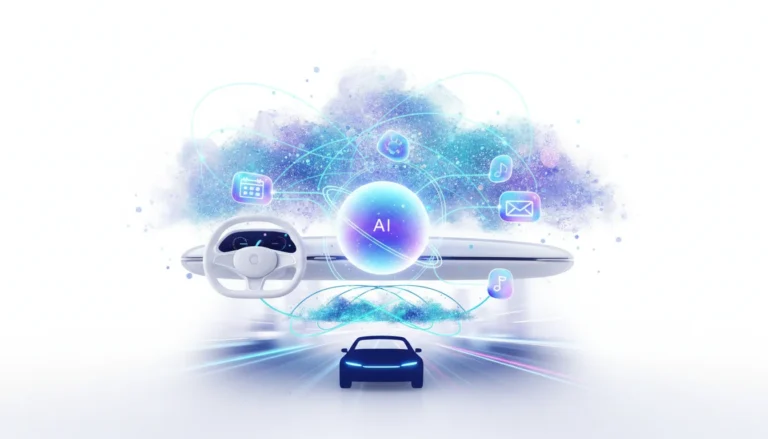
- Why it matters now: This isn’t just a new feature tucked away in the settings; it’s a strategic fusion of Tesla’s hardware and xAI’s intelligence layer. By branding the assistant as Grok, Tesla is preparing its global fleet to become a massive, mobile platform for its own LLM, creating a powerful alternative to the automotive AI offerings from Google, Apple, and Amazon. From what I’ve seen in past integrations, these kinds of moves often snowball into something bigger.
- Who is most affected: Tesla drivers gain a potentially more powerful voice assistant but also enter a new data and privacy paradigm – one that’s worth weighing carefully. xAI gets an unparalleled deployment and data collection platform. Competing automakers are now further pressured to develop their own native LLM strategies beyond simply integrating third-party assistants.
- The under-reported angle: While enthusiast sites focus on the user-facing tweaks, they miss the bigger picture, really. This update is a deliberate move to build a closed-loop AI ecosystem. The car is no longer just a vehicle; it’s becoming a hardware agent for a specific AI model, creating a powerful moat and data engine for the Tesla/xAI universe – and that shift feels like it’s just getting started.
Deep Dive
Have you ever peeled back the layers of a software update and found something that changes everything? On the surface, Tesla’s Spring 2026 software update (2026.14) looks like business as usual. Owners get practical, long-requested features like music queuing and a cleaner weather app – the kind of iterative improvements that define modern vehicle ownership, you know? But buried within the release notes is a single line item that re-frames the entire update: the introduction of a “Hey Grok” wake word.
This is not a mere branding exercise; it is the first tangible sign of xAI’s intelligence layer being woven into the fabric of Tesla’s hardware. The shift is from a utilitarian, command-based system to a branded, conversational AI platform. Previously, Tesla’s voice controls were anonymous and functional – straightforward, even. Now, by invoking “Grok,” drivers are explicitly interacting with a specific Large Language Model from a specific company (xAI). This move sets the stage for future updates where the in-car AI can perform tasks far beyond “turn on the wipers,” potentially tapping into Grok’s real-time knowledge and conversational abilities to offer navigation advice, diagnose vehicle issues, or even interact with smart home devices.
That said, this integration immediately brings up critical questions about privacy and data, a topic largely absent from current feature-focused coverage. An “always-on” microphone listening for a wake word is standard for modern voice assistants, but the data processing backend is what matters most. Where do the voice snippets go? How are they used to train the Grok model? What personal information inferred from in-car conversations becomes part of the training data? Tesla is effectively turning its entire fleet into a distributed listening post for xAI, a move that requires a new level of transparency regarding data governance and user opt-outs – and honestly, I’ve noticed how these concerns tend to linger without clear answers.
Ultimately, the “Hey Grok” feature is a strategic play in the platform wars. While other automakers struggle to create a cohesive software experience, often ceding the infotainment screen to Apple CarPlay or Android Auto, Tesla is doubling down on vertical integration. By building its own AI stack – from the silicon in the car to the LLM in the cloud – Tesla aims to own the entire in-car intelligence experience. This update is a quiet but significant step in transforming every Tesla from a “car that has a computer” into a “wheeled computer that happens to be a car,” with Grok as its native operating system. It’s the sort of evolution that makes you pause and think about where we’re headed next.
Stakeholders & Impact
| Stakeholder / Aspect | Impact | Insight |
|---|---|---|
| xAI (LLM Provider) | High | Gains a massive, distributed fleet for real-world deployment, data collection, and model refinement. This provides a physical footprint that competitors like OpenAI and Google cannot easily replicate – a real edge, in other words. |
| Tesla Drivers | Medium–High | Receive a more powerful, hands-free voice assistant. However, they also face new privacy considerations with an always-on microphone tied to a learning LLM, something to keep an eye on as it rolls out. |
| Competitor Automakers | High | The pressure intensifies. Merely licensing Google or Amazon’s voice AI is now benchmarked against Tesla’s bespoke, deeply integrated solution. They are now further behind in the race to own the “in-car OS” – and catching up won’t be straightforward. |
| Google, Apple, Amazon | Medium | Tesla is reinforcing its walled garden, locking out competing voice assistants and their ecosystems from its vehicles. This move solidifies the car as a key battleground for AI platform dominance, shifting the dynamics a bit more each time. |
| Regulators & Policy | Significant | The large-scale deployment of in-car LLMs will inevitably attract scrutiny around data privacy, driver distraction, and the use of conversational data for model training, potentially leading to new regulations that could reshape the field. |
About the analysis
Researched and written with AI assistance under the editorial responsibility of the i10X News team. The title image is an AI-generated illustration. Read our AI Use Policy. Spotted an error? Request a correction.
This is an independent i10x analysis based on public firmware release notes, comparative analysis of the AI assistant market, and evaluation of well-documented content gaps. It is written for developers, tech strategists, and product leaders tracking the convergence of AI, hardware, and infrastructure – folks who appreciate the nuances, I suppose.
i10x Perspective
What if the next big leap in mobility isn’t about speed or range, but about how we talk to our cars? The “Hey Grok” update is more than a feature; it’s a declaration of intent. Tesla is not simply adding an LLM to its cars; it is transforming its global vehicle fleet into a cohesive, intelligent hardware network that runs on its own proprietary AI. This move signals a future where the primary interface for a vehicle is not its touchscreen, but a conversational agent – a subtle but profound change.
The critical unresolved tension is platform control. As cars become powerful AI agents, the battle will be between closed, vertically integrated ecosystems like Tesla/xAI and the more open, interoperable approach represented by Android Auto or Apple CarPlay. “Hey Grok” is the first shot in a war to define the intelligence layer of our mobile lives, and it’s one that could echo for years.