Have you ever wondered what happens when a powerful AI like Google’s Gemini steps into the driver’s seat of everyday life—not literally, but as a chatty companion in a self-driving car? Waymo is testing just that, but honestly, the heart of the story isn’t some flashy new chatbot. It’s about crafting a solid foundation for trust. They’ve tucked the LLM into a tightly controlled digital sandbox, turning this into a real-world trial run for weaving generative AI into places where the stakes are sky-high—like robotaxis—and where drawing clear lines on what it can and can’t do feels just as vital as unleashing its potential.
Quick Take
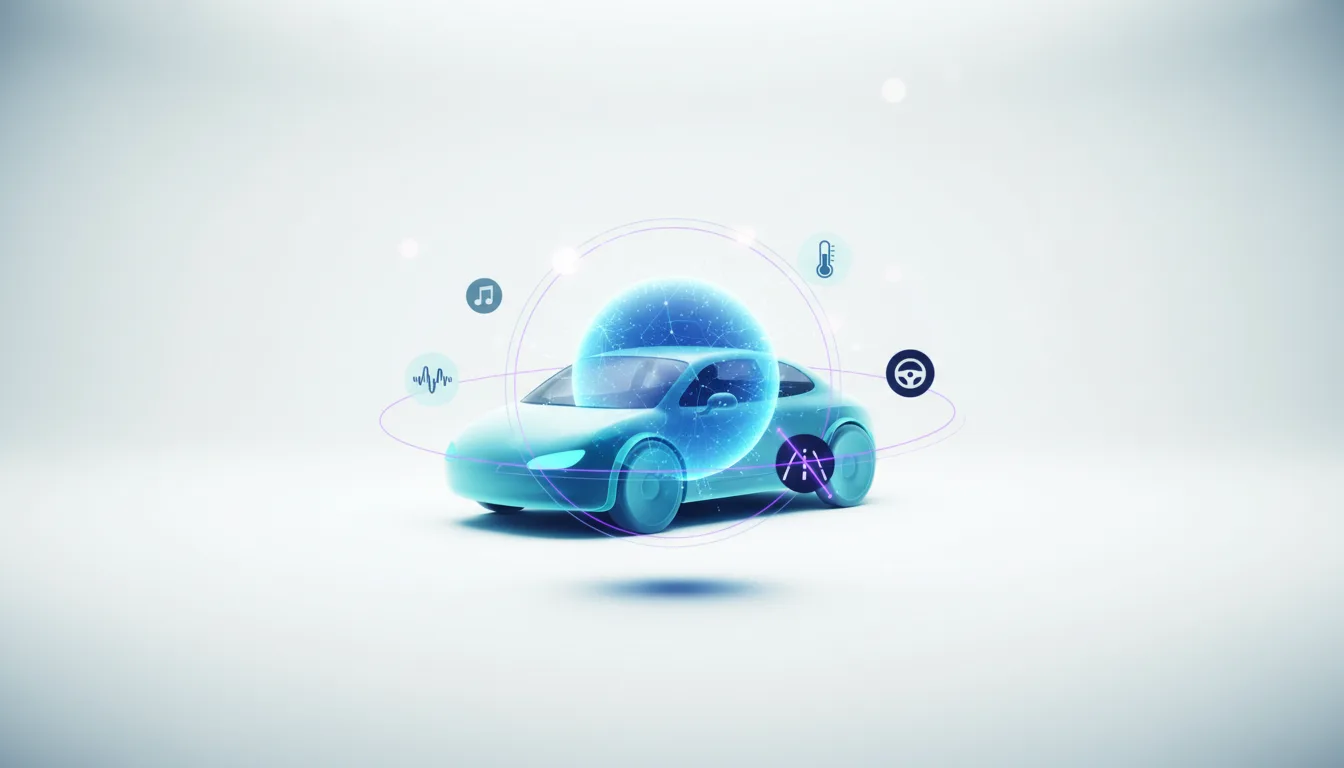
- Summary: Alphabet’s Waymo is weaving in a tailored version of Google’s Gemini large language model as a voice-activated helper right inside its robotaxis. From what folks have pieced together by reverse-engineering the Waymo One app’s code, this setup is still in the early internal testing phase. It lets passengers tweak things like music playlists or the cabin temperature, or even poke around with questions about what’s nearby.
- What happened: No big fanfare or press release here—the discovery came from sharp-eyed journalists and researchers who spotted a whopping 1,200-line system prompt buried in the app’s code. That prompt lays out, in painstaking detail, exactly what the AI can handle and—crucially—what it’s strictly barred from touching. It’s locked down tight in that sandbox, with zero access to driving controls, route changes, window adjustments, or anything emergency-related.
- Why it matters now: We’re seeing a real pivot in how these large language models get rolled out. Shifting them from flat screens into something as tangible and autonomous as a moving vehicle demands a fresh take on safety and earning people’s faith. Waymo’s method, with all those built-in, unyielding guardrails, offers up a clear, real-life example of doing AI right—one that could guide everything from robotics to smart home gadgets and beyond.
- Who is most affected: Waymo’s passengers stand to gain the most hands-on, with a smoother way to navigate their rides. But let’s be real, the bigger ripple hits the whole tech world: rivals in self-driving like Cruise, teams tweaking consumer AIs such as Apple’s Siri or Amazon’s Alexa, and even the regulators watching closely. Now they’ve got a solid, working model of putting safety-first LLMs into something people actually use every day.
- The under-reported angle: Coverage so far has zeroed in on that sandboxed rider assistant, but it’s overlooking Waymo’s split approach to Gemini. Sure, the chatty side for passengers is all locked down. Yet they’re leveraging much beefier, offline versions of Gemini to sharpen their driving models, tackling those tricky, once-in-a-blue-moon scenarios. It’s a smart, dual-path play—same AI backbone, but dialed way back for rider chit-chat versus full-throttle for the car’s smarts—and it highlights how risk levels can swing wildly based on the job.
Deep Dive
Ever feel like the most intriguing tech stories are the ones that sneak up on you, hidden in lines of code rather than headlines? Waymo’s rollout of this Gemini-driven assistant isn’t really about handing riders a bunch of new tricks—it’s more about nailing down the boundaries of what AI gets to call the shots on. Drawing from that insightful TechCrunch breakdown, the uncovered system prompt essentially wraps the LLM in a set of ironclad rules, like a digital leash you wouldn’t want to test. The AI’s free to fiddle with tunes, tweak the AC, or share fun facts on nearby spots. But steer the car? Alter the path? Crack a window or jump into a crisis? Not a chance—that’s by design, front and center.
From what I’ve seen in these kinds of deployments, this “architecture of trust” tackles one of the biggest hurdles in getting folks comfortable with driverless rides: that nagging worry in the back of your mind. Waymo’s making those limits crystal clear, which could go a long way in easing doubts and building a sense of security. Think of the AI as your polite hotel concierge—there to smooth the edges of your stay, not to take the wheel. Experts in the field are calling it a savvy touch for user experience and branding, turning what could be just another perk into a quiet nod to Waymo’s commitment to safety above all. And that prompt? Clocking in at about 1,200 lines, it shows the real grind involved in reining in a beast of an LLM for something as grounded and unpredictable as a car ride—plenty of reasons to appreciate the effort, really.
That said, the quieter part of this tale is how it stacks up against Waymo’s deeper reliance on Gemini elsewhere. In their own recent blog, they spelled out using Gemini’s sharp “world knowledge and reasoning” to fine-tune the actual driving brain, prepping it for those wild-card moments on the road. So here’s the clever split: crank up the full-powered Gemini in the backend to make the vehicle wiser, but serve up a toned-down edition up front to keep passengers company. These are two distinct pipelines—the driving core stays worlds apart from the rider’s side—which matters a ton for anyone keeping an eye on oversight or public buy-in.
All in all, this setup hands Google a goldmine of insights on how people vibe with AI in a hands-on, moving environment. Those takeaways? They’ll surely shape what’s next for Google Assistant, Android Auto, you name it, in our increasingly connected spaces. Right now, it’s a deliberate, low-key trial, but it hints at AI interfaces evolving past pixels into the real, touchable world—one where the rules might need to feel as unyielding as gravity itself.
Stakeholders & Impact
| Stakeholder / Aspect | Impact | Insight |
|---|---|---|
| AI / LLM Providers (Google) | High | It’s like a live-fire exercise for Gemini in the wild—testing how well it holds up under real pressure, with those safety nets in place and patterns of how humans engage beyond just typing on a screen. |
| Waymo (AV Operator) | High | This could be their secret sauce for standing out, blending helpful tweaks in a way that’s all about limits to foster trust—potentially making rides more enjoyable while cutting down on those pesky customer service calls. |
| Riders & Passengers | Medium | Sure, it’s a nice boost for fiddling with onboard stuff or getting quick local info, but at its core, it’s easing folks into chatting with a car that drives itself—safe, straightforward, and without surprises. |
| Regulators & Policy | Significant | They get a blueprint here for AI that’s boxed in transparently within high-risk setups, something that could influence upcoming rules from bodies like the NHTSA on how open and accountable these systems need to be. |
About the analysis
Researched and written with AI assistance under the editorial responsibility of the i10X News team. The title image is an AI-generated illustration. Read our AI Use Policy. Spotted an error? Request a correction.
This piece pulls together an independent take from i10x, weaving in bits from sharp tech reporting, code that’s been unpacked, and straight-from-the-source company updates. It’s geared toward AI builders, product folks at the helm, and those plotting big-picture strategies—anyone curious about what it really takes to slot large language models into tangible, moving-world applications.
i10x Perspective
I’ve always thought that the smartest tech moves aren’t the loud ones—they’re the ones that quietly redefine the rules of the game. Waymo’s Gemini assistant? It’s no mere add-on; it’s a bold statement. It whispers that our future with AI won’t be about pushing limits endlessly, but about carving out—and owning—where those limits absolutely must lie. Suddenly, the conversation shifts from marveling at AI’s tricks to grappling with its necessary pauses.
And that pressure? It’s rippling out fast. As outfits like OpenAI charge toward something like AGI, Google’s showing a practical roadmap for rolling out intelligence that’s reined in just enough to win over skeptics in the physical realm. But here’s the lingering question, the one that keeps me up at night: will we, hooked on the no-holds-barred feel of something like ChatGPT, embrace these built-in brakes? Or will the itch for more power chip away at the safeguards meant to protect us? Whatever shakes out from this Waymo trial, it’ll echo through every gadget we touch—from dashboards to smart fridges—reminding us that trust isn’t given; it’s engineered, one careful step at a time.