
Anthropic’s Push to Tighten AI Chip Export Controls
⚡ Quick Take
Anthropic’s push to tighten US export controls on AI chips isn’t just about stopping hardware from leaving the country. It’s a deeper attempt to reshape how cloud providers manage and restrict access to advanced compute around the world.
The company is urging the Commerce Department to add new rules around interconnects and to require stricter hardware-level monitoring for anyone renting high-end GPU clusters. Physical shipment bans have already shown their limits, after all, since it’s fairly straightforward for determined players to work around them by booking time on clouds through various intermediaries. That shifts the real pressure onto the big providers who actually run the racks.
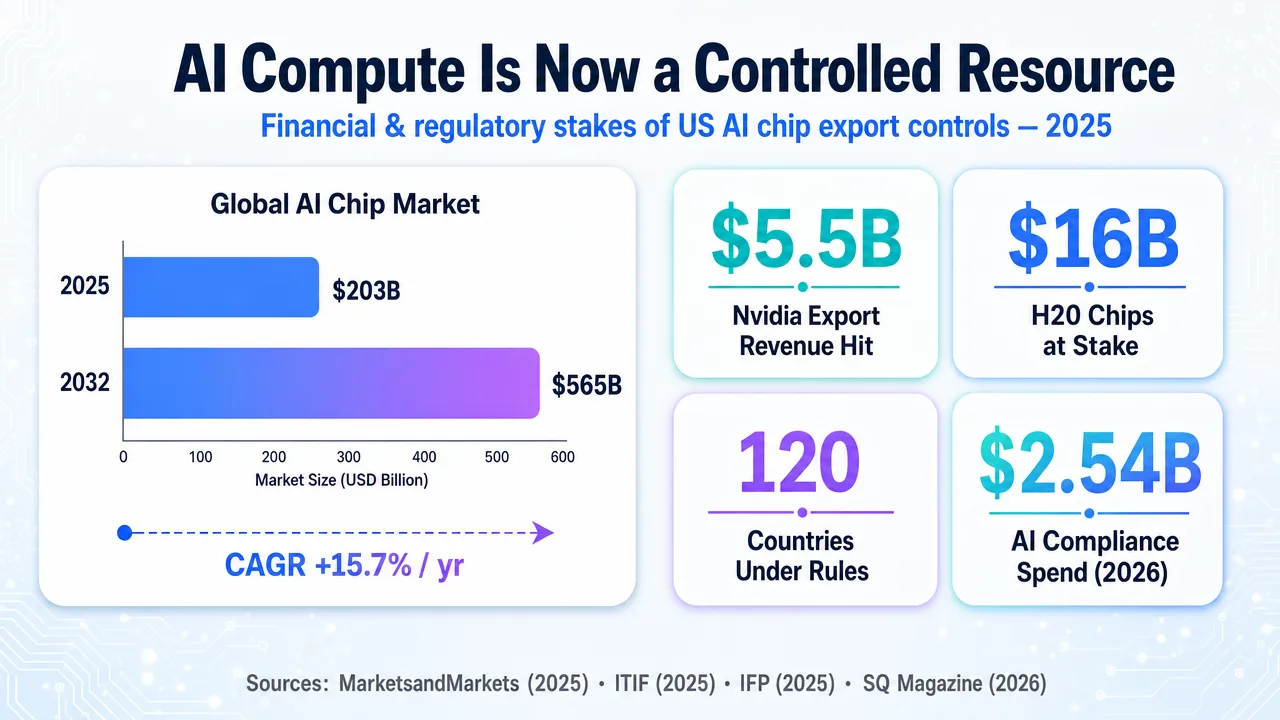
Nvidia, AMD, and the major hyperscalers would feel this first, along with any AI team trying to secure enough compute without extra layers of scrutiny. The less-discussed part is Anthropic’s focus on networking bandwidth rather than raw chip performance. Without fast links like NVLink or InfiniBand, even a pile of restricted chips struggles to train truly frontier models.
🧠 Deep Dive
While headlines fixate on the politics of the moment, Anthropic is making a more technical case in Washington. Export controls based on individual chip specs are starting to look outdated. The lab wants its own Responsible Scaling Policy turned into something regulators enforce, since the real barrier for adversaries is no longer sneaking chips across borders. They can simply rent capacity inside existing US data centers.
The current rules force companies like Nvidia to ship downgraded versions such as the H800. Those still get used, though, because the actual limit on scaling large models often sits in how quickly the GPUs can talk to each other. Anthropic’s suggestion therefore zeroes in on interconnect speed, arguing that clusters without high-bandwidth networking simply can’t deliver the performance needed for next-generation training.
The sharper proposal involves forcing cloud providers to add tamper-resistant logging and identity checks before they hand out serious compute. That would place the compliance burden squarely on AWS, Azure, and Google Cloud. It sounds workable until you consider the added cost and friction for every bare-metal rental. Some labs see this as necessary to keep powerful systems out of the wrong hands. Infrastructure companies, by contrast, stand to lose revenue or watch demand drift toward data centers that sit outside these new restrictions. Without broader agreements among allies, the market could splinter into separate spheres, each with its own rules and workarounds.
📊 Stakeholders & Impact
- AI / LLM Developers — Medium: The divide grows between labs willing to accept heavy oversight and those that move training to jurisdictions with fewer strings attached.
- Cloud Hyperscalers — High: Providers would inherit most of the new compliance work, including identity verification steps that currently feel foreign to simple instance rentals.
- Chip Vendors (Nvidia, AMD) — High: Ongoing redesigns of SKUs become the norm as bandwidth and aggregate performance rules keep shifting.
- Regulators & Policy Makers — Significant: Enforcement moves from tracking physical shipments to reviewing digital access logs, a change in both tools and expertise required.
✍️ About the analysis
Researched and written with AI assistance under the editorial responsibility of the i10X News team. The title image is an AI-generated illustration. Read our AI Use Policy. Spotted an error? Request a correction.
This independent review draws on trade reports, hardware constraints, and current thinking around AI safety. It is meant for readers who track how infrastructure decisions and policy choices interact in real time.
🔭 i10x Perspective
The idea of freely available cloud compute across borders is fading. As models gain strategic importance, access itself is becoming a controlled resource. Anthropic’s effort hints at a longer shift in which hardware telemetry and usage rules sit much closer to foreign policy decisions. The practical result, from what I can tell, is a clearer split between heavily monitored networks and the less visible corners of the ecosystem, pushing more development toward regional clouds that operate on different terms.