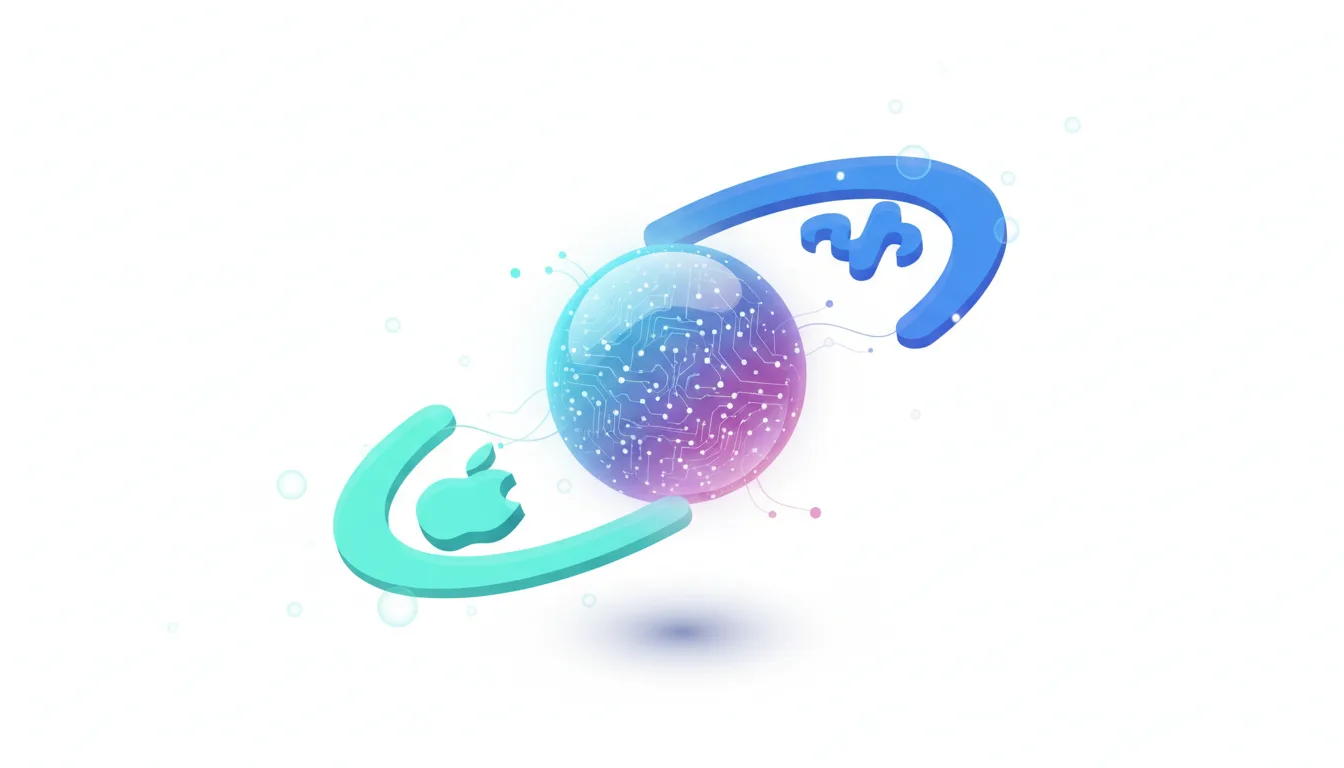
Apple’s highly anticipated AI strategy isn’t a solo act—it’s a landmark partnership with Google. After reportedly evaluating Anthropic and OpenAI, Apple is integrating external AI to supercharge Siri, signaling a pragmatic shift that balances its on-device silicon ambitions with the immediate need for world-class, cloud-scale intelligence. This hybrid approach is a calculated bet on managing privacy, performance, and platform control.
Quick Take
- Summary: : From what I’ve seen in these evolving tech landscapes, Apple is finalizing a partnership to integrate Google’s AI technology, likely from the Gemini family, into its next-generation operating systems to power a revamped Siri. This decision follows a comprehensive evaluation where Apple also considered models from Anthropic and OpenAI, marking a pivotal moment in the company’s AI strategy.
- What happened: : Instead of solely relying on its internal AI models, Apple has chosen to license a foundational model from a direct competitor. The integration will likely create a hybrid system, where on-device processing handles simpler tasks to preserve privacy, while more complex queries are offloaded to Google’s cloud infrastructure – a move that feels like weighing the upsides against the risks right from the start.
- Why it matters now: : Have you ever wondered how even the biggest players have to adapt in this fast-moving AI world? This move fundamentally reshapes the AI assistant landscape. It confirms that even a tech giant like Apple cannot afford to fall behind in the large-model race and must lean on external expertise. It also creates a fascinating “frenemy” dynamic, tying Apple’s core user experience to Google’s AI engine, raising significant questions about data governance, branding, and antitrust scrutiny – plenty of layers to unpack there.
- Who is most affected: : Apple users will see the most significant change in Siri’s capabilities, which could make daily interactions feel that much smoother. Developers will need to adapt to a new SiriKit ecosystem. For AI providers, this is a massive commercial and strategic win for Google and a notable miss for OpenAI and Anthropic in gaining a foothold across billions of Apple devices.
- The under-reported angle: : The decision wasn’t just a model-vs-model benchmark, no. It was an architectural choice, really. The real story lies in the trade-offs between latency, global-scale reliability, cost, and the technical feasibility of a hybrid on-device/cloud system that aligns with Apple’s stringent privacy principles. Apple isn’t just buying a model; it’s buying an infrastructure solution that its own on-device silicon can’t yet deliver alone – and that’s the part that keeps things interesting.
Deep Dive
Ever feel like the tech world is full of these plot twists that make you rethink everything? Apple’s move to partner with Google for its AI reboot is a masterclass in strategic pragmatism, that’s for sure. While the company has invested heavily in its on-device Neural Processing Units (NPUs) within its Apple Silicon, the sheer scale and capability of today’s frontier models like Gemini require massive, centralized cloud infrastructure. Reports that Apple also vetted Anthropic’s Claude and OpenAI’s GPT models underscore a rigorous search not for the “best” model in a vacuum, but for the best partner to execute a very specific, privacy-centric hybrid architecture. This decision concedes that for now, the path to a competitive Siri runs through a competitor’s data centers – a concession that I’ve noticed shifts the whole narrative.
The core of this strategy likely lies in a sophisticated, multi-tiered system, one that treads carefully between local and remote processing. Simple, low-latency tasks—setting a timer, sending a text, or answering a quick fact—will be handled by Apple’s on-device models, leveraging its powerful silicon for maximum privacy and efficiency. This aligns with Apple’s long-standing marketing, you know, that whole “what happens on your device stays there” vibe. However, when a user asks a complex, multi-step, or generative question, the query will be securely passed to Google’s cloud for processing. The details of this data handoff, including anonymization and user consent, will be the most critical and scrutinized aspect of the partnership – and rightly so, given the stakes.
This hybrid model presents both immense opportunity and significant risk, almost like walking a tightrope. For developers, a more capable Siri could finally unlock the full potential of SiriKit and App Intents, allowing for richer, more conversational interactions within their apps. But here’s the thing: the lack of clarity on new APIs or how developers can optimize for a dual on-device/cloud environment creates uncertainty. Will developers need to build for two different AI brains? The success of this new ecosystem hinges on Apple providing a seamless abstraction layer that makes this complexity invisible to both builders and users – or at least, that’s the hope.
From a market perspective, this tie-up is bound to attract regulatory attention, especially in regions like the EU, where the Digital Markets Act (DMA) is already scrutinizing “gatekeeper” partnerships. By embedding Google’s intelligence deeply into the iPhone, Apple is creating a new dependency that could be viewed as anti-competitive. The financial terms—whether a revenue-sharing agreement or a straightforward licensing fee—remain one of the most intriguing unknowns and will define the long-term power dynamic between these two tech titans, leaving us to wonder how it all plays out.
Stakeholders & Impact
| Stakeholder / Aspect | Impact | Insight |
|---|---|---|
| Apple | High | Secures immediate access to a world-class AI model, accelerating Siri’s capabilities. However, it creates a strategic dependency on a key rival and complicates its privacy narrative – a bit of a double-edged sword, really. |
| Google (AI Provider) | High | A monumental distribution win, placing its AI in front of billions of high-value users. It cements Gemini as a primary competitor to OpenAI’s models at the platform level. |
| App Developers | Medium–High | A potentially more powerful SiriKit could unlock new app experiences. However, they face uncertainty regarding new APIs, testing, and optimizing for a hybrid AI architecture – the kind of pivot that demands quick adaptation. |
| Regulators | Significant | The partnership between two of the world’s largest tech companies will face intense antitrust scrutiny, particularly regarding competition, data sharing, and gatekeeper status under laws like the EU’s DMA. |
| Users | High | Stand to gain a vastly more intelligent and useful Siri. They will also face new considerations around data privacy, consent, and how their information is handled between Apple’s on-device and Google’s cloud systems – trust will be key here. |
About the analysis
Researched and written with AI assistance under the editorial responsibility of the i10X News team. The title image is an AI-generated illustration. Read our AI Use Policy. Spotted an error? Request a correction.
This is an independent analysis by i10x based on public reports and our internal research on AI ecosystems, infrastructure, and developer platforms. It is written for developers, engineering managers, and product leaders who need to understand the strategic implications of major shifts in the AI landscape – the sort of insights that help navigate these changes thoughtfully.
i10x Perspective
What does it say about the AI race when even Apple has to team up? Apple’s decision to partner with Google represents a critical inflection point: pragmatism is officially eclipsing ideology. For years, Apple has championed the virtues of vertical integration and on-device processing. Now, it acknowledges that the bleeding edge of intelligence infrastructure is, for the moment, a game played by hyperscalers – I’ve always admired that kind of honest pivot.
This creates a tense but symbiotic relationship, turning a hardware and software rival into an intelligence provider. The most significant unresolved question is whether Apple can successfully “borrow” Google’s AI brain without compromising its own soul—the unwavering brand promise of user privacy. This hybrid strategy is a high-wire act, and its success or failure will define the next decade of personal computing and the very meaning of an “Apple experience” – something worth watching closely.