Greg Brockman’s recent praise for OpenAI’s foundational but now-deprecated Codex model isn’t just nostalgia; it’s a signal that the AI industry is moving beyond mere code completion. His focus on “project ambition” and “complex task management” reframes the entire AI coding narrative, highlighting the shift from simple “pair programmers” to sophisticated “agentic co-pilots” that can orchestrate entire software projects. While Codex is a piece of AI history, its conceptual DNA defines the current race to build autonomous software engineering systems.
Quick Take
- Summary: Have you ever paused to think how a single AI model could spark such a massive shift in how we build software? OpenAI President Greg Brockman’s reflection on Codex—the model that first powered GitHub Copilot—highlights its pioneering role in letting developers tackle more ambitious projects. This look back serves as a lens for understanding the evolution of AI coding assistants, which are rapidly moving from generating code snippets to managing complex, multi-step software development workflows. From what I’ve seen in the field, it’s a reminder that today’s tools are carrying forward those early promises in ways we couldn’t have fully imagined back then.
- What happened: In public comments, Brockman lauded Codex’s ability to help manage complexity, effectively boosting the ambition of what developers could build. This brought attention back to a foundational AI model that has since been succeeded by more powerful systems like the GPT-4 series, which now underpin tools like GitHub Copilot. But here’s the thing – it wasn’t just about the tech; it was about changing how we approach the bigger picture of coding.
- Why it matters now: This perspective validates a crucial market shift. The value of AI in software is no longer just about autocompleting boilerplate code. It’s about AI’s capacity for planning, task decomposition, and execution – the core components of agentic workflows. Brockman is articulating a vision that Codex hinted at but only today’s models are beginning to realize. Weighing the upsides here, it’s clear we’re on the cusp of something transformative, one that redefines productivity in subtle but profound ways.
- Who is most affected: Developers, engineering managers, and CTOs. They must now evaluate AI tools not just for developer productivity (time saved on typing) but for strategic leverage (ability to prototype, test, and deploy entire features with AI oversight). This changes team structures, project planning, and the very definition of a software development lifecycle. Plenty of reasons to rethink those processes, really – and it’s happening faster than most might expect.
- The under-reported angle: Most analyses treat Codex as a historical artifact or confuse it with the current Copilot. The critical story is its conceptual lineage. The initial promise of Codex wasn’t just to write code faster, but to think about code in a structured way. This dream has evolved into the current race for agentic software development, where the goal is no longer just assisting a human but autonomously executing tasks on their behalf. It’s that evolution that keeps me coming back to these milestones – they show how far we’ve come, yet how much ground remains.
Deep Dive
Ever wondered what it would feel like if your coding assistant could handle the whole project, not just the bits and pieces? Greg Brockman’s praise for OpenAI Codex’s role in enabling “more ambitious projects” serves as a powerful waypoint in the evolution of AI for software engineering – one that ties the past to where we’re headed now. Codex, launched in 2021, was the breakthrough system that translated natural language into code, famously powering the first version of GitHub Copilot. It functioned as an exceptional “pair programmer,” adept at generating functions, completing lines, and translating between languages. It proved that large language models could fundamentally accelerate the act of writing code – and in my experience observing these tools roll out, that acceleration felt like a game-changer from day one.
That said, the technology has moved on. While revolutionary, Codex itself has been largely deprecated and superseded by more powerful and generalist models like GPT-4. One of the key content gaps in public understanding is the assumption that Codex is still the engine running the show. In reality, today’s leading AI coding tools leverage models that possess superior reasoning and planning capabilities, making them far more capable than the original. The migration from the specialized Codex to general-purpose powerhouses marks a pivotal, yet often overlooked, transition in AI infrastructure. It’s easy to get lost in the hype of the new stuff, but overlooking this shift means missing the full story.
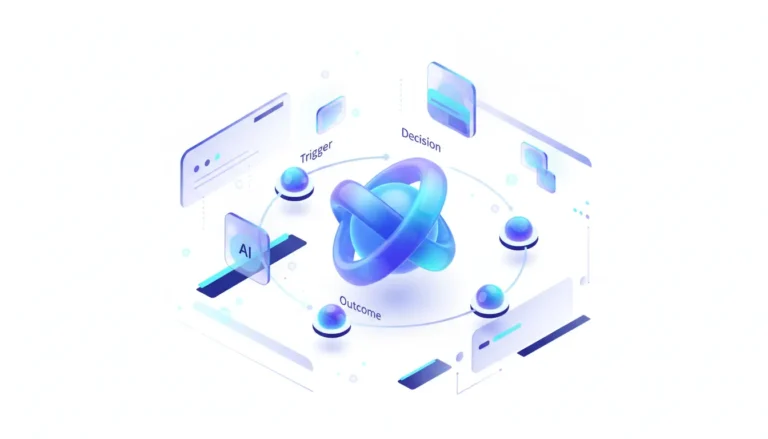
This evolution bridges Brockman’s abstract notion of “tackling complexity” with the concrete, modern concept of agentic workflows. Where Codex could take a prompt and generate a self-contained code block, today’s systems are tasked with higher-order goals: “build a user authentication service with a React front-end,” or “write unit tests for this entire module and integrate them into the CI pipeline.” This requires the AI to perform task decomposition, generate a plan, write multiple files, execute tests, and even self-correct based on errors – a workflow far beyond simple code generation. Tread carefully here, though; it’s not all smooth sailing yet.
This represents a paradigm shift from a “pair programmer” to a “project co-pilot.” The former saves keystrokes; the latter helps manage cognitive load and project execution. This is the transformation the market is now experiencing. Startups and tech leaders are no longer just asking “Can AI write this function for me?” They are asking, “Can AI help me architect, build, and validate this entire feature?” This shift puts pressure on all AI model providers to demonstrate not just coding proficiency (like the pass@k benchmark for code generation) but true planning and tool-use capabilities. And as someone who’s followed these developments closely, I can’t help but see how this pressure is pushing the boundaries in unexpected directions.
As AI graduates from an assistant to an agent, it drags a new set of challenges into the spotlight. Security, IP governance, and supply chain integrity become paramount. When an AI agent can independently select and install dependencies, handle API keys, or write code that interacts with sensitive data, the risk surface expands dramatically. The next frontier for AI coding platforms isn’t just about building more ambitious software, but about doing so safely, securely, and in compliance with enterprise-grade policies. It’s a balancing act, one that leaves you pondering the trade-offs long after the excitement fades.
Stakeholders & Impact
The evolution from simple code completion to agentic software development impacts the entire technology stack – and it’s worth taking a moment to see who feels it most.
| Stakeholder / Aspect | Impact | Insight |
|---|---|---|
| Developers & Eng. Leads | High | The role shifts from pure code authoring to AI-assisted system design, prompt engineering, and output validation – a change that’s both empowering and a bit daunting at first. |
| Enterprise & CTOs | High | AI coding assistants are evolving from tactical productivity tools into strategic platforms for autonomous software delivery, reshaping how teams scale up (or down). |
| AI Model Providers | Significant | The benchmark for a “great” code model is no longer just code generation accuracy but its ability to reason, plan, and use tools – plenty of room for innovation there, really. |
| Security & Compliance Teams | Growing | Agentic code generation introduces new risks in dependency management, secrets handling, and code provenance/licensing, demanding a fresh look at safeguards. |
About the analysis
Researched and written with AI assistance under the editorial responsibility of the i10X News team. The title image is an AI-generated illustration. Read our AI Use Policy. Spotted an error? Request a correction.
This analysis draws from an independent i10x viewpoint, pulling together insights from historical product announcements, technical documentation, and the latest trends in agentic AI. It’s crafted with developers, engineering managers, and CTOs in mind – folks like you who are right in the thick of shifting from AI-assisted coding to something more like AI-driven development. Think of it as a conversation starter for those late-night strategy sessions.
i10x Perspective
What if Greg Brockman’s nod to Codex isn’t really about looking back, but setting the stage for what’s next? His comment about Codex is less a statement about the past and more a benchmark for the future. Codex was the “Model T” of AI coding – it made the concept tangible and accessible, proving that natural language could be a viable interface for software creation. We are now leaving that era behind and entering one defined by autonomous agents that don’t just write code, but build systems. I’ve noticed how this progression echoes broader patterns in tech evolution – simple starts leading to complex realities.
The next major battleground for OpenAI, Anthropic, and Google will be fought over which platform can provide the most reliable “agentic co-pilot.” The core unresolved tension remains one of trust and control. Can an AI be trusted to not just suggest a line of code, but to manage a project’s architecture, security, and deployment? The transition from “pair programmer” to “AI project lead” is where the greatest opportunities – and most profound risks – for the future of intelligence infrastructure lie. It’s that tension that keeps the field so alive with possibility.
The transition from “pair programmer” to “AI project lead” will define how organizations balance ambition with governance as agentic systems mature.