A nascent term, “OpenClaw,” has surfaced in discussions with key figures from OpenAI’s developer ecosystem, signaling a potential new tool or strategic direction for builders on the platform. While official details are non-existent, the context points to a new developer-focused initiative designed to address workflow and product strategy challenges.
Quick Take
- Summary: The term “OpenClaw” is gaining traction after being highlighted in a public discussion featuring product expert Peter Steinberger, shared by OpenAI’s Head of Developer Relations, Romain Huet. With no official announcement, the market is currently in an information vacuum, trying to decipher what OpenClaw is and how it relates to OpenAI’s existing stack.
- What happened: Conversations among influential AI builders and OpenAI insiders have introduced the “OpenClaw” concept. Lacking a formal definition, it’s currently understood only through the lens of these expert dialogues, which frame it as a forward-looking element in the AI development landscape. From what I’ve seen in these circles, it’s the kind of hint that keeps everyone on their toes.
- Why it matters now: Ever wonder how the smallest signals can shift the entire game in AI? The AI platform war is increasingly fought over developer experience and ecosystem loyalty. A new tool or framework from OpenAI, even one floated unofficially, could reshape how developers build applications, potentially competing with or complementing incumbent tools like LangChain and LlamaIndex. Early signals like this are critical for developers and strategists planning their roadmaps – plenty of reasons to pay attention right now.
- Who is most affected: If you’re knee-deep in AI projects, this might hit close to home. AI developers, product managers, and founders building on the OpenAI platform are the primary audience. The emergence of OpenClaw could influence their choice of tools, architectural patterns, and integration strategies for future AI-powered products.
- The under-reported angle: But here’s the thing – beyond simple curiosity, the appearance of “OpenClaw” reveals a strategic move by OpenAI. Floating a concept through influential community members before a formal launch allows them to gauge developer interest and shape the narrative early. It points to a deeper strategy focused on winning the developer workflow, not just providing API access to models, and that feels like a smart play in the long run.
Deep Dive
What if a single word could hint at the next big thing in AI tools? In the high-velocity world of AI development, even whispers can signal tectonic shifts. The latest is “OpenClaw,” a term that has bubbled up from conversations involving OpenAI’s developer leadership, creating a ripple of intrigue without a single line of official documentation. The primary signal originated from a discussion with PSPDFKit founder Peter Steinberger, amplified by OpenAI’s own Romain Huet, immediately positioning it as a concept developers should track. But with no official landing page or GitHub repo, what is it, really?
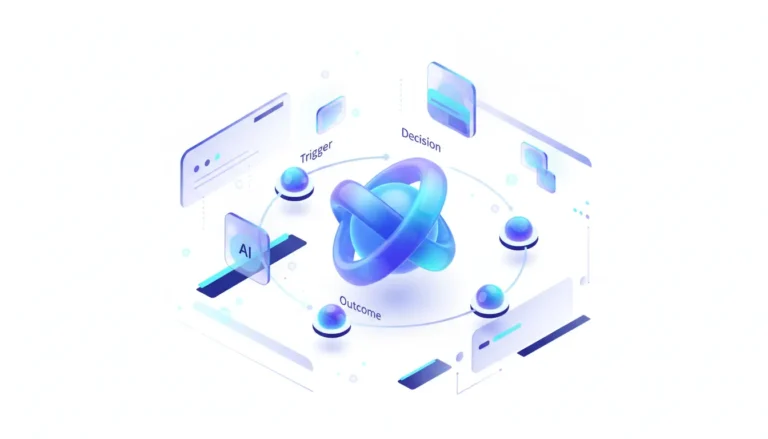
That said, the current information vacuum strongly suggests OpenClaw is not a product, but a pre-launch concept or internal codename being socialized within the developer community. The involvement of OpenAI’s Head of Developer Relations is the key clue: this is about the developer experience, no doubt. Analysis of the surrounding conversation points toward a framework or philosophy for building more robust, manageable AI applications. The name itself – “Claw” – evokes ideas of grabbing, holding, or manipulating data or processes, hinting at a potential solution for orchestration, agentic control, or complex workflow management, all significant pain points for developers building beyond simple API calls. I’ve noticed how these kinds of metaphors often stick because they capture the frustration of wrangling AI systems.
This “soft launch” strategy highlights a critical tension for platform leaders like OpenAI. While their closed, powerful models provide the core value, they must compete for developer loyalty against an increasingly sophisticated ecosystem of open-source tools. By seeding a concept like OpenClaw, OpenAI may be testing the waters for a more opinionated, first-party framework – weighing the upsides of control against the risks of pushback. This could be an attempt to provide a “golden path” for building on their platform, ensuring stickiness and reducing reliance on third-party orchestration libraries, though it’s still early days.
For developers and product teams, OpenClaw represents a strategic unknown. Will it be an open-source library that complements existing tools? Or will it be a proprietary component of the OpenAI platform, creating a new dependency? The answer will reveal much about OpenAI’s long-term vision for its ecosystem: an open garden that welcomes all tools, or a walled garden that offers a seamless, integrated – but less flexible – experience. Watching how this concept matures from a talking point to a tangible tool is essential for anyone betting their product on the OpenAI stack; it could change everything, or nothing at all.
Stakeholders & Impact
| Stakeholder / Aspect | Impact | Insight |
|---|---|---|
| AI Developers & Builders | High | A potential new framework to learn that could either simplify complex workflows or introduce new lock-in. Its design will directly affect application architecture – and that’s where the real decisions come in. |
| OpenAI | High | Signals a strategic move to capture more of the developer value chain, moving beyond the model API to influence the entire application lifecycle. |
| AI Tooling Ecosystem (e.g., LangChain) | Significant | A first-party “Claw” from OpenAI could be a major competitor to existing orchestration and agent frameworks, forcing them to adapt or focus on multi-platform support, which might shake things up more than expected. |
| Enterprises | Medium | If OpenClaw matures into an enterprise-grade solution for AI orchestration and governance, it could become a critical component for deploying reliable AI systems at scale. |
About the analysis
Researched and written with AI assistance under the editorial responsibility of the i10X News team. The title image is an AI-generated illustration. Read our AI Use Policy. Spotted an error? Request a correction.
This article is an independent i10x analysis based on public signals, emerging discussions within the AI developer community, and the professional context of the individuals involved. It is written for developers, product managers, and technology strategists seeking to understand the trajectory of OpenAI’s developer platform and the broader AI tooling landscape – in other words, for those who need to stay a step ahead.
i10x Perspective
Have you ever seen a company play the long game so subtly? The unofficial emergence of “OpenClaw” is a masterclass in modern platform strategy, using community dialogue as a distributed focus group. It demonstrates that the next phase of AI competition isn’t just about model performance, but about owning the developer’s end-to-end workflow, from conception to production – and that shift feels inevitable.
This move forces a crucial question upon the ecosystem: will OpenAI’s future be defined by providing foundational intelligence for others to build upon freely, or by delivering a fully integrated, opinionated stack that guides developers down a single path? Whether OpenClaw becomes a core product or fades away, its appearance signals that the battle for the AI developer is intensifying, and control over the tools is the ultimate prize, one worth keeping an eye on as things unfold.