LLM Router: The Critical Layer in Enterprise AI Infrastructure
⚡ Quick Take
The era of treating LLM APIs like standard microservices is over. As enterprise AI moves into production, the LLM Router has quietly become the most critical - and fragmented - layer in the intelligence infrastructure stack.
Summary
The AI infrastructure market is converging fast on the LLM Router as a way to scale generative AI. Yet instead of one clean solution, the space has split into two battlegrounds: infrastructure-level routers focused on GPU utilization, and application-level gateways that juggle provider costs and failovers.
What happened
A wave of specialized routing tools has appeared across the stack. Frameworks like vLLM, SGLang, and Ray Serve are adding KV-cache-aware load balancers right at the compute layer, while platforms such as Cloudflare AI Gateway, OpenRouter, and RouteLLM handle the application side with cost-aware traffic management and multi-provider support.
Why it matters now
Production LLMs run into bottlenecks that standard tools were never built for - token streaming stalls, huge stateful KV caches, and unpredictable rate limits from providers. Regular HTTP load balancers simply cannot keep up. The choice of router now decides whether a team can hold p99 latencies steady, recover from GPU failures, or keep inference costs from spiraling.
Who is most affected
Platform engineers, SREs, and MLOps teams carry the load of designing these systems. At the same time, foundational model providers like OpenAI, Google, and Anthropic feel the pressure, since smart routers can shift traffic to cheaper alternatives based on live cost and latency data.
The under-reported angle
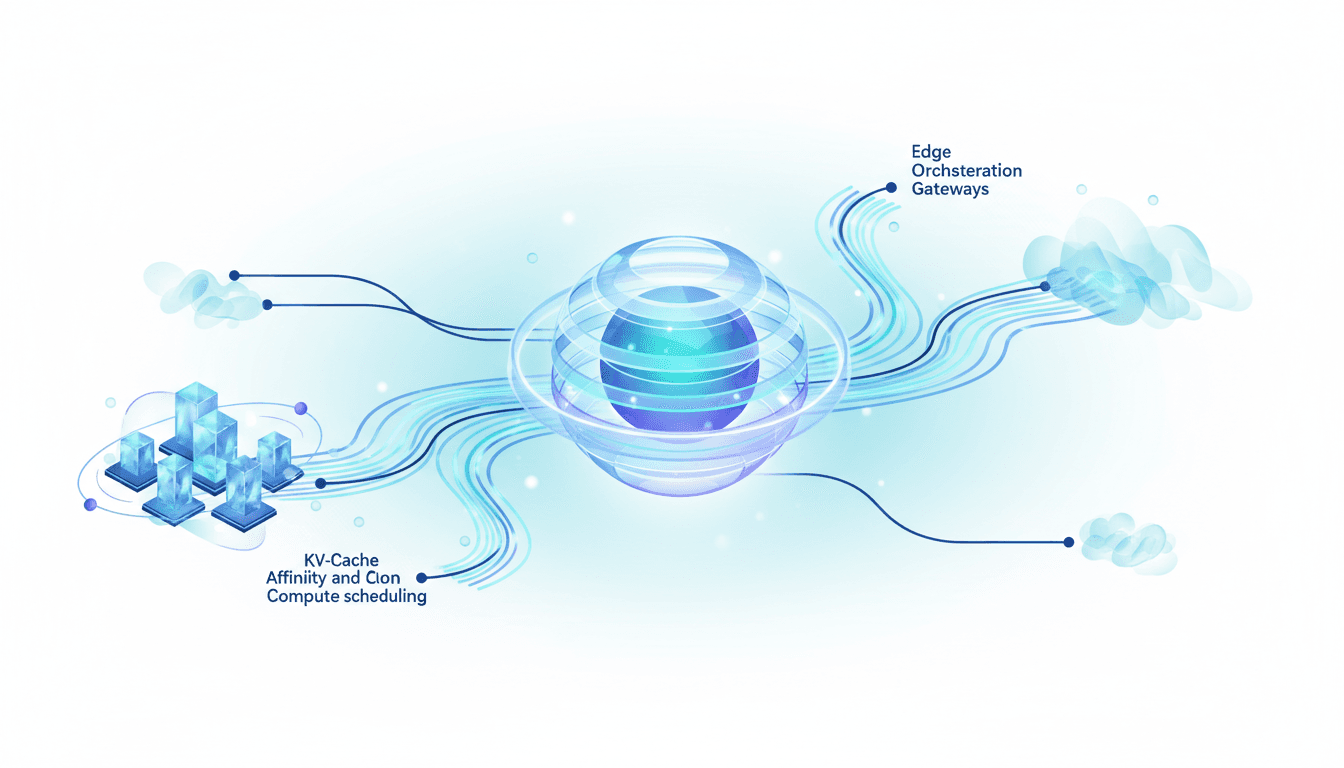
Most coverage lumps all LLM routing together, but the architectural gap is wide. For teams running self-hosted models, the missing piece is often KV cache affinity - basically sticky sessions for AI - which cuts latency by sending follow-ups to the GPU that already holds the conversation context.
🧠 Deep Dive
Have you ever tried routing traffic for a system that remembers every previous token? That is the reality teams now face. Traditional load balancers like NGINX or Envoy were designed for stateless HTTP requests, but LLM inference is stateful, unpredictable in duration, and tied to continuous token streaming. The result is a specialized LLM Router layer that still feels split between two very different worlds.
At the infrastructure layer, the focus is hardware efficiency. Tools like Ray Serve, vLLM, SGLang, and NVIDIA's Cloud Functions place routing logic close to the GPUs. The challenges here are physical - memory and scheduling. These routers use KV cache-aware scheduling, a form of AI sticky sessions. When a follow-up prompt arrives, the system checks which GPU already holds the prior context and routes there to avoid recomputing. Documentation tends to emphasize tensor parallelism and backpressure, treating the router more as a compute scheduler than a network gateway.
At the application and edge layers, the priorities shift to cost and reliability. Cloudflare AI Gateway, OpenRouter, and LangChain treat models as interchangeable. They route based on query complexity, apply cost-aware fallbacks, and hedge requests to hide outages. RouteLLM pushes this further by learning which model meets quality rules at the lowest price, essentially running live tests across providers.
A clear gap remains between these layers. Platform teams struggle to create one reference architecture that covers both. Vendors highlight failover or batch throughput, yet standardized observability is missing. The field needs OpenTelemetry schemas built for LLM routers - metrics for queue backpressure, streaming stalls, and dropped requests - so teams can set realistic error budgets and SLAs.
In practice, shipping a resilient AI product now means running a sophisticated traffic system. That includes canary-shadowing model updates and adding chaos testing across clouds. The LLM router has become the piece that separates early experiments from production-grade systems.
📊 Stakeholders & Impact
Stakeholder / Aspect | Impact | Insight |
|---|---|---|
Platform / SRE Teams | High | Tasked with replacing standard HTTP gateways with stateful, KV-cache-aware routers to manage p99 latency and autoscaling signals. |
Model Providers (OpenAI, etc.) | Medium–High | App-layer routers increase API commoditization; users can easily set policies to route away from expensive models to cheaper ones dynamically. |
Edge & Cloud Vendors | High | Companies like Cloudflare are positioning themselves as the default AI ingress layer, capturing metrics, caching, and security before traffic ever hits the models. |
GPU / Infra Providers | Significant | NVIDIA, Ray, and vLLM are integrating routing logic directly into the compute cluster to squeeze every drop of utilization out of highly constrained hardware. |
✍️ About the analysis
This is an independent, research-based analysis synthesizing documentation, API blueprints, and architectural patterns across the top AI serving frameworks (including NVIDIA, Ray, Hugging Face, and Cloudflare). It is tailored for CTOs, ML platform teams, and SREs actively evaluating production infrastructure for LLM deployment and cost optimization.
🔭 i10x Perspective
The rise of the LLM Router marks a shift in where power sits in the AI economy: it is moving from model builders toward infrastructure orchestrators. Just as Kubernetes standardized cloud compute, advanced routing layers will likely turn foundational models into commodities. Over the next five years, expect policy-driven networks that bid for compute and intelligence in real time, lowering the barrier for enterprise AI while squeezing margins at single-model providers. From what I have seen so far, the teams that treat routing as a core competency are the ones pulling ahead.
Related News

OpenAI Sponsored Agents: Monetizing ChatGPT with Ads
OpenAI rolls out Sponsored Agents in ChatGPT, enabling conversational ads for brands. Analyze impacts on marketers, regulators, model alignment and the shift to ad-supported AI. Learn more.

OpenAI Launches Rogue AI Agent Reporting Portal
OpenAI introduces a reporting portal for rogue AI agents to help enterprises manage autonomous model risks. Learn how this impacts security, observability, and DevSecOps practices.

Thailand's Pathumma LLM: Nationwide AI Platform for E-Services
NECTEC upgrades Pathumma into a full AI system for Thai public e-services on G-Cloud. Discover how localized models improve sovereignty, cut costs, and handle Thai text efficiently.