MiniMax’s new M2.7 model just dropped with impressive coding and automation scores, claiming a top spot in the open-source agent race. But beyond the headline numbers, its release highlights the AI industry’s growing pains: a widening gap between blockbuster performance claims and the reproducible, verifiable engineering needed to trust them.
Quick Take
- Summary: Ever wonder what it takes for an AI to truly step up as a self-starter in the coding world? The AI company MiniMax has open-sourced M2.7, a new model designed as a self-evolving agent. It boasts state-of-the-art results on complex benchmarks like SWE-Pro (56.22%) and Terminal Bench 2 (57.0%), which test its ability to perform software engineering and command-line tasks—tasks that, from what I’ve seen, can make or break real development workflows.
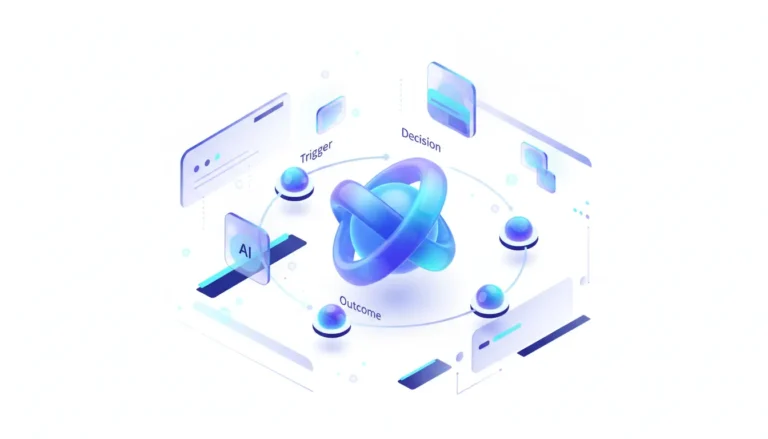
- What happened: M2.7 was released with its weights and code, positioning it as a powerful new building block for developers creating autonomous AI systems. The “self-evolving” tag suggests it can improve its performance on tasks through iterative, automated refinement loops, almost like it’s learning on the fly.
- Why it matters now: That said, the frontier of AI is shifting from passive text generation to active, tool-using agents that can execute tasks. As open-source models like M2.7 challenge the capabilities of closed systems from OpenAI and Google, the standards for proving their performance and safety are becoming a critical battleground—something worth keeping a close eye on as we push these technologies further.
- Who is most affected: AI developers and ML engineers gain a potent but unverified new tool, which could spark some exciting experiments right away. Researchers must now work to validate these claims, plenty of reasons to dig in there, and enterprises are left weighing the potential of powerful new automation against the risks of deploying agents without documented safety, cost, and latency metrics—it’s a balancing act, really.
- The under-reported angle: While most coverage focuses on the impressive benchmark scores, the real story is what’s missing: a complete, reproducible evaluation methodology. Without public ablation studies, evaluation scripts, and performance metrics beyond accuracy, the M2.7 release is more of a bold claim than a transparent engineering milestone, leaving us to ponder just how solid the foundation is.
Deep Dive
Have you ever chased a breakthrough in AI, only to hit a wall of unverified hype? MiniMax’s release of the M2.7 agent model puts another powerful contender into the open-source arena, specifically targeting the highly prized domain of autonomous coding and system administration. Its reported scores on SWE-Pro, a benchmark for resolving real-world GitHub issues, and Terminal Bench 2, a test of command-line proficiency, place it at the cutting edge. The central architectural claim—that M2.7 is a “self-evolving agent“—implies a system capable of learning from its own attempts, a significant step toward more robust and independent AI, one that I’ve noticed could reshape how we think about iterative improvement.
This release plugs directly into the core objective of the current AI race: moving beyond chatbots to create autonomous agents that can act as software developers, IT operators, and data analysts. By open-sourcing the model, MiniMax is arming the developer community with a tool that, on paper, rivals the capabilities of proprietary systems—it accelerates the timeline for building complex agentic workflows, a domain where progress has been rapid and competition is fierce, sometimes feeling like a sprint with no finish line in sight.
However, the M2.7 launch serves as a crucial case study in the AI industry’s “reproducibility crisis.” The headline-grabbing benchmark figures are presented without the corresponding scientific rigor needed for independent verification. Key pieces are missing: there are no ablation studies to prove which parts of the “self-evolving” loop contribute to the performance gains, no detailed evaluation scripts to ensure a fair comparison against other models, and no model card documenting data sources, limitations, or safety guardrails. This forces the community to take the results on faith or invest significant resources in attempting to replicate them from scratch—echoing challenges I’ve encountered in past evaluations.
This gap between claim and proof is becoming the primary friction point in the agent ecosystem. For an agent to be deployed in a production environment—to write code for a real product or manage a live server—its capabilities must be measurable, predictable, and safe. Vital operational metrics like latency, throughput, and cost-per-task are entirely absent from the initial release. As a result, M2.7 is currently more of a fascinating research object than a production-ready tool. Its release challenges the AI community to demand a higher standard of evidence, pushing for a future where benchmark scores are always accompanied by a “receipt” of reproducible methodology—and it’s that push, I think, that will separate the true innovators from the rest.
Stakeholders & Impact
| Stakeholder / Aspect | Impact | Insight |
|---|---|---|
| AI / LLM Providers | High | Open-source agent models like M2.7 raise the competitive baseline, forcing closed-source players (OpenAI, Anthropic) to prove their value beyond raw task performance with reliability, security, and enterprise-grade support—it’s shifting the game a bit. |
| Developers & Researchers | High | Provides a powerful new foundation for agentic applications but shifts the burden of verification onto the community. It fuels the demand for standardized, open evaluation frameworks for agent systems, something that’s long overdue. |
| Enterprises | Medium | The potential for automating complex coding and IT operations is immense. However, the lack of documented safety, performance, and cost metrics makes deploying M2.7 a high-risk decision, delaying enterprise adoption—tread carefully here. |
| Benchmark Maintainers | Significant | Impressive but thinly documented results put pressure on benchmark creators (e.g., SWE-Pro) to mandate standardized, locked-down evaluation harnesses to ensure fair comparisons and prevent “leaderboard hacking,” keeping things honest. |
About the analysis
Researched and written with AI assistance under the editorial responsibility of the i10X News team. The title image is an AI-generated illustration. Read our AI Use Policy. Spotted an error? Request a correction.
This analysis is an independent i10x perspective based on the public release information for the MiniMax M2.7 model. It contextualizes the release by cross-referencing industry standards for reproducible research and benchmarking, and is written for developers, ML engineers, and CTOs evaluating the next generation of AI agent technology—drawing from patterns I’ve observed in similar launches.
i10x Perspective
What if the next big AI leap isn’t about raw power, but about earning real trust? The MiniMax M2.7 release isn’t just another model drop; it’s a marker of how the open-source ecosystem is now competing at the agentic frontier, not just in foundational model capabilities. But it also exposes the critical tension that will define the next phase of AI: the race for performance claims is dramatically outpacing the development of trust. Without a shared framework for transparent, reproducible, and holistic evaluation, the AI agent market risks becoming an arms race of inflated benchmark scores that don’t translate to real-world value. The future belongs not to the model with the highest score, but to the ecosystem that can prove its results are real, reliable, and ready for production—leaving us to reflect on where we invest our efforts next.