Ollama Tuning: Optimize Local LLM Quality Beyond Setup
⚡ Quick Take
As AI infrastructure decentralizes, Ollama has rapidly become the default stack for local LLM inference, pushing developers past the initial novelty of running models offline and into the complex reality of parameter tuning and hardware optimization.
Summary: Ollama has successfully mainstreamed local LLM execution by simplifying complex installation processes into single-line commands. Yet as developers move from quick experiments to production use, the ecosystem is now zeroing in on sophisticated parameter tuning to close the quality gap between on-device models and proprietary cloud APIs.
What happened: Community attention around Ollama has shifted from basic setup guides to advanced quality optimization. The emphasis now falls on sampling parameters such as Mirostat and top_p, hardware-specific setups like Apple Metal versus NVIDIA CUDA, and careful quantization trade-offs.
Why it matters now: Open-weight models like Llama 3 and Mistral keep getting smaller and stronger. Still, out-of-the-box local inference often produces generic or hallucinated results. Getting local tuning right has become essential for privacy-first enterprise work, edge computing, and cutting reliance on expensive cloud calls.
Who is most affected: Software developers, AI practitioners, and data scientists building private RAG pipelines, along with hardware vendors whose edge devices now face benchmarks centered on local LLM performance.
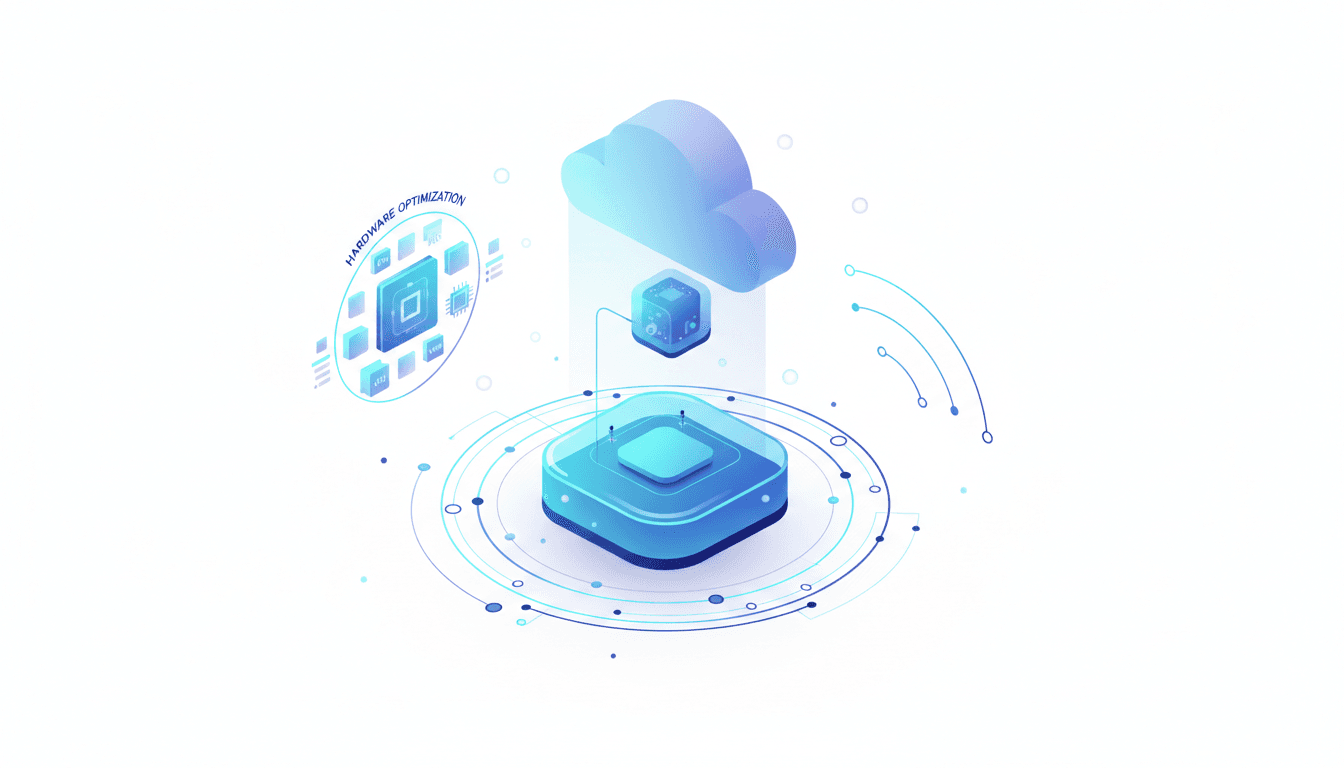
The under-reported angle: While prompt engineering grabs most headlines, the real constraint on local AI quality is hardware-aware parameter configuration. That means balancing VRAM limits through smart quantization choices (Q4_K versus Q8_0, for instance) and managing the dynamic context window (num_ctx) to avoid slowdowns.
🧠 Deep Dive
Have you ever gotten a local model running only to watch it drift into vague or repetitive answers? Ollama’s quick rise marks a real shift in AI infrastructure: inference compute is moving from big centralized clouds to edge devices and local workstations. Its CLI and Modelfile setup removed the old headaches of compiling models and chasing dependencies, much like Docker once did for containers. That ease, though, has surfaced a fresh problem. Developers coming from OpenAI or Anthropic APIs soon find that starting a model locally is simple, yet matching cloud-level reasoning demands real familiarity with the hardware underneath.
Most coverage still focuses on installation and browsing the Ollama Library. The tougher engineering work lies in fixing the generic, sometimes erratic outputs that appear without tuning. Practitioners are moving past basic temperature tweaks to techniques such as Mirostat sampling, tighter top_k limits, and repetition penalties. For tasks like coding or data extraction, many now lock output formats with stop sequences and JSON-constrained decoding, creating local guardrails that actually hold.
Hardware limits add another layer. Model choice is no longer just about raw capability; it becomes a calculation involving VRAM and latency. Quantization levels (Q4_K versus Q8_0) force constant trade-offs between precision and memory use. Platform-specific GPU offloading across Apple’s Metal, NVIDIA CUDA, or AMD ROCm also matters, since poor layer distribution quickly leads to throttling.
A bigger operational change is Ollama’s role in privacy-focused systems. Teams are using its embedding features and OpenAI-compatible endpoints to run fully offline RAG pipelines. This demands careful num_ctx settings to avoid truncation, plus fixed seed values for repeatable testing.
In short, Ollama is pushing the AI developer role to mature. Treating LLMs as black-box cloud services is fading. Unlocking the cost and privacy gains of local AI now requires understanding the physical side of compute, turning prompt engineers into operators who manage the full stack.
📊 Stakeholders & Impact
Stakeholder / Aspect | Impact | Insight |
|---|---|---|
AI / LLM Providers | Moderate | Cloud providers face more pressure as developers see that well-tuned local models can handle everyday enterprise tasks securely and at no added cost. |
Edge Hardware Vendors | High | Apple, NVIDIA, and AMD now watch their consumer hardware get pushed hard as primary inference endpoints. |
Enterprise Developers | High | Faster progress on privacy-first RAG apps and structured outputs without sending sensitive data outward. |
Data Security & Policy | Significant | On-premises setups sidestep many cloud compliance hurdles around SOC2 or GDPR cross-border rules. |
✍️ About the analysis
This analysis draws from official documentation, repository data, and hands-on developer resources to assess where local LLM infrastructure stands today. It is aimed at CTOs, engineering leads, and practitioners ready to move past cloud APIs and refine edge-based systems.
🔭 i10x Perspective
Ollama is more than a convenience tool. It acts as a wedge against the closed-API model that frontier labs still rely on. With local deployment friction nearing zero, a hybrid intelligence grid is taking shape: heavy reasoning stays in the cloud while most routine work shifts to the edge. Over the next five years, the real advantage will come less from model size alone and more from tooling that lets teams move workloads smoothly between proprietary cloud models and optimized on-device open weights.
Related News
Ask Your LLM: Why Standardized Evaluation Matters for Model Comparison
The Ask Your LLM trend exposes the limits of manual AI model testing. Learn why standardized evaluation frameworks are essential for comparing ChatGPT, Claude, and Gemini in production. Explore the analysis.

AI Slowdown: Operational Stakes and Infrastructure Ripples
Discover how voluntary AI slowdowns via responsible scaling policies affect frontier labs, hyperscalers, and data center plans. Analyze the real operational and infrastructure impacts. Explore the guide.

The AI Skills Gap Is Really an LLM Hiring Problem
Enterprise surveys reveal companies hire for outdated AI titles while needing LLMOps, RAG, and prompt engineering skills. Learn why this blocks GenAI scaling and how to build skill-based hiring matrices.