Voice Cloning APIs: Enterprise Latency, Compliance & TCO
⚡ Quick Take
Summary
Voice cloning APIs are maturing from experimental consumer tools into highly scrutinized, enterprise-grade AI infrastructure, sparking a race for low-latency streaming and robust digital provenance.
What happened
The commercial market for synthetic voice APIs has rapidly expanded, forcing top vendors like ElevenLabs, PlayHT, and Resemble AI to compete not just on speaker similarity, but on sub-second streaming latency, commercial licensing rights, and strict consent verification.
Why it matters now
As LLMs increasingly power real-time conversational agents, the primary friction point has shifted from text generation to audio synthesis infrastructure. Delivering highly realistic, cloned voices in real time requires immense, optimized GPU compute, making voice APIs a critical battleground in the AI ecosystem.
Who is most affected
Enterprise engineering teams integrating live AI agents, compliance officers navigating global deepfake regulations, and cloud providers supplying the compute for high-concurrency audio inference.
The under-reported angle
The true TCO (total cost of ownership) and the compliance deficit. Hidden compute fees for streaming, zero-shot training costs, and a lack of standardized watermarking protocols (like C2PA) are creating massive integration and legal risks for early enterprise adopters.
🧠 Deep Dive
The commercial landscape for Voice Cloning APIs is undergoing a brutal maturation phase. What began as a novelty showcase of zero-shot cloning capabilities has morphed into a high-stakes infrastructure play. As product managers and engineering teams look to deploy LLM-backed live agents, IVR systems, and dynamic media, they are realizing that the leap from generic Text-to-Speech (TTS) to hyper-realistic voice cloning breaks traditional cloud budgets. Buyers are actively seeking to normalize pricing—often calculating the cost per 1 million characters—but are frequently blind-sided by the secondary compute taxes associated with real-time streaming, voiceprint storage, and concurrency scaling.
From what I've seen, behind the vendor PR emphasizing "emotion and hyper-realism," a quiet infrastructure crisis is unfolding. Real-time AI applications require aggressive latency optimizations to achieve acceptable Real-Time Factor (RTF) and avoid awkward pauses in human-AI conversations. This pushes the burden onto cloud infrastructure, where serving concurrent, low-latency audio streams demands highly specialized, inference-optimized GPU clusters. The market is effectively splitting: vendors offering cheap, batch-processed audio for content creators, versus premium, latency-optimized stacks designed for enterprise live agents.
Furthermore, the existing web coverage reveals a massive gap in objective evaluation. While directories and SEO-driven buyer’s guides list supported SDKs and basic price tiers, they fail to provide standardized quality metrics—like Mean Opinion Score (MOS) for intelligibility or Equal Error Rate (EER) for speaker verification. Developers are left to rely on subjective audio samples rather than reproducible load tests or k6/Locust traces that prove an API can handle enterprise-scale traffic without rate-limit throttling.
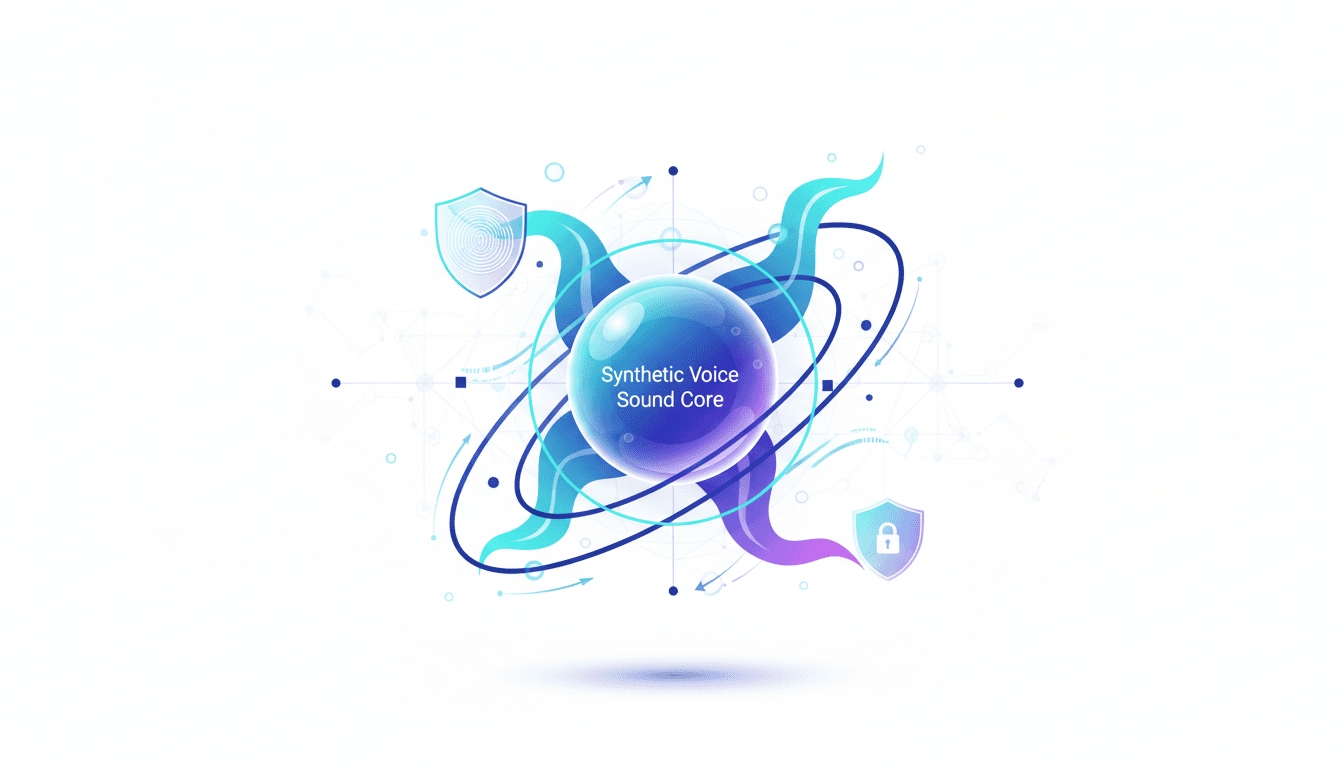
The most existential threat to this ecosystem, however, is governance. As deepfake legislation tightens globally (including the EU AI Act and state-level US laws), the "move fast and clone things" era is over. Enterprise compliance teams are demanding rigorous consent workflows—such as active KYC and voiceprint confirmation—before deployment. Yet, the industry lacks a unified compliance matrix. Navigating the nuances of commercial licensing (broadcast vs. resale rights), data residency, SOC 2 compliance, and invisible audio watermarking is currently a fragmented nightmare. Vendors that can seamlessly integrate these trust-and-safety guardrails directly into their APIs will ultimately capture the enterprise market.
📊 Stakeholders & Impact
- AI / LLM Providers — Impact: High. Insight: Racing to offer native, end-to-end multimodal capabilities to bypass standalone voice API vendors entirely.
- Enterprise Devs & CTOs — Impact: High. Insight: Struggling to balance sub-second latency requirements for live agents against TCO and stringent compliance bottlenecks.
- Cloud Infra Providers — Impact: Medium–High. Insight: Facing surging demand for inference-optimized GPUs capable of handling concurrent real-time audio streams at the edge.
- Regulators & Policy — Impact: Significant. Insight: Scrambling to enforce deepfake guardrails, pushing for mandatory audio watermarking, digital provenance, and strict consent checks.
✍️ About the analysis
This independent, research-based analysis evaluates the commercial Voice Cloning API market by synthesizing vendor capabilities, search intent, and structural content gaps. It is designed for CTOs, product managers, and compliance teams who are navigating the technical and regulatory complexities of integrating synthetic audio into enterprise AI infrastructure.
🔭 i10x Perspective
The obsession with Voice Cloning APIs is a leading indicator of the broader AI transition from text-based interfaces to multimodal, real-time intelligence. That said, standalone synthetic voice vendors are on a collision course with foundational model builders like OpenAI and Google, who are rapidly baking low-latency audio natively into their models. Over the next five years, the voice cloning companies that survive won't just be those with the most realistic acoustic models; they will be the ones that master enterprise governance—building the unassailable infrastructure for digital identity, cryptographic audio provenance, and verifiable consent.
Related News

AI Cyber Resilience: Recovery Speed Now Outweighs Backups
AI workloads demand a new approach to cyber resilience, prioritizing rapid RTO for GPU clusters and LLM pipelines over traditional backups. Learn how to adapt your strategy for minimal downtime.
AI Paper Ecosystem Shifts Toward Compute Transparency
The AI research landscape is moving from arXiv dumps to platforms demanding GPU hours, reproducibility, and real-world viability. Discover why ML teams now prioritize infrastructure details over benchmark scores alone. Explore the guide.

Prompt Engineering Is Now Software Engineering
Prompt engineering has shifted from casual templates to structured outputs, evaluation frameworks, and governance. Discover how enterprises are treating prompts like code for reliable AI at scale. Explore the guide.