📐 AI for Flooring Installer
AI for Flooring Installers - Prep-Line Bids, Acclimation & Room Updates
Flooring work is prep-heavy and schedule-bound. i10X handles repeatable customer comms – lead routing, bids with subfloor lines explicit, acclimation updates, daily room progress – so you can stay on demo, leveling, and the install.
Retail or measure inquiry
Homeowner, showroom, or GC asks about hardwood or LVP scope
Agent sorts it
Whole-home lead, acclimation callback, or squeak repair?
You get a summary
Short brief or booked measure on your calendar.
If you are looking at AI for a flooring business, the useful question is not whether another app can replace Floorzap or your estimating spreadsheet. It is whether customer comms – retail callbacks, bid follow-up, acclimation notices, room progress on whole-home jobs – can run without pulling you off the subfloor grinder or the install.
Three patterns that show up in flooring prep guides and job-costing writeups:
- Subfloor prep not priced. Industry guides on subfloor prep treat leveling, moisture testing, vapor barriers, and board replacement as the foundation of a successful install – not optional add-ons. In the field, many bids still price per square foot of hardwood or LVP lay only. When the crew arrives to grind, level, or replace squeaky boards, margin disappears because demo and prep hours were never broken out on the proposal.
- Product acclimation and delivery. Hardwood and engineered products need acclimation days and moisture clearance before the first plank goes down. Delivery windows slip when rooms are not ready or slab readings run high. Install dates get moved by text chains while the owner is on knees on another job – and the homeowner hears silence until someone remembers to call back.
- Multi-room install drift. Whole-home work spreads across multiple rooms and often multiple days while the crew rotates between two or three active sites. Homeowners and GCs ask which rooms are happening today; without a simple daily progress signal, check-in calls stack up even when labor is on schedule. Job-costing guides cite comms gaps on multi-phase installs as a hidden labor-tracking problem, not a crew-speed problem.
You’ve heard you need to “do something with AI.” Fair. Here’s what that looks like for a one-van outfit, not a corporate IT project.
Help with the comms layer, not a new estimating platform
i10X connects to your phone line, Gmail, calendar, and QuickBooks. It can route calls, draft bids from measure notes with prep and moisture lines broken out, send acclimation milestone updates, and report room-by-room progress on multi-day installs.
You keep your supplier portals, measure apps, and whatever drives your unit pricing. i10X sits on the customer-facing side: messages, drafts, reminders. Final bids and scope-change approvals stay with you unless you choose otherwise.
One installer told us he underbid a whole-home LVP job because the measure assumed flat plywood and the field needed a full grind and moisture barrier he had not priced. Getting prep lines onto every draft and a daily room update out during a three-day install did not fix labor shortage – but it cut the evening callback pile and the where-is-my-crew texts.
What i10X can do
What i10X can run on rules you set:
Lead and callback routing
Showroom referrals and measure callbacks get scoped and queued while you are on the floor.
Bid drafts with prep explicit
Measure notes become estimate drafts in Google Docs with demo, leveling, and moisture lines for your review.
Acclimation-milestone messages
Scheduled updates during delivery, acclimation, moisture clearance, and install window.
Daily room progress
Whole-home installs get a short end-of-day thread so homeowners know which rooms are done.
Same install crew, fewer prep-surprise calls
Not a magic margin fix – just fewer tasks that pull you off demo, leveling, and the lay.
- Measure done Tuesday; bid still priced per SF with no grind or moisture lines Friday
- Hardwood delivered early; homeowner calls daily because nobody explained the acclimation hold
- Three rooms done Monday; GC texts asking which rooms the crew is in today
- Slab moisture question on site; installer waits while someone looks up underlayment spec
- Draft bid from measure notes ready Wednesday with demo, prep, and install phases separated
- Milestone text sent when acclimation started; homeowner reply says thanks, no panic call
- End-of-day progress note names completed rooms and tomorrow's plan before you leave site
- Underlayment and moisture answer saved to the job file before the first plank goes down
Five common starting points for flooring contractors. i10X can do more once connected – these are what owners usually set up first:
Examples of what i10X can handle
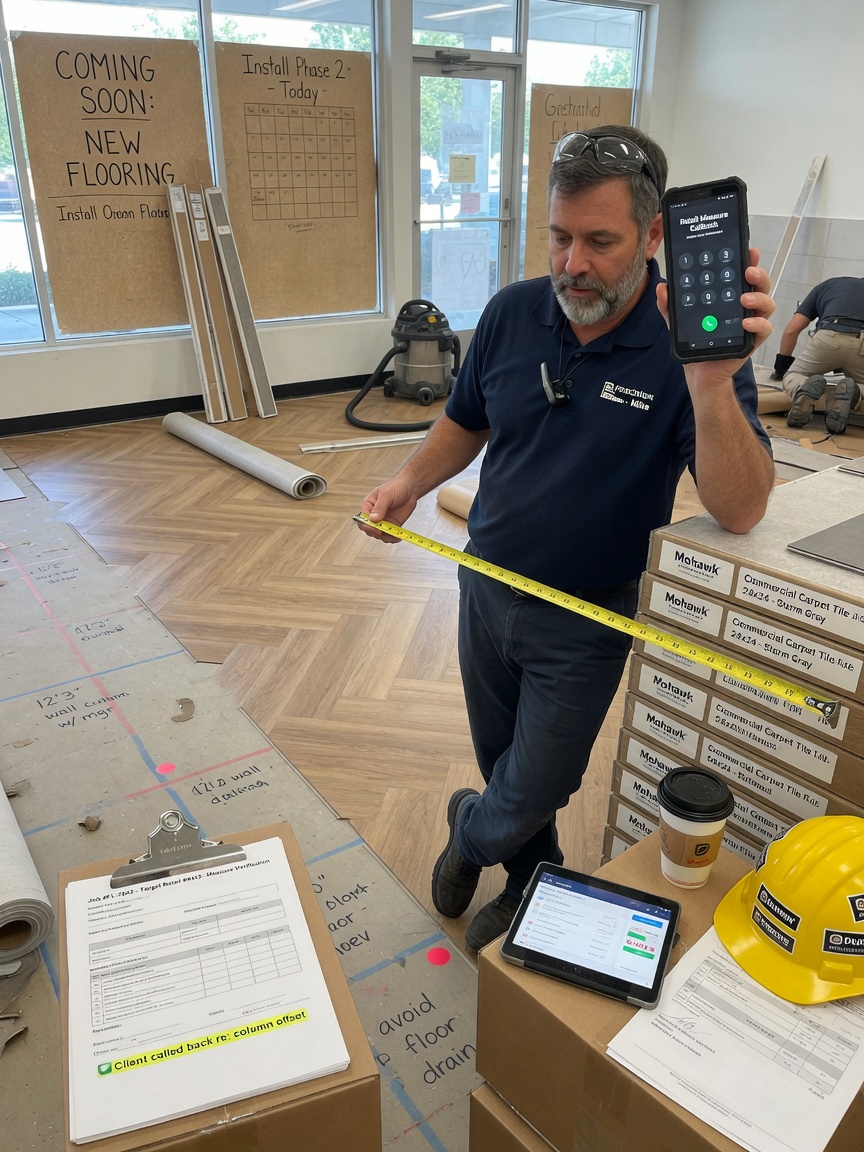
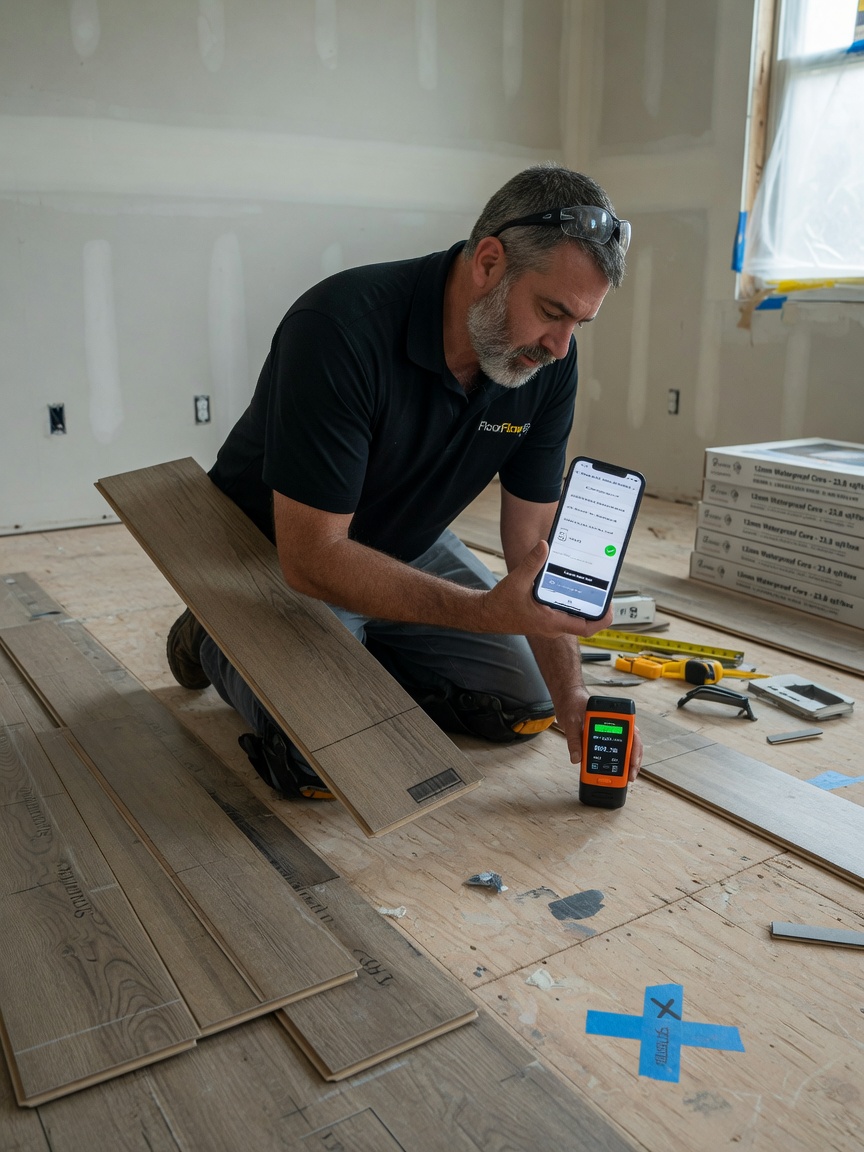
Route retail and measure callbacks
A showroom referral, a whole-home measure request, and a squeak-repair callback need different scripts and timelines. i10X can answer or take a message, ask hardwood vs LVP scope questions, and offer measure slots from your calendar while you are on a subfloor grind or finishing a stair nose.
3 hrssaved / week
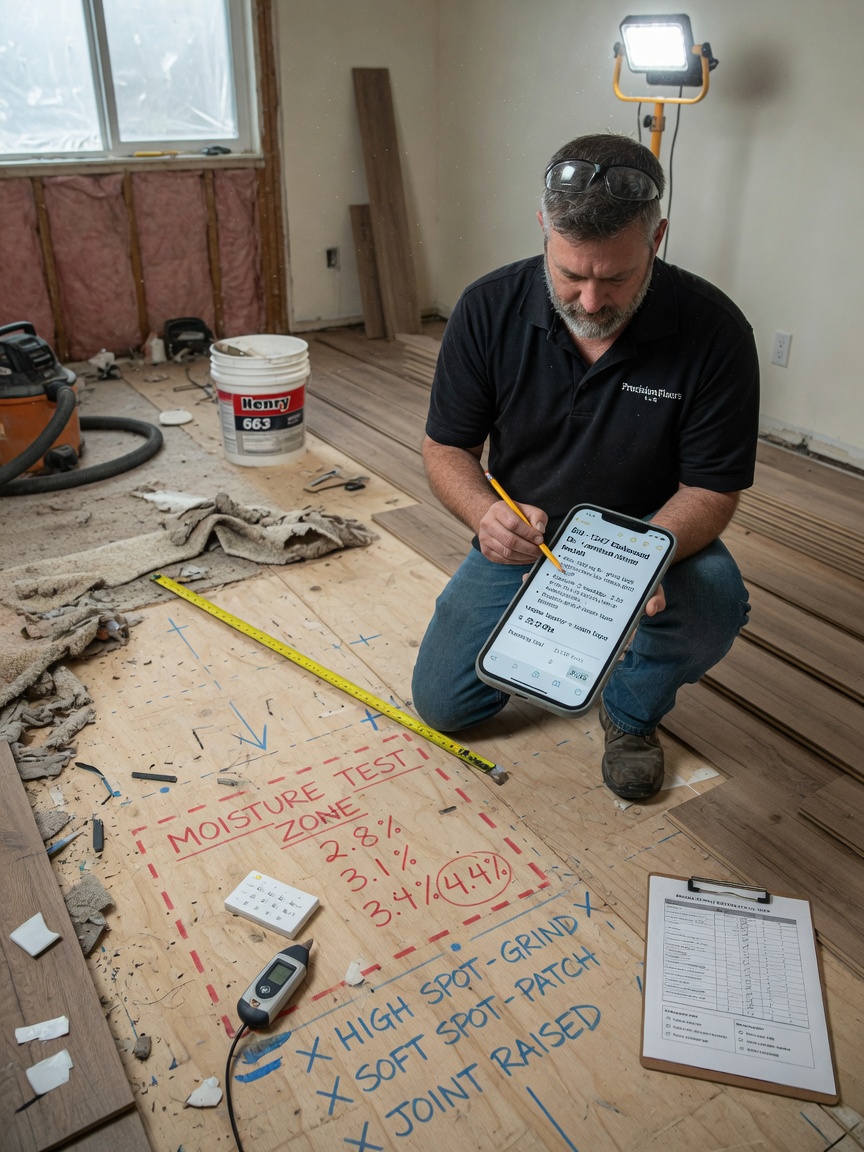
Draft bids with prep and moisture lines
Dictate or email notes after a measure: subfloor condition, demo scope, moisture test result, leveling tier. i10X turns them into a draft bid in Google Docs with prep, rip-out, and install phases broken out – and can queue follow-up reminders on dates you choose.
4 hrssaved / week
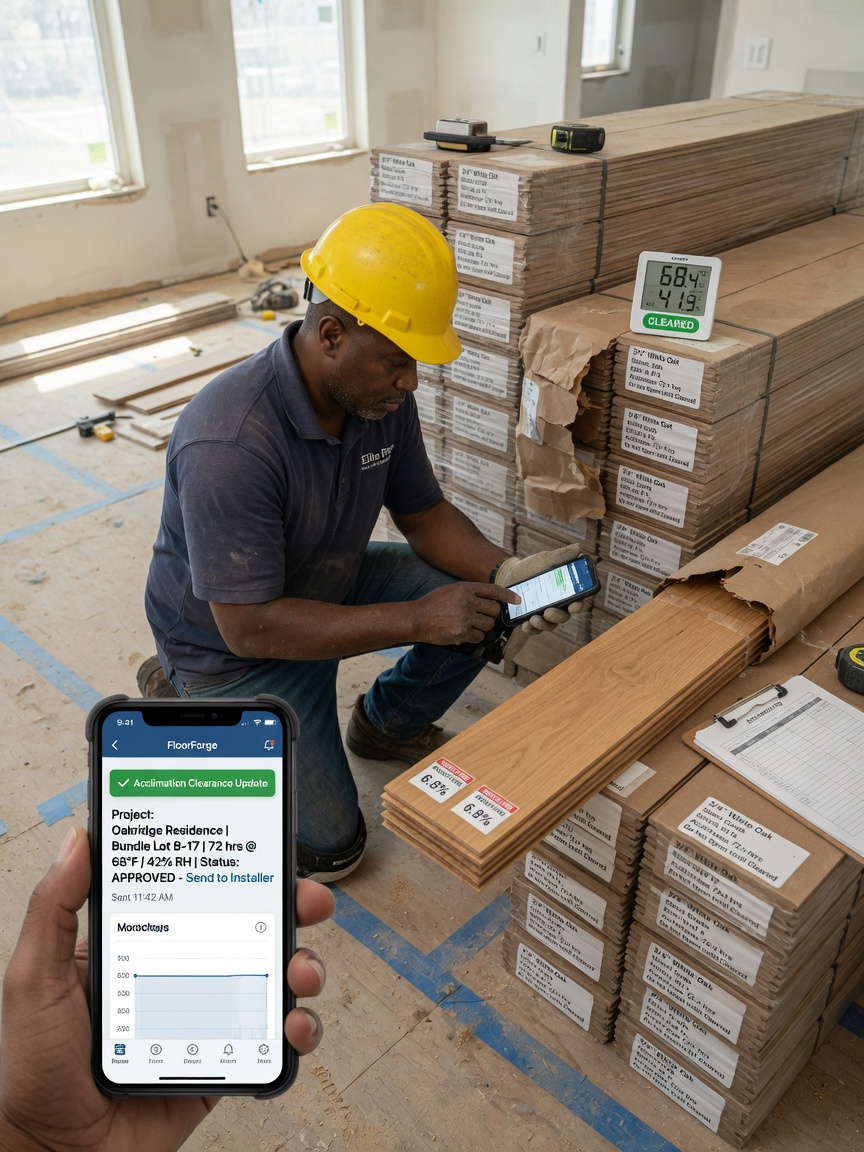
Acclimation and moisture-clearance updates
Product delivered, acclimation clock started, moisture reading cleared, install week approaching – homeowners expect a signal before the crew arrives. i10X can send milestone emails or texts on the dates you set and flag reschedule needs when slab or plywood readings are still high.
3 hrssaved / week
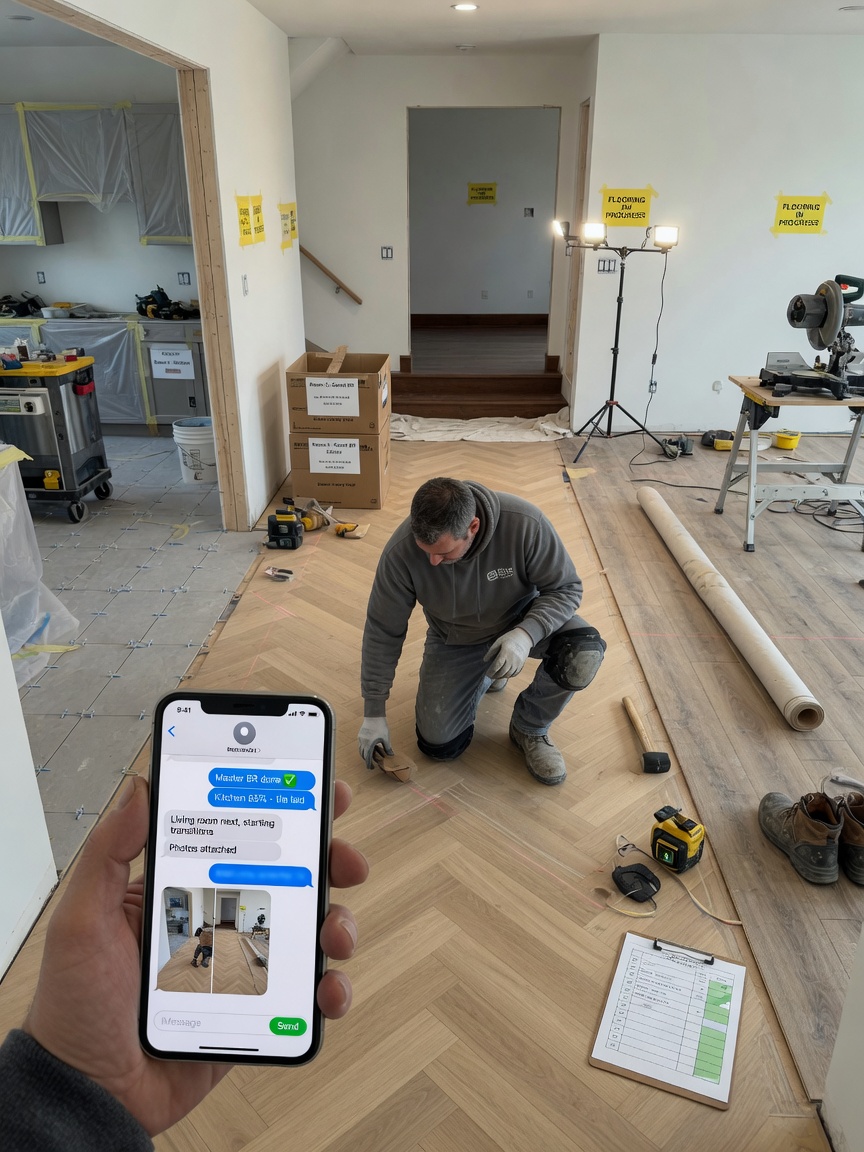
Room-by-room progress on whole-home jobs
Three bedrooms done, great room tomorrow, stairs on Friday – GCs and homeowners lose track on multi-day installs. i10X can send a short daily progress text naming completed rooms, today's focus, and any prep hold – so check-in calls do not interrupt every cut.
2 hrssaved / week
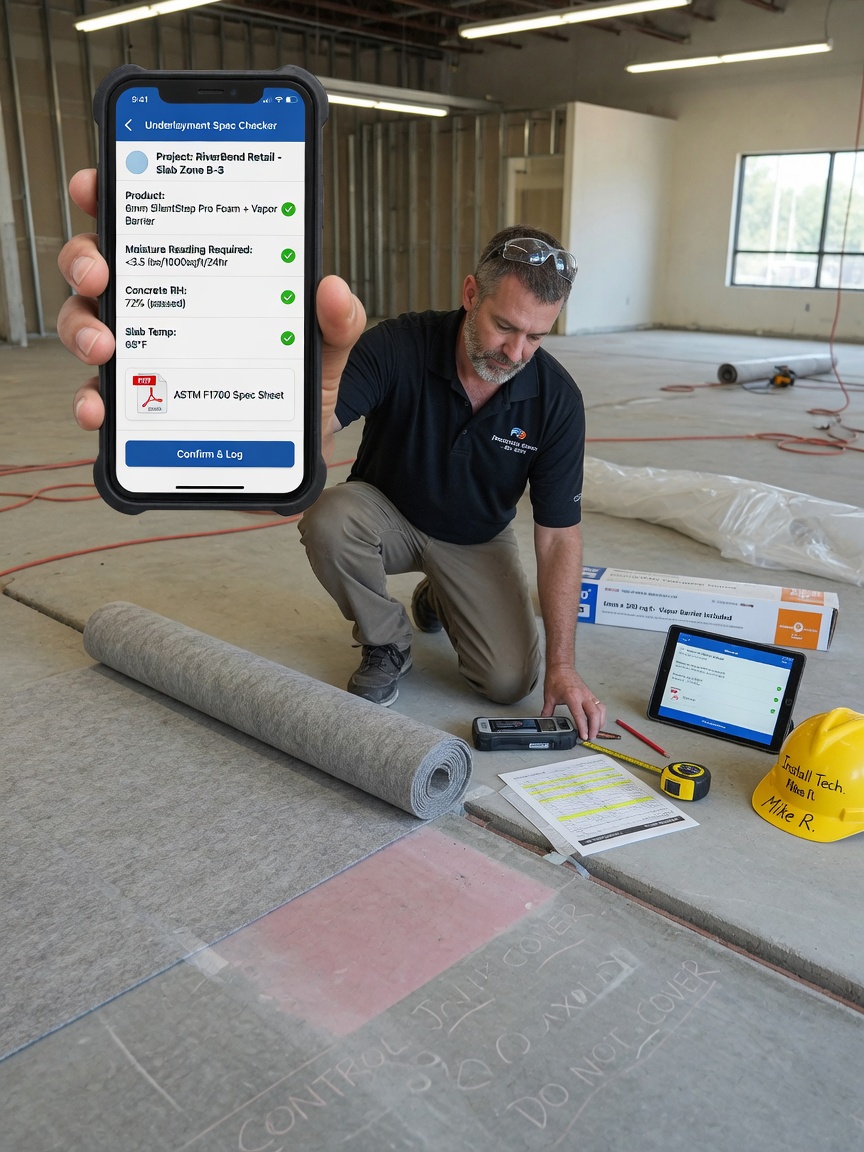
Underlayment and moisture spec lookup
Ask in plain language: underlayment for LVP over slab, vapor barrier spec for a below-grade room, or acclimation days for a 5-inch engineered plank. i10X pulls manufacturer installation guides and saves them to the job file so the crew does not walk to the truck for every data sheet.
1 hrsaved / week
Skilled installers and long lead times on hardwood are real constraints in this trade; i10X does not solve those. It mainly reduces the manual comms work that falls on the same person measuring, bidding, and running the crew.
Works with your stack
No new software to learn. Phone, inbox, calendar, books, and bid docs – where most flooring contractors already handle retail leads, estimates, and homeowner updates. i10X connects to the tools you already run:
Why flooring installers choose i10X
Built around prep-heavy flooring work
Subfloor leveling, moisture clearance, acclimation holds, multi-room installs – not same-day handyman dispatch.
Learns how your crew talks
Tone for a showroom whole-home lead vs a homeowner mid-acclimation can differ; you set that during setup.
You approve what matters
Bids, acclimation notices, and customer-facing messages can stay ask-first until you trust the defaults.
Getting started takes about 10 minutes
No tech skills, no setup fee, no new app to figure out. Three steps and you’re live:
Connect your tools
Click to link your phone line, inbox and calendar – the same secure login your bank uses. Nothing to install.
Answer 3 questions
Tell it how you talk to customers and what it’s allowed to do. It learns from your past quotes and messages.
It starts working
From minute one it answers calls and drafts replies for your approval. Most flooring installers see a booked job the same day.
What usually changes first
Most contractors start in ask-first mode: drafts and summaries land on your phone, you edit or send. That alone cuts down evening email sessions after long install days.
Once acclimation-milestone messages and daily room progress run on a schedule you defined, homeowners and GCs stop filling the gap with check-in calls during multi-day installs.
None of this replaces a skilled sand-and-finish crew or a dedicated prep specialist. It clears comms work off the owner so measuring, bidding, and site oversight get more of the week.
Customer-facing actions need your OK by default
Bids, acclimation notices, and outbound replies can wait for approval. Turn on auto-send for specific message types once the wording matches your shop.
Your data stays in your tools. We do not train on your bids or customer threads. Revoke access in one step.
I still approve every final bid and sign off on moisture readings myself. But showroom callbacks do not go to voicemail all afternoon anymore, and I am not rewriting the same acclimation notice at 9pm. Bid drafts from measure notes with prep lines broken out save me a desk sitting I did not have.– Derek Holloway, Charlotte, NC · 10 years installing hardwood and LVP
Frequently asked questions
Will it break out demo, leveling, and moisture testing in LVP bids?
Site measure notes drive the draft. i10X adds separate lines for demo, subfloor prep, moisture testing, and vapor barrier – not just box count times square footage. That matches how flooring job-costing guides say margin actually survives.
Can it remind homeowners when hardwood acclimation ends and install can start?
You log delivery date and acclimation days in the job notes. i10X drafts the install-ready notice on the date you set so cartons aren't opened early and homeowners know why the crew hasn't arrived yet.
Does it log room-by-room progress on multi-area installs?
You define milestones per zone: demo complete, subfloor prepped, main floor laid, stairs templated. i10X drafts progress updates so a whole-home job doesn't feel like one silent week between rooms.
Can it flag subfloor flatness issues found during the measure?
Measure notes with dip or deflection readings become allowance lines in the bid draft – grinding, plywood overlay, or self-leveler – before install day when the crew finds a floor that wasn't in the original price.
Does it handle retail showroom leads differently from contractor referrals?
Showroom and big-box leads get product-type and square-footage intake. Referral and GC leads ask job address, spec level, and timeline. Each source can route to different calendar slots and proposal templates you define.
See if it fits your flooring business
Connect your tools, skim a week of drafts and summaries, and decide whether the comms load is lighter.
Start free trial