🧠 AI for Psychiatrist (Outpatient Practice)
AI for Psychiatrists - Outpatient Practice
Waitlist intake, refill triage, and no-show rebook on your line, Gmail, and calendar – without replacing SimplePractice or AdvancedMD.
Plans from $20/month after free trial. See pricing

New eval or refill callback
Caller hits your line while staff room med-management patients
Agent runs intake
New eval, existing patient, refill, or billing?
You get a summary
Booked slot, refill routing draft, or escalation for approval.
If you searched AI for psychiatrists or AI for psychiatry practices, you are probably not looking to replace SimplePractice, AdvancedMD, or TherapyNotes. You want to know whether patient comms – waitlist intake, refill triage, no-show rebook – can run without another hire at the front desk.
Sound familiar?
Three patterns outpatient psychiatry owners name first when they audit front-desk performance:
New patient waitlist inquiries idle
Thursday morning: a Psychology Today lead, two website psychiatry inquiries, and a PCP referral email sit unread while your waitlist coordinator rooms patients for back-to-back 20-minute med checks. Curogram intake research puts same-day reply as the baseline for converting motivated new patients – and front desks that cannot respond during a full med-management afternoon let waitlist leads book elsewhere.
Refill requests between sessions
Voicemail and portal messages about SSRI refills stack up while the MA rooms the next follow-up. Curogram front-desk burnout data flags refill and scheduling requests as top admin drivers in behavioral health – with routing to portal or nurse queue as the fix, not another psychiatrist callback between sessions.
No-show med-management slots
Tuesday 11am med-management follow-up ghosts and the 20-minute slot stays empty in a fully booked month. MGMA behavioral health guidance recommends friction-free reschedule after a miss; Curogram mental health no-show analysis puts psychiatry above many specialties – and two-way rebook within 24 hours with a telehealth option is what reclaims capacity you already blocked.
You have probably heard you should look into AI. Most outpatient psychiatry owners we talk to start with the same three front-desk time sinks – not chatbots or hype.
What can AI actually do for a psychiatry practice?
Plain English first – forget chatbots, prompts, and IT projects. Three jobs practice owners ask about on every discovery call:
Answers when staff are rooming med checks
Full med-management afternoons, refill voicemails, and a new eval callback at once – new patient vs existing patient vs refill gets triaged in your practice voice.
Writes the admin routing
Refill requests become portal or nurse-queue drafts. Cancelled med-management slots become waitlist texts with real telehealth or in-person openings.
Never forgets to follow up
Same-day waitlist replies, no-show rebook batches, and prior-auth prep notes run on the schedule your team keeps putting off.
If your front desk can text from the window, you can run it.
Is AI worth it for a solo outpatient practice?
The math is usually one patient – not a stacked hours claim.
One booked new eval or one reclaimed med-management slot can cover a month. Plans start at $20/month after a free trial – or book a discovery call if you want a walkthrough first.
If your front desk already answers every call, routes every refill to the right queue, and rebooks every no-show within the hour, you may not need this. Most outpatient psychiatry practices are not – because afternoons look like triage, not calm intake.
Psychiatry EHR, answering service, or this?
You may already pay for SimplePractice or AdvancedMD, plus a live answering service or Curogram. Here is what each actually covers at the front desk.
| Psychiatry EHR | Answering service | i10X | |
|---|---|---|---|
| Answers during med-management blocks | Scheduling rules only | Message-taking and warm transfer | New eval and existing patient intake |
| Medication refill triage | Portal notifications you chase manually | Takes a message for callback | Routes to portal, nurse queue, or urgent flag |
| No-show slot rebook | Open slot reports you phone through | One-way reminders only | Waitlist texts with telehealth or in-person openings |
| Replaces your EHR | Becomes your system of record | Adds another vendor | No – sits on top |
| Typical setup | Days to weeks | Hours | About 10 minutes |
Keep your EHR. i10X is the layer that handles calls, drafts, and follow-ups those tools leave on your team.
Help with patient comms, not a new psychiatry platform
i10X connects to your phone line, Gmail, Google Calendar, Twilio, Google Docs, and Google Sheets. It can route new eval and callback calls, triage refill requests to portal or nurse queue, rebook no-show med-management slots with telehealth options, prep prior-auth status notes, and sort waitlist leads.
You keep your EHR as the system of record. i10X sits on the patient-facing side: calls, drafts, reminders, and lead replies. Clinical decisions, prescribing, and documentation stay with you and your clinical staff.
One owner in Portland told us her med-management afternoons turned the front desk into a triage desk – Psychology Today leads sat three days, refill voicemails stacked between sessions, and Tuesday no-shows never got waitlist texts with telehealth slots. Routing intake and drafting refill triage did not fix psychiatrist hiring – but it filled med-management slots she had already blocked.
Five common starting points for outpatient psychiatry practices. i10X can do more once connected – these are what owners usually set up first:
Five workflows psychiatry practices set up first
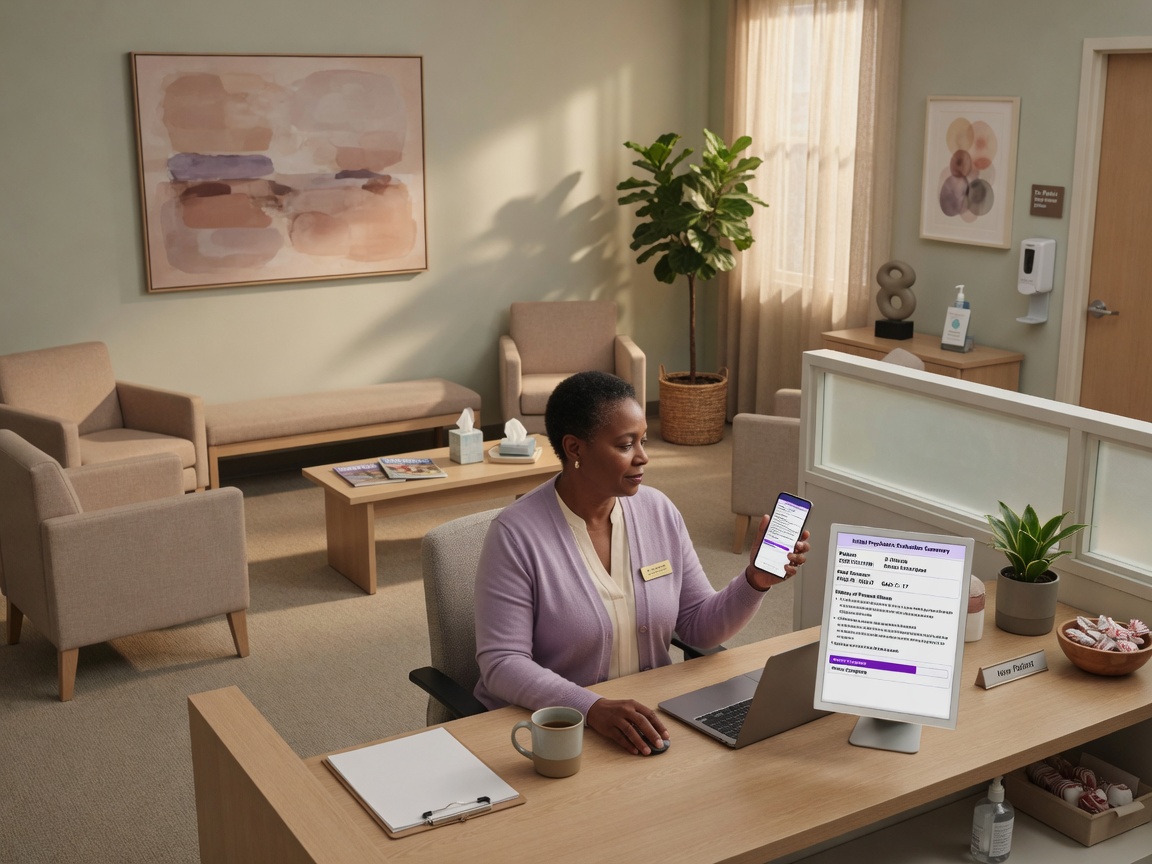
Route new eval and existing patient callback calls
Anxiety eval callbacks, existing patient reschedule requests, and refill voicemails while your front desk is rooming a full med-management afternoon – i10X answers in your practice voice, runs intake, and books or escalates per your rules.
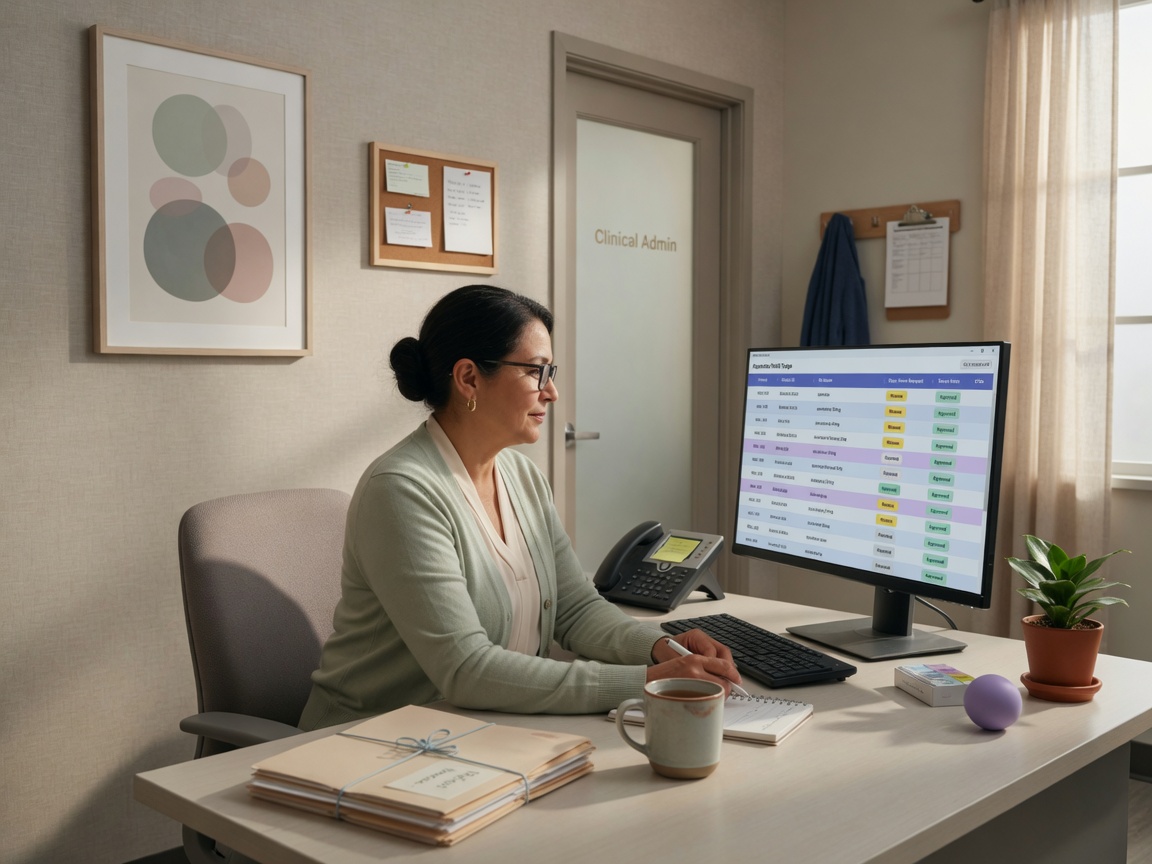
Triage medication refill requests to the right queue
Refill voicemails and portal messages between med-management sessions do not need a psychiatrist phone tree. i10X drafts routing replies that send stable refills to your patient portal, nurse queue, or urgent callback per protocol – admin triage only, not prescribing.

Rebook no-show med-management slots from your waitlist
Ghosted follow-up slots should not sit empty until end of day. i10X drafts two-way waitlist texts with real openings from your calendar – in-person or telehealth per your rules, personalized enough to feel like the front desk, not a blast.
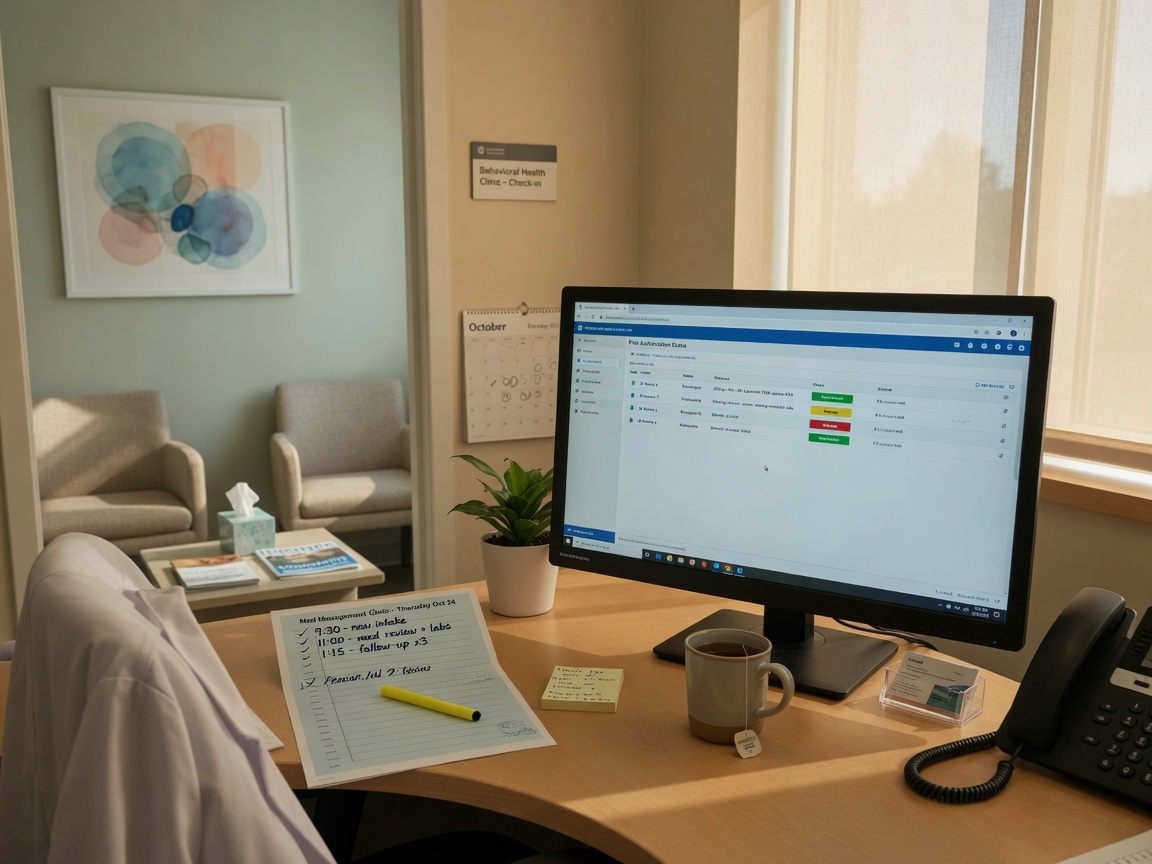
Prep prior-auth status notes before med-management day
Staff should not scramble through payer portals before controlled-substance follow-ups. i10X pulls schedule export data and drafts prior-auth status summaries in Google Docs – your team spot-checks before the morning med-management block.
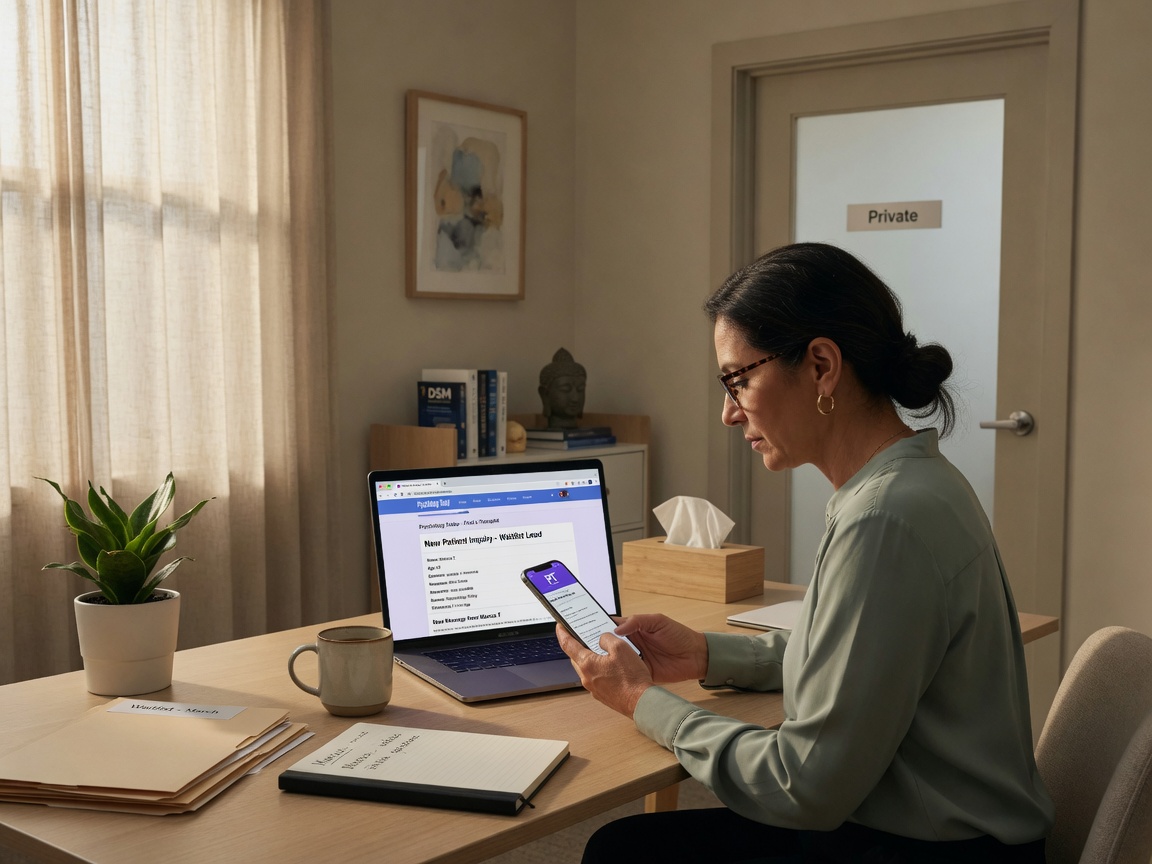
Sort new patient and waitlist leads the same day
Psychology Today inquiries, PCP referrals, and website psychiatry eval requests land in the same inbox as payer correspondence and vendor threads. i10X labels real waitlist leads, drafts screening replies, and offers telehealth or in-person slots before motivated patients call another practice.
Why not just use ChatGPT?
ChatGPT is useful for drafting a letter. It is not wired to your practice line, waitlist, or refill inbox.
ChatGPT
- Waits for you to open a tab and paste patient context
- Does not answer your phone during afternoon med-management rush
- Does not watch your refill request queue
- Forgets context between sessions unless you re-paste notes
i10X superagent
- Answers your line and inbox in your practice voice
- Drafts refill routing and waitlist rebook outreach for approval
- Preps prior-auth status notes before med-management day
- Connects to Gmail, Calendar, Twilio, Docs, and Sheets
The difference between a chat tab and front-desk help that already knows your intake and refill routing rules.
Proof from outpatient psychiatry practices
One outpatient practice, fewer empty med-management slots
Not a magic production jump – just fewer tasks that pull your front desk off intake and leave waitlist leads unanswered.
- Psychology Today inquiry sits unread three days – patient books eval elsewhere
- SSRI refill voicemails stack up with zero routing to portal or nurse queue
- Tuesday 11am no-show and an open slot nobody texts the waitlist about
- Front desk scrambling on prior-auth status while three patients wait at check-in
- Waitlist lead replied same day with screening questions and two telehealth eval slots
- Refill triage draft routes stable request to portal link – waiting for your OK before send
- Waitlist text batch offered in-person and telehealth openings; three patients rebooked overnight
- Prior-auth status notes in Google Docs before the morning med-management block
I still review every refill routing draft before it goes out. But I am not losing waitlist leads to a three-day inbox anymore, and stable SSRI refills get routed to our portal instead of stacking in voicemail between med checks. No-shows get a text with telehealth slots instead of a list I never finish calling.– Dr. Marcus Chen, Portland, OR · 8 years in solo outpatient psychiatry practice
See it in action
Optional preview – same Superagent workspace you use after signup, simulated on new eval intake, refill triage, and a no-show rebook batch.
While staff room med-management patients, i10X answers your practice line:
A stable SSRI refill request becomes a portal routing draft in your inbox:
Ghosted Tuesday med-management slot – i10X drafts waitlist texts with telehealth and in-person openings:
Preview only – not your live account. Tap a tab to replay each workflow in the Superagent UI.
Book a free discovery callWorks with your stack
No new software to learn. Phone, inbox, calendar, and outreach docs – where most outpatient psychiatry practices already coordinate waitlist intake, refill triage, and no-show rebook without another EHR login. i10X connects to the tools you already run:
Why psychiatrist (outpatient practice)s choose i10X
Built around psychiatry front-desk workflows
Waitlist intake, refill triage, med-management rebook – not generic contractor dispatch scripts.
Learns how your practice talks to patients
Tone for a nervous new eval vs a stable refill request can differ; you set that during setup.
Ask-first on patient outreach
Refill routing, waitlist texts, and intake replies can wait for approval until you trust the defaults.
Getting started takes about 10 minutes
No tech skills, no setup fee, no new app to figure out. Three steps and you’re live:
- Connect your tools. Link your phone line, inbox, and calendar – nothing to install.
- Answer 3 questions. Tell it how you talk to customers and what it’s allowed to do.
- It starts working. From minute one it answers calls and drafts replies for your approval.
Patient-facing actions need your OK by default
Refill routing drafts, waitlist texts, and intake replies can wait for approval. Turn on auto-send for specific message types once the wording matches your practice.
Your data stays in your tools. We do not train on your patient threads. Use HIPAA-aware workflows and revoke access in one step. i10X routes refill requests administratively – it does not prescribe, authorize, or change medications.
What it costs
Start with a free trial on the Essential plan (from $20/month), or book a discovery call if you want a walkthrough on HIPAA-aware setup first. One booked new eval or one reclaimed med-management slot often covers a month – your mileage depends on case volume and how much you automate.
Compare plans and creditsFrequently asked questions
Does refill triage prescribe or authorize medications?
No. i10X handles admin routing only – it drafts replies that direct stable refill requests to your patient portal, nurse queue, or urgent callback line per the protocol you set. Prescribing, dosage changes, and clinical authorization stay with you and your licensed clinical staff. Nothing routes to a patient until you approve the draft.
How does it route refill requests to portal vs nurse queue?
You define routing rules by request type – stable maintenance refills get a portal link draft, requests needing clinical review go to nurse queue, and urgent flags escalate for callback. i10X triages inbox and voicemail messages against those rules and queues drafts for your approval. It sorts admin traffic; your nurse or psychiatrist still handles clinical decisions.
Can it reply to waitlist leads while staff are in med-management sessions?
You set intake rules for lead source, insurance, and visit type. i10X labels real waitlist inquiries in Gmail, drafts same-day replies with screening questions, and offers telehealth or in-person booking slots from your calendar – so motivated new patients get a response instead of sitting three days while your team rooms back-to-back appointments.
Does it rebook no-show med-management slots with a telehealth option?
Waitlists sync to Google Sheets with visit type and preferred contact. When a slot opens, i10X drafts segmented text-first outreach with two real openings from your calendar – in-person or telehealth per your rules. Patients who book or decline are logged; nothing sends until you approve unless you turn on auto-send for that message type.
Can it prep prior-auth status notes before a full med-management day?
You list today's patients with payer and medication class from your schedule export. i10X drafts prior-auth renewal flags, expiration dates, and staff action items in Google Docs. Your team spot-checks flagged gaps before patients arrive – it preps admin notes; your staff still confirms anything unusual with the payer portal.
See it on your next waitlist lead that sits three days
Book a 15-minute discovery call – we will walk through new eval intake, refill triage, and no-show rebook on a practice like yours.
No pressure to buy on the call. HIPAA-aware setup. Ask-first on every patient message until you trust the tone. Refill triage routes admin requests – it does not prescribe.
Book a free discovery call