Agents · August 2026
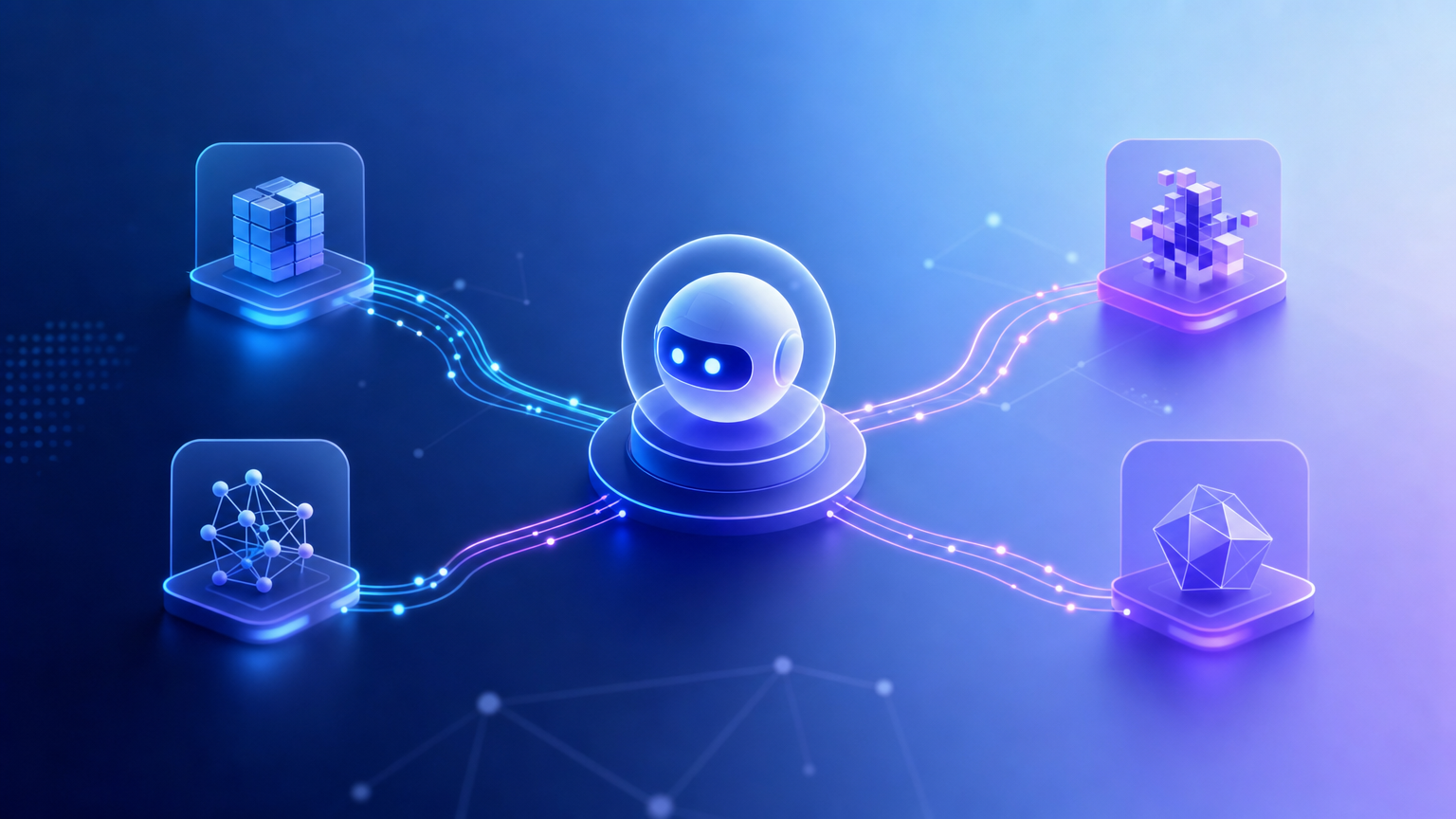
Multi-model AI means using more than one large language model or provider in the same work system. It is not the same as multimodal AI (one model handling text, images, or audio together). This article is about the next layer: an AI agent workspace that can choose a model per step, run multi-step goals, and pause for humans before irreversible actions. That is Superagent plus multi-model routing. Product explainer: What is the i10X Superagent? Production realism: AI agents experiment vs scale. Commercial home: multi-model AI workspace.
62% |
Organizations at least experimenting with AI agents (McKinsey State of AI 2025 baseline) |
23% |
Scaling agentic AI in at least one function (McKinsey, Nov 2025 baseline) |
17% |
Have deployed AI agents (Gartner 2026 CIO Survey, via i10X checkpoint) |
11% |
Tech leaders fully ready for agent scale (IBM IBV, Jun 2026, via checkpoint) |
42 pp |
Model/tool choice changes outcomes: max hire-rate gap by AI resume style (i10X Research) |
Intent is high. Production is still thin. Different surveys, same direction. Full source map and “do not mix instruments” guidance live on experiment vs scale. This post uses those checkpoint numbers for agent realism, not as a new survey.
Agent vs chat vs router
Three product shapes get sold under “AI” labels. Confusing them creates bad pilots.
Shape |
What it does |
Success looks like |
Failure looks like |
|---|---|---|---|
Chat |
Answers a prompt in a thread |
Useful draft in one turn |
No memory of process; restarts every morning |
Router |
Sends a single call to a suitable model |
Better quality or cost per call |
Still one-shot; no multi-step ownership |
Agent (workspace) |
Pursues a goal across steps with tools and state |
Package of work ready for human approval |
Runaway steps, wrong tools, cost spikes |
Superagent is the i10X name for the agent layer inside a multi-model workspace: multi-step work, tools, and model choice under your policy. It does not replace chat for quick questions. It replaces the fragile habit of “I will remember to open three apps and stitch the results in a doc at 11pm.”
Series overview: multi-model AI guide and hub multi-model AI.
Why agents need multi-model
A multi-step job is not one cognitive shape. Forcing every step through one default model is like forcing every employee role through one job description.
Step types differ
- Retrieve / research: browsing, source listing, cautious synthesis.
- Plan: break goals into steps, identify risks, choose tools.
- Draft: prose quality, tone, structure.
- Transform: format conversion, summarization, boilerplate.
- Critique: adversarial check, find weak claims, code review spirit.
- Act (careful): prepare sends, tickets, or updates that still need a human gate.
Those steps want different model strengths and different cost tiers. Gartner’s March 2026 inference commentary points value toward platforms that orchestrate a portfolio of models and route routine work to smaller or specialized models. Agents that always call the maximum frontier model for “rename this column” are economically naive.
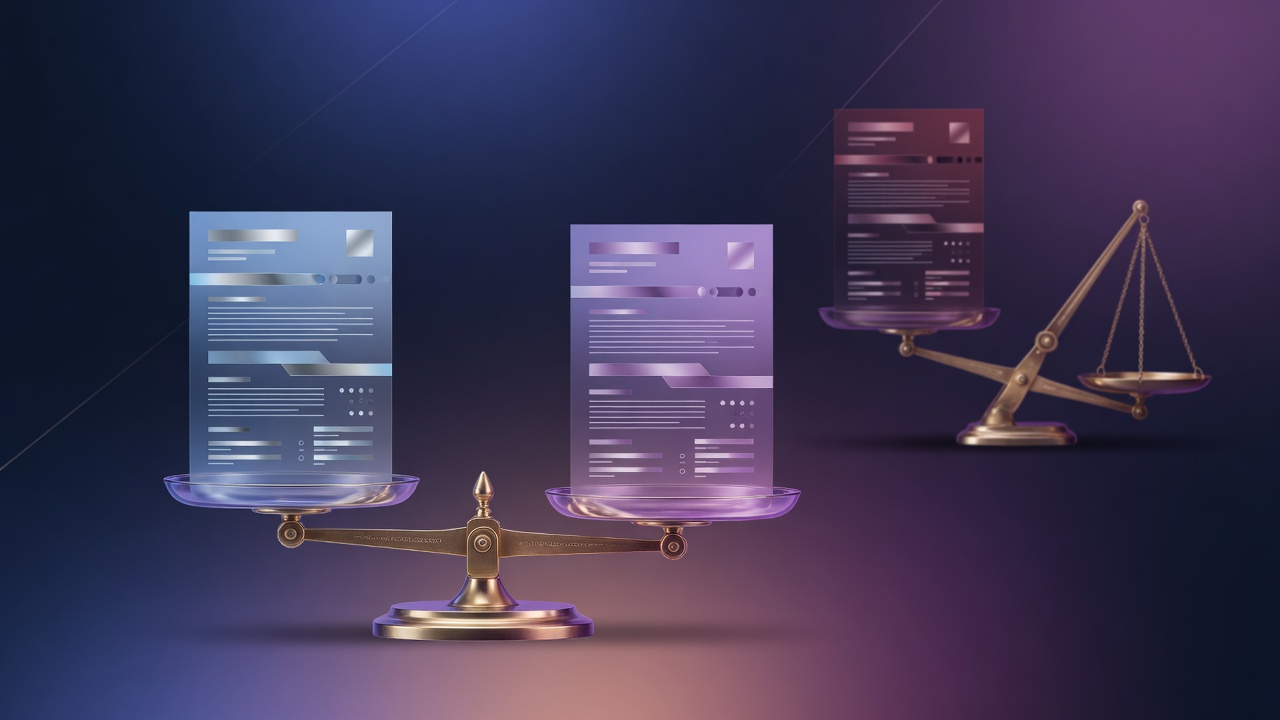
Model choice also changes outcomes on sensitive evaluation tasks. i10X Research found up to a 42 percentage-point hire-rate gap for the same candidate by AI resume writing style across 1,576 points and 100 profiles, with large evaluator gaps (including a 29-point single-evaluator score gap). That evidence is about screening and writing tools, not agent marketing, but the operating lesson transfers: which model you call is not a cosmetic setting. Study: AI CV bias.
Magnet: Agent Step → Model Policy
Name the artifact so teams can cite it. The Agent Step → Model Policy maps each step type to a default model class, a checker, a cost tier, and a human gate.
Step type |
Default model class |
Checker |
Cost tier |
Human gate |
|---|---|---|---|---|
Plan |
Strong reasoning model |
Optional second plan critique |
Medium-high |
Approve plan before long runs |
Research retrieve |
Retrieval-aware tools + synthesis model |
Adversarial model on claims |
Medium |
Approve sources list for high stakes |
Long-doc read |
Large context model |
Quote spot-check sample |
Medium |
Before board-facing summaries |
Draft prose |
Strong writing model |
Different model for tone/claims |
Medium |
Before client or public send |
Boilerplate |
Smaller / cheaper model |
Spot sample weekly |
Low |
Light review |
Code implement |
Code-capable model or coding agent product |
Separate review model/tool |
High for hard bugs |
Before merge |
Critique / QA |
Different family than author when possible |
Human on hard disagrees |
Medium |
On claim conflicts |
Prepare send / act |
Draft only by default |
n/a |
Low-medium |
Always before real-world send |
Copy the table into your team wiki. Replace “model class” with actual model IDs you allow. Log version IDs. Review monthly after vendor updates. Without versioning, last month’s good agent becomes this month’s mystery regression.
Routing without agents: AI model routing playbook. Task-level instincts: writing, coding, research.
The control clock: approval gates
The 2026 agent story is not only “can it demo.” It is “can you control it.” On experiment vs scale, the control clock is the hard addition: readiness lags intent. IBM’s June 2026 reading that only 11% of tech leaders feel fully ready for expected agent scale, with governance already behind adoption in that survey’s narrative, is the backdrop for Superagent design.
Minimum gates for an AI agent workspace
- Plan gate: multi-step runs longer than N minutes or M tool calls require plan approval.
- External action gate: email, social, CRM writes, tickets, payments: draft only until a human confirms.
- Cost gate: hard cap per run and per day; alert on spikes.
- Data gate: which data classes may leave the tenant; which models are allowed.
- Publish gate: claims that will be public need sources or dual-model critique.
- Kill switch: any operator can stop a run; logs remain.
Gartner’s mid-2020s agentic project risk commentary has long stressed cost, unclear value, and weak risk controls as cancellation drivers (see the checkpoint article’s “project clock”). A Superagent without gates inherits those drivers.
The gen-AI risk was AI saying the wrong thing. The agentic risk is AI doing the wrong thing.
Paraphrase of McKinsey’s 2026 trust framing as discussed on the i10X agents checkpoint. Multi-model routing does not replace control design.
Reference workflow: research → brief → outreach
Example Superagent job with multi-model policy applied.
- Goal intake (human): “Prepare a competitor brief on Company X for a founder call, then draft three outreach variants. Do not send.”
- Plan step (reasoning model): outline sources to check, risks, deliverable shape. Pause if plan is vague.
- Research step (retrieval + synthesis): collect public facts with links. Log sources.
- Critique step (different model): attack weak claims, missing dates, marketing fluff mistaken for fact.
- Brief draft (writing model): one-page brief with uncertainty flags.
- Outreach draft (writing model, brand constraints): three variants. No send tool enabled.
- Human package review: approve, edit, or kill. Only then may a human send.
That is multi-model routing inside an agent, not “chat with a fancy name.” Side-by-side method for the critique culture: side-by-side AI comparison. Hallucination protocol: multi-model hallucination checks.
Failure modes (design against them)
Failure |
Symptom |
Mitigation |
|---|---|---|
Runaway steps |
Agent loops, piles tool calls, burns budget |
Step caps, time caps, plan gate |
Wrong tool |
Looks busy, wrong system of record |
Allow-list tools per workflow |
Wrong model lock-in |
Every step uses max frontier model |
Agent Step → Model Policy with cost tiers |
Correlated agreement |
Two models agree, both wrong |
Sources for high stakes; sample audits |
Silent send |
External action without approval |
Hard block on act tools in pilot |
Context rot |
Step 5 ignores step 2 constraints |
Carry checklist state; restate constraints each step |
Agent-washing |
Fixed script sold as agent |
Demand plan/act/observe behavior; see checkpoint on label inflation |
Pilot theater |
Demo works, nobody owns weekly ops |
Named owner, weekly sample, kill or industrialize rule |
The experiment-vs-scale funnel is the culture check: if you are still “experimenting” after a year with no gates, you are not waiting for better models. You are avoiding operating work. Re-read the checkpoint before you scale Superagent autonomy.
Metrics for agent multi-model routing
Metric |
Why it matters |
Target spirit |
|---|---|---|
Human edit rate on packages |
Quality of multi-step output |
Falling after prompt/policy tuning |
Blocked vs unblocked actions |
Gate health |
100% external actions blocked until approval in pilot |
Cost per accepted package |
Economics of routing |
Known and trending with model mix |
% steps on non-frontier models |
Portfolio discipline |
Rises for boilerplate without quality loss |
Hard disagree rate on dual checks |
Uncertainty visibility |
Logged; human resolution SLA |
Incident count needing correction |
Control clock |
Tracked; not ignored (see IBM incident narrative on checkpoint) |
i10X Superagent path
On i10X, Superagent sits inside the multi-model workspace rather than as a separate chat toy:
- Access to multiple frontier and specialized models in one place.
- Multi-step goals with tools from the broader library (500+ tools/agents as supporting layer in product positioning).
- Space to encode routing habits and human checkpoints instead of tab-hopping.
- Free / start-now path on i10x.ai (verify current plan limits live).
Deep product narrative: Superagent explainer. Commercial series home: multi-model AI. Platform landscape: best multi-model AI platforms 2026.
Vertical example only when relevant: recruiting agents can use multi-model panels and gates. That is a domain instance, not the whole product. See recruiting silo materials only if you hire at volume; do not force every Superagent story into HR.
14-day Superagent pilot
Days 1-3: Pick one workflow with clear package output (brief, report, shortlist of options). Write success criteria. Disable all external send tools.
Days 4-7: Run with human-chosen models per step using the Agent Step → Model Policy table. Log cost and edit rate.
Days 8-11: Encode static model defaults for that workflow. Add critique step on a different model for any factual claims.
Days 12-14: Allow limited auto-pick only on low-risk transform steps. Review incidents. Decide: kill, keep assist-only, or expand one more workflow.
Do not scale to “the whole company” until one workflow is boringly reliable. The 62/23 and 17/11 checkpoint numbers exist because scale is still the minority story.
How much autonomy is safe?
A practical ladder:
- Assist: agent drafts package; human always runs the last mile.
- Guarded act: agent may use internal tools with logs; external still blocked.
- Conditional act: agent may perform low-risk external actions inside narrow templates after policy maturity.
- Wide act: rare, regulated, and not the default for 2026 knowledge-work Superagent pilots.
Most teams should live in assist and guarded act for months. That is not cowardice. That is reading the readiness numbers on experiment vs scale instead of vendor keynotes.
Routing signals inside agents
Human routers use judgment. Agent routers need explicit signals or they default to the most expensive model “to be safe.”
Signal |
Route tendency |
Gate tendency |
|---|---|---|
Short transform, low risk |
Cheaper / smaller model |
Light review |
Long document, many entities |
Large context model |
Quote sampling |
Needs live web facts |
Retrieval tools + cautious synthesis |
Source list approval for high stakes |
Customer or public language |
Strong prose + checker model |
Human before send |
Code change |
Code-capable model; separate review |
Human before merge |
Ambiguous goal |
Stop and ask; do not invent scope |
Plan gate mandatory |
Encode signals in the Agent Step → Model Policy rather than in one giant system prompt nobody maintains. Static routing depth without agents lives in AI model routing.
Observability: what to log every run
- Goal text and constraints (versioned).
- Plan steps as executed (not only as proposed).
- Model ID per step (not “default”).
- Tool names and targets (which system was touched).
- Tokens or cost estimate per step.
- Human interventions (edit, kill, approve).
- Final package link and decision outcome.
Without logs you cannot debug last Tuesday’s bad brief. With logs you can see whether cost spikes come from research loops, from frontier overuse on boilerplate, or from a tool thrashing. The IBM survey narrative on the agents checkpoint (incidents needing human correction as a lived reality for many orgs) is a reminder that “we will notice” is not a control system. Read experiment vs scale again when someone proposes turning off logs to “move faster.”
Anti-patterns for Superagent multi-model
- One model for every step labeled as multi-model because the workspace catalog has many models.
- Critique model identical to author model with the same temperature and prompt family, then calling it a panel.
- Plan optional on long runs because “it usually works.”
- External tools enabled on day one to impress stakeholders.
- No cost cap because the vendor will “optimize later.”
- Success = demo video rather than accepted packages over four weeks.
- Ignoring production statistics while citing only vendor win rates.
Multi-model screening in hiring is a cousin discipline: disagreement visibility and human gates on irreversible steps. If you hire at volume, borrow the spirit from multi-model AI screening and the outcome sensitivity evidence in ai-cv-bias. If you do not hire, still keep the gate idea.
Team rollout without theater
- Pick one workflow owner (named human, not “the AI committee”).
- Write Agent Step → Model Policy for that workflow only.
- Train three operators on gates and kill switch.
- Run fourteen days assist-only with daily cost glance.
- Publish a one-page retrospective: edit rate, cost, incidents, keep/kill.
- Only then invite a second workflow.
This matches the industry reality that experiment is common and scale is not. Your Superagent program should look more like the boring 23% scale story you want to join than the loud 62% experiment story everyone already lives in. Checkpoint: AI agents experiment vs scale.
Commercial home for the multi-model series remains the hub: multi-model AI workspace. Broader guide: multi-model AI guide.
Copy-paste policy snippet
1) Plan on a strong reasoning model; human approves plans with more than five steps or any external tool. 2) Research uses retrieval tools plus synthesis; claims get a second-model attack before the brief is marked ready. 3) Prose drafts use a strong writing model; customer or public text requires human send. 4) Boilerplate and format transforms use a cheaper model. 5) Code changes require a separate review path. 6) Cost cap per run is set before start; kill switch is known to every operator. 7) Logs store model IDs and tool calls for thirty days minimum in pilot.
Adapt IDs to your allowed catalog on i10X or your approved stack. Revisit after model version changes.
Frequently asked questions
What is an AI agent workspace?
A workspace where agents can run multi-step goals with tools, memory of the job, model choice, and human gates, not only single-turn chat.
Will Superagent replace chat?
No. Chat remains ideal for quick questions. Superagent is for multi-step packages and overnight or unattended prep with review.
Can agents reduce hallucinations?
They can add critique steps and multi-model checks. They can also compound errors across steps. Protocol:
hallucination checks.
How much autonomy is safe?
Start assist-only. Keep external actions behind approval until metrics are boring. See autonomy ladder above and the control discussion on the agents checkpoint.
Is multi-model required for agents?
Not strictly, but single-model agents waste specialization and overpay for boilerplate. Portfolio routing is the economic design Gartner’s Mar 2026 commentary points toward at platform level.
How is this different from OpenRouter auto-routing?
API routers optimize model selection per call for developers. Superagent optimizes multi-step work packages for operators with tools and gates.
What is the Agent Step → Model Policy?
The named table in this article mapping step types to default model class, checker, cost tier, and human gate.
Why link experiment vs scale so hard?
Because agent demos without production controls are the industry’s main failure mode. The 62/23 experiment-scale gap and 17/11 deployment-readiness readings are the context for every Superagent pilot.
Does model choice really matter that much?
Yes in measurable settings. i10X’s CV study showed large outcome gaps from writing-tool and evaluator choice. Agents inherit the same sensitivity when they evaluate or draft on your behalf.
Where do I start product-wise?
i10x.ai
for the workspace,
multi-model AI hub
for the series, and the Superagent explainer for product depth.
Should I let agents send email in week one?
No. Draft only. Human send. Non-negotiable for pilot hygiene.
How often should I update model policy?
At least monthly, and after any major model version change or cost incident.
“Give agents a portfolio of models and a short leash. Multi-step power without gates is just a faster way to industrialize mistakes.”
i10X
Run Superagent multi-model routing on i10X
Encode an Agent Step → Model Policy, keep humans on external actions, and work from one multi-model AI workspace instead of three tabs.
Multi-model AI hub · Superagent explainer · Experiment vs scale checkpoint
- McKinsey State of AI 2025: 62% experimenting with AI agents; 23% scaling agentic AI in at least one function (baseline cited throughout AI agents experiment vs scale).
- Gartner 2026 CIO Survey: 17% of organizations have deployed AI agents (via the same i10X checkpoint article; do not mix with McKinsey scale definition).
- IBM Institute for Business Value (Jun 2026): 11% of tech CxOs fully ready for expected agent scale; governance lag narrative as summarized on the checkpoint.
- Gartner (25 Mar 2026 press commentary on inference economics): portfolio orchestration across models; route routine work to smaller or specialized models (high-level).
- Gartner agentic project risk / cancellation drivers and related control discussion: summarized with source map on experiment vs scale (open primary for exact forecast wording).
- i10X Research (June 2026), AI CV bias study: up to 42 pp hire-rate gap; 1,576 points; 100 profiles; 29-point evaluator gap (outcome sensitivity of model/tool choice).
- i10X Superagent product narrative: Superagent explainer; workspace i10x.ai; hub multi-model AI.