Quick Take
The introduction of GLM-5.2 marks a clear shift in how these models are being built. Instead of chasing better single-turn answers, the focus has moved toward handling longer, multi-step processes that feel more like actual workflows than simple back-and-forth exchanges.
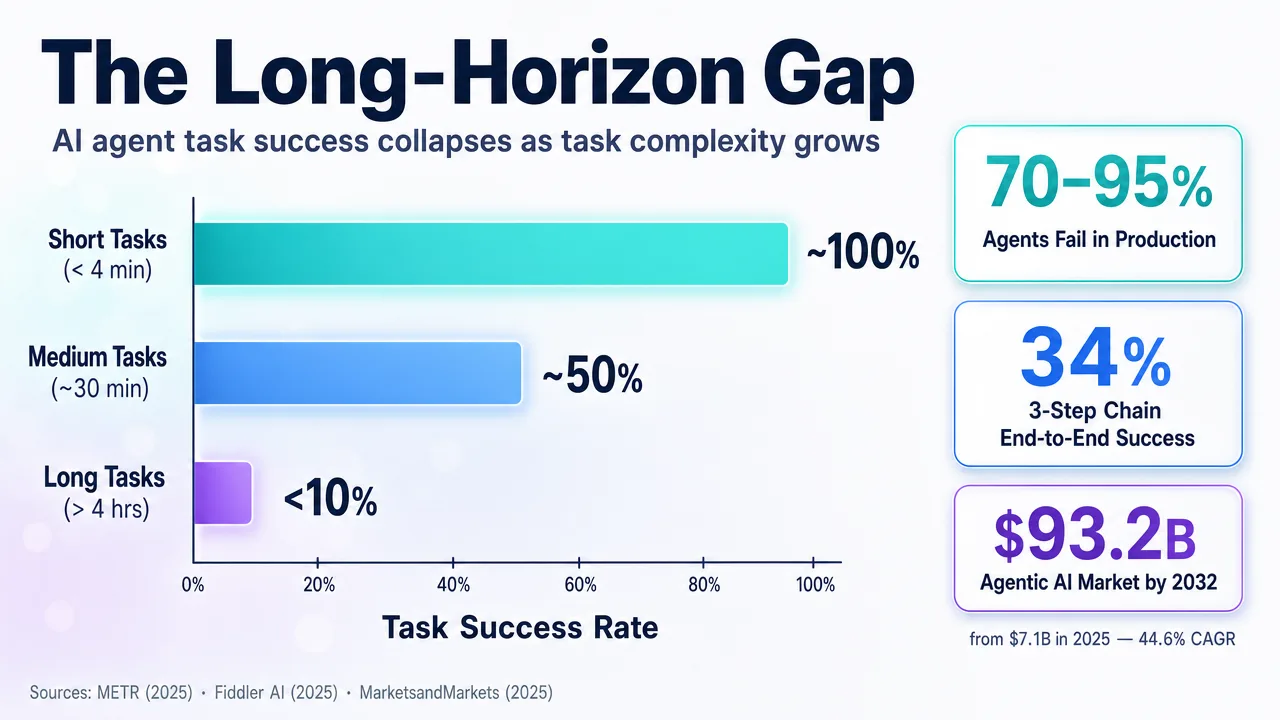
Summary: GLM-5.2 has surfaced as a new frontier model specifically optimized for executing long-horizon tasks. Rather than focusing purely on conversational benchmarks, its architecture is built to sustain hierarchical reasoning across extended, complex workflows.
What happened: A new entry in the GLM family, GLM-5.2, was introduced via the open-source platform Hugging Face. The model is explicitly positioned to solve the pervasive issue of reasoning degradation when LLMs are asked to perform multi-step planning and tool-augmented execution over long horizons.
Why it matters now: The primary bottleneck in deploying autonomous AI agents is the “compounding error” problem. When current LLMs attempt 10- or 20-step workflows, they frequently lose track of the initial objective or fail to self-correct. GLM-5.2 focuses on robust, extended chains of thought, bridging the gap between isolated API calls and reliable, autonomous enterprise software.
Who is most affected: Developers building agentic frameworks, enterprise automation teams, and infrastructure providers are heavily impacted. If models begin natively “thinking” for several minutes before acting, the underlying compute patterns and application architectures shift radically.
The under-reported angle: Behind the promise of long-horizon tasks lies a massive infrastructure challenge – the latency and compute overhead of extended reflection. While the industry fixates on the reasoning capabilities, the real battle will be optimizing the throughput, serving infrastructure, and memory management required to run these planner-executor models in production.
Deep Dive
Have you ever watched an agent start strong on step three, only to wander off by step twelve? The era of “vibes-based” conversational LLMs is giving way to solver models. The quiet debut of GLM-5.2 underscores a critical industry realization: predicting the next token is not the same as formulating and executing a plan. By focusing explicitly on long-horizon tasks, GLM-5.2 directly tackles one of the most stubborn friction points in modern AI development – the tendency of language models to hallucinate, loop, or forget their primary directive deep into a multi-step workflow.
Current open-weights and commercial models often struggle when deployed as agents. They require heavy scaffolding – orchestration frameworks, external short-term memory modules, and rigid error-correction loops – just to maintain coherence. The GLM-5.2 proposition attempts to internalize this orchestration. By baking hierarchical reasoning, self-reflection, and process supervision directly into the model’s behavior, it aims to natively support planner-executor loops and tool-calling chains without relying on bloated external wrappers.
That said, current developer documentation and early PR signals reveal a significant content and validation gap. While positioning a model for “extended multi-step reasoning” sounds ideal for automated research or ops runbooks, the AI community is increasingly demanding reproducibility. What are the specific architectural choices enabling this long-horizon competence? There is an urgent need for concrete benchmark results on evaluation suites tailored for multi-step reasoning, alongside transparency regarding curriculum training and error attribution in long chains of thought.
Furthermore, integrating a model like GLM-5.2 into production environments shifts the paradigm from bandwidth to compute capability. Extended reasoning means extended latency. Developers exploring this release will quickly hit roadblocks if they lack clear guidance on latency, throughput limitations, and serving optimizations for long chains of thought. A model that can reliably complete a 30-step task is a breakthrough, but only if the AI infrastructure is calibrated to hold the context and memory state open without timing out or breaking the bank.
Stakeholders & Impact
| Stakeholder / Aspect | Impact | Insight |
|---|---|---|
| AI/Agent Framework Developers | High | GLM-5.2 reduces the need for heavy external prompt-chaining, shifting the heavy lifting of orchestration into the model itself. |
| Data Centers & Cloud Infra | High | Long-horizon reasoning demands intense, continuous inference compute and VRAM allocation, altering typical GPU batching constraints. |
| Enterprise Software Teams | Medium | Unlocks more reliable autonomous workflows (e.g., sophisticated automated QA, multi-step data migration), provided latency is manageable. |
| Researchers & Evaluators | Significant | Forces the creation of new benchmarks. Static Q&A datasets are insufficient; dynamic, multi-turn agent execution tasks are now the gold standard. |
About the analysis
Researched and written with AI assistance under the editorial responsibility of the i10X News team. The title image is an AI-generated illustration. Read our AI Use Policy. Spotted an error? Request a correction.
This analysis is based on independent review of early model metadata, developer reception signals, and architectural positioning on ML platforms like Hugging Face. Carefully tailored for AI infrastructure operators, CTOs, and agentic developers, it contextualizes technical model claims within the broader market shift toward reasoning-based AI systems.
i10x Perspective
From what I’ve seen so far, GLM-5.2 is a leading indicator that the industry’s definition of “intelligence” is maturing from static knowledge retrieval to dynamic, temporal problem-solving. As models spend more compute at inference – literally “thinking” prior to outputting an answer – the underlying economics of AI will transform. We are moving toward a paradigm where AI is billed not by the token, but by the complexity and duration of the task completed. If long-horizon reasoning models master self-correction, we will finally cross the threshold where AI transitions from a digital assistant to a true digital workforce.