The Eclipse Foundation just shipped the first public milestone of its Jakarta Agentic AI project. The release adds a standardized LLM facade and a vendor-neutral API built for enterprise Java teams. By turning the shifting APIs of AI providers into a stable, runtime-orchestrated workflow, the 1.0.0-M1 specification lets large Java backends run autonomous agents without locking into any single vendor.
Quick Take
- The milestone: Jakarta Agentic AI published its 1.0.0-M1 API on Maven Central, debuting a draft specification for building, deploying, and running AI agents natively within enterprise Java runtimes.
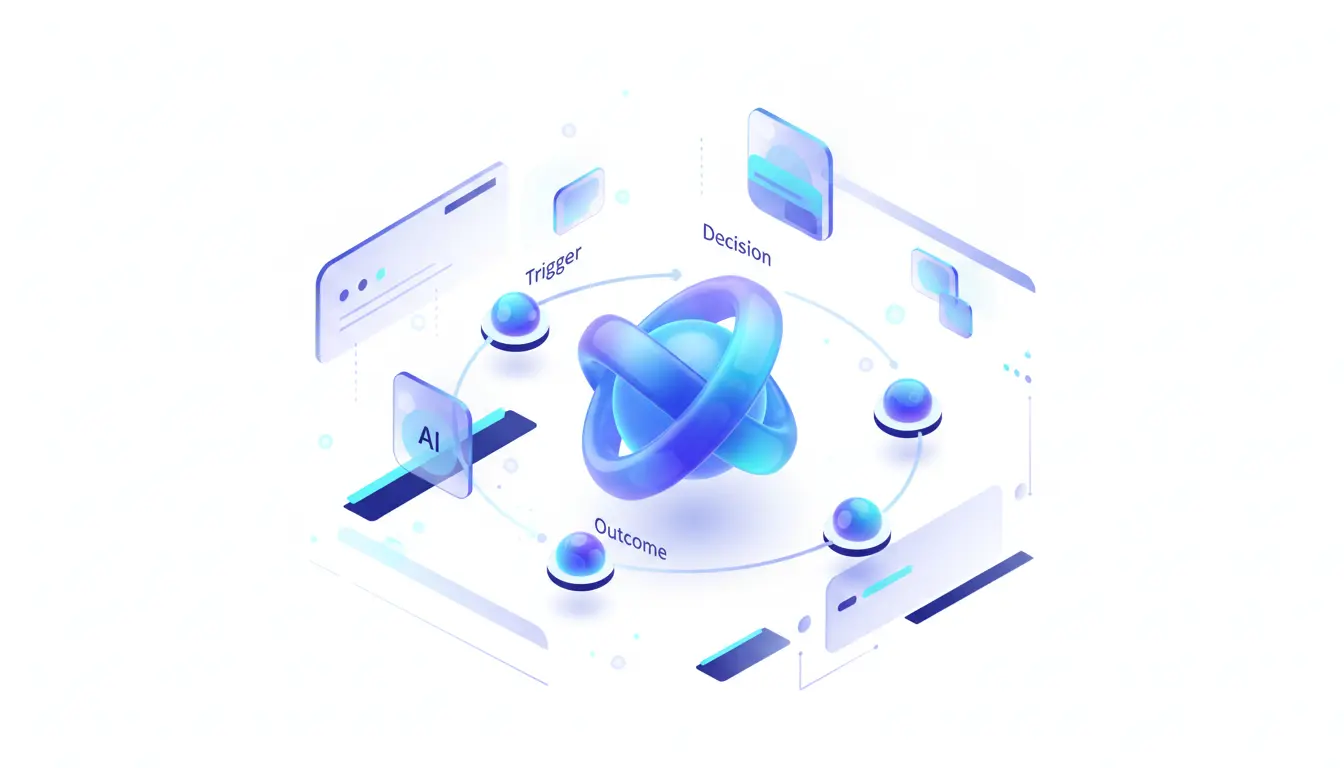
- The architecture: It introduces an annotation-driven lifecycle—orchestrating AI agents through Trigger, Decision, Action, and Outcome phases using standard CDI (Contexts and Dependency Injection) beans.
- Why it matters now: Large enterprise systems need a buffer against rapidly changing LLM APIs. This specification treats underlying foundational models as pluggable commodities.
- The under-reported angle: Rather than competing with popular Java AI libraries like Spring AI or LangChain4j, Jakarta Agentic AI is designed to sit above them, offering a unified abstraction layer that prevents proprietary lock-in.
What happened
The Eclipse Foundation has formally introduced the 1.0.0-M1 milestone of the Jakarta Agentic AI specification, offering Java developers their first concrete API artifact to test on Maven Central. Rather than forcing developers to build bespoke orchestration loops to manage LLM interactions, the specification integrates directly with existing Jakarta EE technologies to create autonomous, goal-driven systems.
At its core, the release defines a new programmatic lifecycle. Developers build agents by applying simple annotations—such as @Agent, @Trigger, @Decision, @Action, and @Outcome—to ordinary Java methods. The runtime then takes over, orchestrating the sequence to perceive data, query an LLM for reasoning, execute business logic, and handle exceptions natively within a @WorkflowScoped context.
Additionally, the milestone establishes a minimal LargeLanguageModel facade. This interface processes prompts and maps responses directly to typed JSON-B objects, while offering a targeted unwrap() method for developers who need to temporarily bypass the facade to access provider-specific LLM quirks.
Why it matters now
The current pace of the AI race means that LLM APIs from major players like OpenAI, Google, and Anthropic are in a constant state of flux. Hardcoding these proprietary endpoints into massive, monolithic enterprise Java backends creates a significant technical debt time bomb. By introducing a vendor-neutral standard, the Jakarta EE community is actively commoditizing the AI model layer for the enterprise.
This standard shifts leverage away from the AI providers and back to the software architects. With a standardized facade, migrating a complex fraud detection, customer support, or operations-automation agent from an older GPT model to a new Gemini or Claude release becomes a configuration update rather than a multi-month refactoring project.
Furthermore, this move secures a future for legacy enterprise infrastructure in the age of agentic AI. By wrapping modern intelligence inside familiar, mature specifications, the Java ecosystem ensures that enterprise applications can become “smart” without discarding decades of security, observability, and lifecycle management tooling.
Who is most affected
| Stakeholder | Impact | Why |
|---|---|---|
| Enterprise Java Architects | High | Gains a standardized, portable blueprint to build AI agents, drastically reducing the risk of single-vendor AI lock-in. |
| AI Framework Maintainers | Medium | Tools like Spring AI and LangChain4j will increasingly act as the underlying engines orchestrated by this higher-level standard. |
| Application Server Vendors | High | Runtimes (like Payara and Azul) must evolve to support automated, stateful workflow orchestration across the new agent lifecycle. |
| Major LLM Providers | Low to Medium | Faces increased commoditization in the enterprise market as middleware creates a neutral buffer between their APIs and corporate codebases. |
About the analysis
Researched and written with AI assistance under the editorial responsibility of the i10X News team. The title image is an AI-generated illustration. Read our AI Use Policy. Spotted an error? Request a correction.
This independent i10x analysis synthesizes official specification drafts, developer tutorials, and ecosystem announcements to evaluate how standardized AI orchestration will shape the enterprise software landscape. It is written for engineering leaders, CTOs, and developers navigating AI adoption in complex environments.
- Jakarta Agentic Artificial Intelligence | The Eclipse Foundation
- Jakarta Agentic AI
- Jakarta Agentic AI Hits Its First Milestone – foojay
- Jakarta Agentic AI Specification
- Jakarta Agentic AI — Interactive Tutorial
- Announcing the Jakarta Agentic AI Project – Azul Systems
- The Jakarta Agentic AI Project – iProgrammer
i10x Perspective
Standardization is the clearest sign that a technology has moved from experiment to dependable infrastructure. By wrapping the chaos of LLM APIs in a predictable, even routine Java lifecycle, Jakarta EE is doing to AI agents what JDBC once did to database connections. As this specification hardens and application servers adopt it, the power dynamic will shift—allowing vast swaths of the global economy to orchestrate multi-model intelligence while remaining completely insulated from the volatile AI vendor wars.