Quick Take — The Rise of Agentic AI and AgentOps
⚡ Quick Take
Summary
Major cloud providers, data platforms, and AI labs are aggressively pivoting their product narratives from passive chatbots to AI agents. These autonomous systems use large language models (LLMs) not just to generate text, but to plan workflows, call external tools, and execute actions with minimal human oversight.
What happened
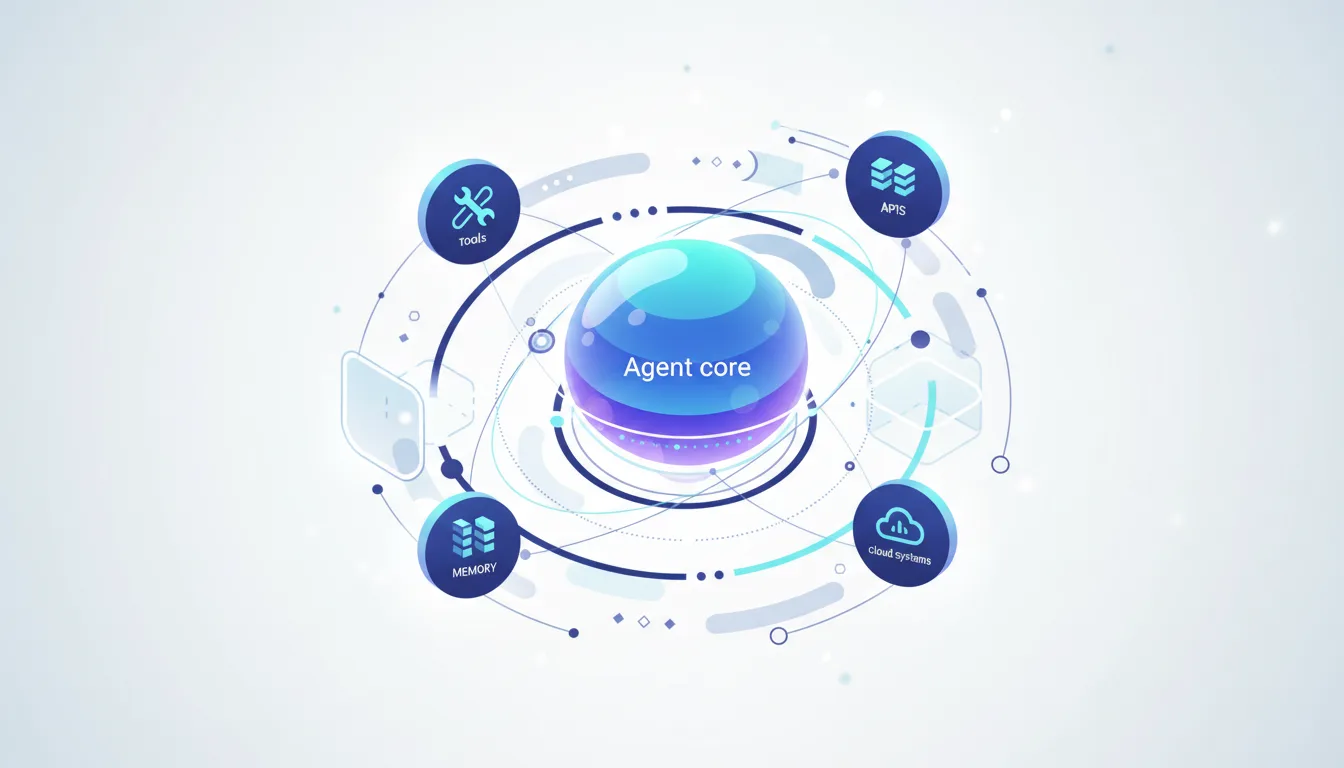
Across the ecosystem—from Meta’s AI research labs to enterprise giants like AWS, Google Cloud, and Snowflake—the definition of AI is moving toward autonomous task execution. Platforms are rapidly releasing frameworks that equip LLMs with memory (RAG), state machines, and API routing capabilities to act on behalf of users.
Why it matters now
This evolution changes the fundamental physics of AI deployment. While traditional LLMs require compute primarily for a single inference pass, agentic workflows rely on multi-step reasoning loops (like ReAct). This exponentially increases inference-time compute demands and shifts the competitive bottleneck from model intelligence to tool orchestration and execution reliability.
Who is most affected
Enterprise architects, platform engineers, and security teams are on the front lines. They must now figure out how to integrate unpredictable, autonomous engines into rigid enterprise software environments without breaking compliance or stability.
The under-reported angle
While the mainstream conversation focuses heavily on productivity gains, the critical missing layer is “AgentOps” and blast radius containment. The industry lacks standardized reliability engineering for agents—such as circuit breakers, strict OAuth-scoped permissions, and state recovery frameworks—which is the true barrier to production-scale deployment.
🧠 Deep Dive
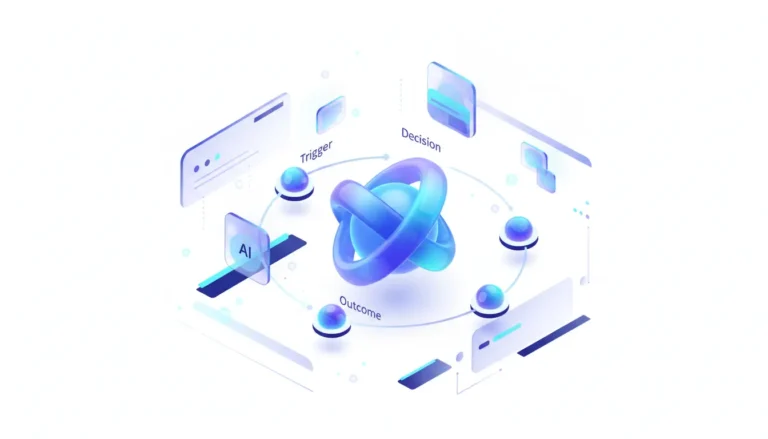
Have you ever wondered why some AI demos feel seamless in a slide deck yet stall the moment they touch real enterprise systems? The pivot from chatbots to AI agents represents a fundamental upgrade in the cognitive architecture of artificial intelligence. If a standard LLM is a powerful calculator, an AI agent is a fully equipped autonomous worker. As outlined in architectures pushed by AWS, Google Cloud, and Microsoft, agents operate on a perceive-plan-act loop. They break complex goals into sub-tasks, retrieve necessary context from enterprise data environments (often via Snowflake or cloud-native data lakes), and use APIs to execute changes in the real world.
From what I’ve seen, the current consensus across enterprise PR and consulting whitepapers (like those from McKinsey and IBM) heavily over-indexes on the sheer potential of workflow automation, while glossing over the infrastructural reality. Running an agent is not like querying a database; it is more akin to managing a chaotic microservice. Because agents utilize frameworks like LangGraph or AutoGen to execute multi-step plans, they consume massive amounts of tokens through continuous reasoning and self-correction. This fundamentally alters the ROI and cost modeling of AI, pushing inference costs far higher than simple zero-shot generations.
Furthermore, integrating agents introduces unprecedented security and governance challenges. When an LLM is given read-write access to enterprise APIs, the “blast radius” of a hallucination or a prompt injection attack expands exponentially. The real enterprise battleground is no longer just model accuracy; it is containment. Sandboxing, strict role-based access control (RBAC), human-in-the-loop approvals, and containerized tool execution are becoming mandatory infrastructure layers to prevent autonomous systems from triggering data exfiltration or destructive downstream actions.
This brings the ecosystem to the dawn of a new discipline: AgentOps. Much like Site Reliability Engineering (SRE) standardized cloud operations, AgentOps is emerging to tame agentic workloads. Enterprises are finding that out-of-the-box models fail without live monitoring, execution tracing, time-outs, and fallback protocols. When an agent gets stuck in an infinite API-calling loop, traditional software monitors often fail to catch the semantic error.
Ultimately, the shift toward agentic AI is forcing a convergence between AI developers and traditional cloud infrastructure engineers. Vendors are racing to provide the most secure, deeply integrated environments for these agents to live in. The winners of the next AI cycle will not necessarily be those who train the smartest base models, but those who provide the most robust execution environments, evaluation harnesses, and security policies to make autonomous AI safe for the enterprise grid.
📊 Stakeholders & Impact
| Stakeholder / Aspect | Impact | Insight |
|---|---|---|
| AI / LLM Providers | High | Forced to optimize models specifically for function calling, tool use, and multi-step reasoning (e.g., shifting focus to inference-time compute). |
| Cloud & Data Infra | High | AWS, GCP, and Snowflake are positioning themselves as the orchestration layer, capitalizing on the massive compute and storage required for AgentOps and memory. |
| Enterprise Architects | High | Tasked with building new governance patterns: RBAC for agents, sandboxing, build-vs-buy framework assessments, and integration with legacy APIs. |
| Regulators & Policy | Significant | Compliance models (HIPAA, GDPR) must adapt to autonomous actors handling sensitive data. Liability shifts from “AI bias” to “unintended automated actions.” |
✍️ About the analysis
Researched and written with AI assistance under the editorial responsibility of the i10X News team. The title image is an AI-generated illustration. Read our AI Use Policy. Spotted an error? Request a correction.
This independent analysis synthesizes current enterprise adoption frameworks, cloud provider architectural guidelines, and emerging gaps in AgentOps methodologies. It is designed for CTOs, AI product leaders, and platform engineers who need to navigate the transition from experimental LLM deployments to production-grade autonomous systems.
🔭 i10x Perspective
The transition to agentic AI is the clearest signal yet that the compute bottleneck is shifting from model training to model inference. As agents execute sprawling, multi-step ReAct loops, they will drive an unprecedented surge in demand for inference infrastructure, changing the economic calculus of AI data centers.
The true moat in the AI ecosystem will belong to platforms that master “Agent SRE”—providing the rails, sandboxes, and observability required to deploy autonomous systems safely. Looking forward, over the next five years, the tension between aggressive autonomous capabilities and strict enterprise governance will define which AI deployments scale, and which remain trapped in the lab.