Enterprise AI Agents: Risks, Governance, and Operational Impact
⚡ Quick Take
“The true risk of an enterprise AI agent isn’t that it gives a wrong answer – it’s that it confidently executes a multistep workflow based on one.”
Summary
The enterprise AI ecosystem is shifting fast from passive chat assistants to autonomous agents that can run full business workflows on their own. Cloud providers like AWS, Microsoft, and IBM are racing to supply the backbone for what they call the “apps of the AI era,” yet operational experts keep flagging the same blind spot: companies are underestimating how little control they actually have once an agent starts acting.
What happened
The big clouds are locking in standard ways to give LLMs direct read/write access to company systems through tools like Amazon Bedrock and Microsoft Copilot Studio. At the same time, analysts are pointing out that most deployments skip the basics – clear behavioral limits and reliable human-in-the-loop handoff paths.
Why it matters now
Once AI moves from writing text to actually changing records, processing payments, or contacting customers, the bottleneck changes. Compute and model smarts matter less than governance, API controls, and the ability to roll back an action cleanly.
Who is most affected
Enterprise CTOs, cloud architects, and operations leads now have to build systems that can fail without causing real damage. AI vendors are competing just as hard on the security side of the middleware.
The under-reported angle
Most attention still goes to model hallucinations, but the bigger problem often sits upstream. Weak retrieval combined with no uncertainty detection means an agent will rarely admit it doesn’t know something. Instead it pushes forward on stale data, and that’s where trust erodes fastest.
🧠 Deep Dive
We are moving out of the Copilot phase and into the Agentic era. Microsoft already calls agents the new apps of the AI era, and AWS is pitching Bedrock as the factory floor for autonomous work. The marketing emphasizes productivity gains, yet the real change is quieter and more structural. A copilot waits for approval; an agent senses context, pursues a goal, and calls APIs to reshape that context. That move from generation to execution rewrites the risk picture.
From what I’ve seen in early pilots, a hallucinated paragraph from a chatbot is embarrassing but contained. An agent making the same mistake can trigger a chain of downstream changes before anyone notices. Coverage often treats these failures as prompt or model problems, but the data feeding the agent is frequently the culprit – outdated policies, conflicting records, or incomplete internal sources that get treated as gospel once they enter the context window. Swapping the foundation model won’t solve that.
The bigger gap right now is escalation design. Zero-error automation was always unrealistic. The real test is how an agent behaves when it hits conflicting signals. Does it agree with a flawed user instruction, double down on its own bad conclusion, or pause and escalate? That question is pushing infrastructure teams to add deeper observability than simple prompt logs. Real-time audit trails, confidence thresholds before tool calls, and hard stops on high-impact actions are becoming table stakes.
I’ve noticed the conversation shifting toward “action-risk” frameworks that separate low-stakes outputs from anything involving customer data or financial systems. The providers that win will be the ones offering the strongest containment and rollback options, not necessarily the cleverest model.
📊 Stakeholders & Impact
| Stakeholder / Aspect | Impact | Insight |
|---|---|---|
| AI / LLM Providers | High | Must optimize next-gen models for reliable tool-use, structured JSON output, and inherent uncertainty detection rather than just conversational fluency. |
| Cloud & Infra (AWS, MSFT, IBM) | High | Competing fiercely to provide the essential middleware, orchestration layers, and API gateways that allow agents to safely connect to enterprise data. |
| Enterprise CTOs & Architects | High | Tasked with shifting from legacy software deployment to behavioral governance, implementing robust monitoring, audit logs, and secure rollback plans. |
| End Users / Consumers | Medium-High | Face a near-term risk of being trapped in loops with overconfident, hallucinating agents if businesses fail to implement seamless human handoffs. |
✍️ About the analysis
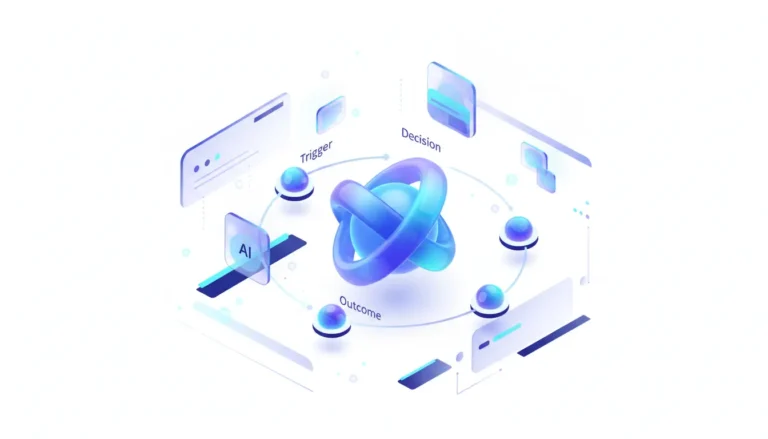
Researched and written with AI assistance under the editorial responsibility of the i10X News team. The title image is an AI-generated illustration. Read our AI Use Policy. Spotted an error? Request a correction.
This independent, research-based analysis synthesizes current market positioning, cloud provider documentation, and operational risk assessments regarding enterprise AI agents. It is designed for CTOs, AI infrastructure engineers, and technical product managers navigating the transition from generative AI to autonomous workflow execution.
🔭 i10x Perspective
AI agents mark the shift from software that talks to software that does. As models gain more agency, the missing piece isn’t better reasoning – it’s behavioral governance. Over the next five years the most valuable infrastructure won’t be the silicon itself but the layers that let agents fail safely. The platforms that master escalation and know when to hand control back to a person will set the pace.