Quick Take
Large language models are moving fast from chat interfaces to agents that can actually act inside systems. That change is splitting the enterprise attack surface wide open, and both regulators and security teams are having to redraw the map of what counts as risk.
Summary:
The cybersecurity picture is splitting under generative AI. What started as worry about AI-written phishing has become a concrete problem of machine-speed attacks and exposed AI agents. Companies now face two fronts at once: stopping AI-driven threats while trying to lock down their own LLM setups and the shadow AI that keeps popping up.
What happened:
Frontline reports from groups like Mandiant and Google, alongside regulators such as NY DFS and the UK NCSC, plus firms like Deloitte, all point to the same conclusion. Old controls are not enough for AI deployments. Security teams used to focus on data. Now they also have to protect models, agent workflows, and third-party AI chains from attacks like indirect prompt injection and data poisoning.
Why it matters now:
AI agents are getting real permissions to read databases, run code, and call APIs. That turns them into attractive targets for moving laterally or gathering intel. The trouble is that many organizations still blur the line between governance of AI (how people use the tools) and governance for AI (how the systems themselves are hardened). When those two stay tangled, exposure grows.
Who is most affected:
CISOs, technology leaders, and compliance officers feel it first, along with the developers who now have to build secure lifecycles into their models. Third-party vendors are also under heavier scrutiny for how they handle sensitive data inside their own AI stacks.
The under-reported angle:
The real blind spot is not just attackers using AI. It is the growing number of nonhuman identities. Once autonomous agents receive broad permissions, they create undocumented workflows and extension points that existing incident response plans were never written to handle.
Deep Dive
The discussion around AI-related cyber risk has moved past the early alarm over deepfakes and AI-generated malware. The sharper issue now is that AI plays three roles at the same time: weapon, target, and defense. That overlap has pushed the industry to separate governance of AI from governance for AI, the latter meaning actual hardened architecture around live models.
The sharper risk is coming from agentic systems. As models gain the ability to act on their own, they receive access to databases, operational systems, and code environments. This opens new paths for indirect prompt injection, where malicious instructions arrive through web pages or emails and then trigger data leaks or automated exploits. Most organizations still treat these nonhuman identities like ordinary service accounts, without dedicated assessments.
Regulators have stopped waiting. NY DFS guidance now requires AI considerations in formal cyber risk reviews, and that requirement reaches third-party providers. Enterprises can no longer treat vendor LLM pipelines as someone else’s problem. The full supply chain, from model weights to training data and plugins, is effectively critical infrastructure.
Defense planning is shifting toward machine speed. Deloitte and others describe a four-part frame: data, models, applications, and infrastructure. Traditional perimeters do not cover the gaps. Security operations centers still lack clear playbooks for questions such as model compromise, shadow AI activity, or vulnerabilities introduced by hallucinated code.
This amounts to a stress test for the whole developer ecosystem. Groups like the Atlantic Council are urging that adversarial AI risks be folded directly into software security standards. As attackers use AI for espionage and adaptive malware, the practical move is to build defenses that can operate at the same pace, including defensive models that can counter offensive ones in real time.
Stakeholders & Impact
| Stakeholder / Aspect | Impact | Insight |
|---|---|---|
| AI / LLM Providers | High | Must bake robust security guardrails, red-teaming, and permission scoping into foundation models to prevent agentic misuse. |
| CISOs & SecOps | High | Forced to rethink incident response and threat modeling for nonhuman identities, prompt injections, and shadow AI. |
| Enterprise Vendors | Significant | Facing strict regulatory mandates to prove their embedded AI tools do not expose client data or introduce lateral vulnerabilities. |
| Regulators & Policy | High | Shifting from broad AI ethics frameworks to concrete, control-oriented compliance mandates targeting systemic cyber resilience. |
About the analysis
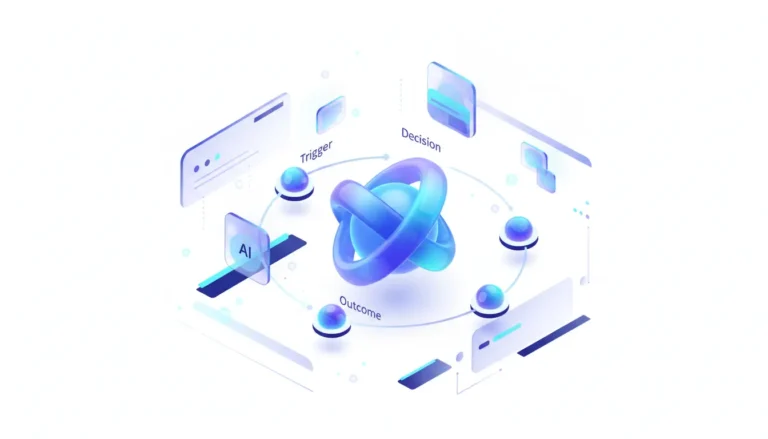
Researched and written with AI assistance under the editorial responsibility of the i10X News team. The title image is an AI-generated illustration. Read our AI Use Policy. Spotted an error? Request a correction.
This independent, research-based analysis synthesizes current search intent, regulatory guidance, and frontline threat intelligence to map the evolving landscape of AI cyber risk. It is designed for CISOs, CTOs, and AI infrastructure leaders who need to navigate the collision between rapid LLM deployment and modern enterprise security frameworks.
i10x Perspective
The move toward autonomous, agentic LLMs effectively ends reliance on traditional perimeter security. Over the next five years, the tension between scaling AI capabilities and protecting enterprise data will shape infrastructure decisions, with an advantage likely going to cloud providers that can embed machine-speed defenses at the platform level.
As models receive more authority to execute code and move resources, the scarcest resource in the ecosystem will not be compute power alone. It will be verifiable, cryptographic trust in the actions of nonhuman identities.