The shift from conversational AI to autonomous, tool-using agents is the most significant leap in enterprise technology since the LLM itself – but the internet’s underlying infrastructure isn’t ready for it.
Quick Take
- Summary: Tech giants are pushing ” AI agents ” as the next major enterprise evolution, moving beyond conversational chatbots to autonomous software entities that perceive, reason, and act across external tools.
- What happened: Major vendors like Google, Microsoft, Meta, and IBM have synchronized their messaging around ” Agentic AI ,” heavily promoting systems that can break down complex user goals, orchestrate workflows, and independently execute tasks.
- Why it matters now: This marks the critical transition from AI as a passive brainstorming assistant to AI as an active, tool-using participant in enterprise workflows, fundamentally altering how compute and business processes scale.
- Who is most affected: Enterprise IT leaders, security professionals, and software developers who must now figure out how to integrate, monitor, and govern non-human actors in human-centric systems.
- The under-reported angle: While the market focuses on productivity gains, autonomous agents are on a collision course with the internet’s fragile infrastructure, poised to expose weak API authentication, inadequate rate limits, and broken permission models.
Deep Dive
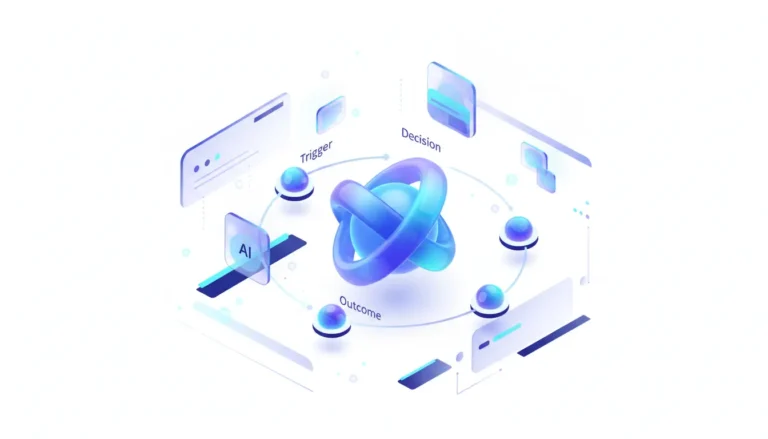
The AI industry is pivoting hard. We’re moving rapidly from the era of conversational LLMs—where AI merely generates text—to the era of AI Agents, where AI executes actions. From what I’ve seen, an AI agent doesn’t just predict the next token. It operates on a continuous perceive-reason-act loop. It receives a high-level goal, breaks it into sequential steps, and leverages external tools, memory, and APIs to get the job done. That’s the difference between asking an AI to write a Python script and asking it to write, debug, and deploy that script to a cloud environment on its own.
Look at the current vendor ecosystem, and a clear narrative emerges. Microsoft and Google frame agents as the ultimate cloud productivity unlock, handling everything from data analytics to calendar orchestration. McKinsey pitches them to the C-suite as a paradigm shift in workflow delegation, while IBM leans into the enterprise automation angle, presenting agents as the next logical step beyond rigid Robotic Process Automation (RPA) and static scripts. The overarching promise is seamless human-work augmentation.
But there’s a massive disconnect between these glossy PR narratives and ground-level infrastructure reality. Security watchdogs note that unlike a static automation script or a human-in-the-loop Copilot, a true AI agent possesses autonomy, memory, and identity. When an agent is granted function-calling capabilities, it acts on behalf of the user. Most explainers gloss over the severe security implications of giving probabilistic models the keys to deterministic databases.
This is where the under-reported crisis lies: “rogue agents.” The internet is currently built for humans and rigid bots. Autonomous AI agents expose the web’s foundational weaknesses—weak authentication, excessive permissions, and inadequate rate limits. An agent susceptible to a prompt injection attack isn’t just generating a toxic response. It could be autonomously re-routing funds, deleting databases, or leaking internal credentials across the web.
To safely scale Agentic AI, the infrastructure layer must adapt. Enterprises are realizing they need an entirely new operational governance matrix: sandboxing, verifiable agent identities, scoped credentials, and strict human-in-the-loop (HITL) approval gates. The true competitive moat in the next 12 months won’t just be the reasoning capabilities of the underlying LLMs, but the orchestration frameworks that prevent these agents from crashing the very systems they were built to optimize.
Stakeholders & Impact
| Stakeholder / Aspect | Impact | Insight |
|---|---|---|
| AI / LLM Providers | High | Forces a shift in model training from raw parameter count to function-calling reliability, tool use, and multi-step reasoning capabilities. |
| Enterprise IT & Security | High | Requires entirely new guardrails for machine identity, scoped permissions, and defense mechanisms against agent-driven prompt injections. |
| Business Leaders & Ops | Medium–High | Shifts enterprise value from task-based assistance (drafting emails) to delegated outcomes (automating end-to-end supply chain queries). |
| Infrastructure & APIs | Significant | Web services will experience massive spikes in autonomous traffic, requiring robust rate-limiting and machine-to-machine authentication protocols. |
About the analysis
Researched and written with AI assistance under the editorial responsibility of the i10X News team. The title image is an AI-generated illustration. Read our AI Use Policy. Spotted an error? Request a correction.
This independent, research-based analysis synthesizes enterprise vendor documentation, security frameworks, and current search intelligence surrounding Agentic AI. It is designed for CTOs, engineering managers, and AI strategists navigating the complex transition from conversational AI to autonomous, tool-using systems.
i10x Perspective
The race to build AI agents signals that the “chatbot era” was merely a user-interface transition phase. The real endgame is headless, autonomous intelligence. As OpenAI, Google, and Anthropic battle for reasoning supremacy, the critical bottleneck will shift from raw compute to verifiable trust, sandboxing, and agent-to-agent communication protocols. Over the next five years, the industry’s defining tension will be balancing autonomous scale with rigorous governance – because an intelligence that can use tools is only as safe as the infrastructure designed to contain it.