Less than three months after launch, DeepSeek’s open-source AI agent framework Harness has already cleared 1.54 million daily active users, opening a sharp new front in the AI infrastructure race. The Chinese startup is betting on a modular, plug-in architecture that now routes an estimated 92 trillion tokens daily, aiming to sidestep the closed systems built by OpenAI and Anthropic.
Quick Take
- Explosive adoption: DeepSeek Harness jumped from 271,000 daily users in late September to over 1.5 million by early November, accelerated heavily by a September desktop release.
- A plug-in economy: The platform is shifting user behavior from pure chat to functional tool use, with over 60% of active users installing or building from a pool of 35,000 third-party plug-ins.
- Massive compute burn: Harness processes roughly 92 trillion tokens daily through its official API—averaging 60 million tokens per user—highlighting the hidden infrastructure cost of multi-step agentic workloads.
- The under-reported angle: DeepSeek is moving the competition from raw foundation model benchmarks to developer marketplaces and orchestration layers, challenging the closed ecosystems of tools like Anthropic’s Claude Code.
What happened
DeepSeek Harness, an open-source orchestration framework that lets AI models call external tools and carry out multi-step tasks, hit 1.54 million daily active users on November 4. The jump from 271,000 DAUs five weeks earlier came largely after the September 29 release of a dedicated desktop app.
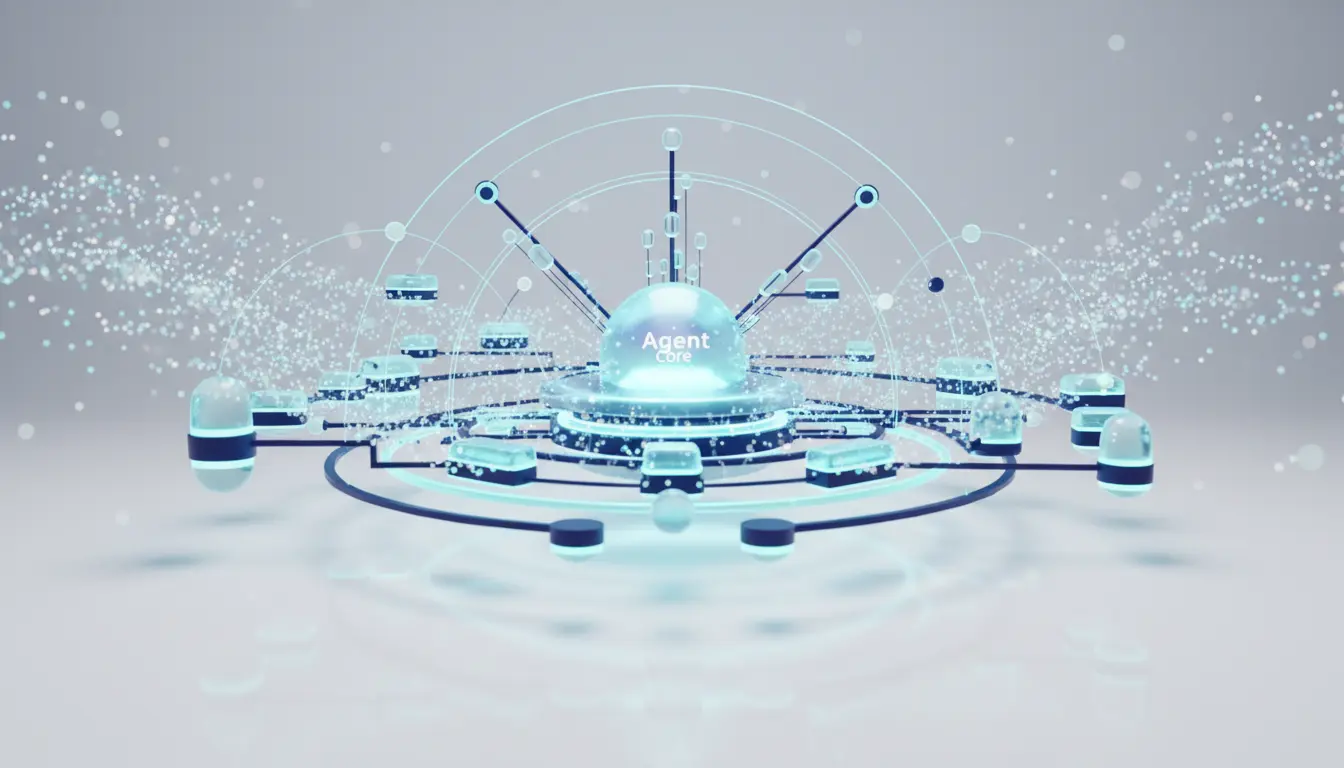
Instead of locking users into proprietary tooling, DeepSeek built Harness around a modular design that now supports roughly 35,000 third-party plug-ins. That scale has created a decentralized ecosystem in which community developers shape what the platform can actually do.
The volume has forced DeepSeek to pour substantial compute into the system. Its official API handles an estimated 92 trillion tokens per day. To keep pace, the company plans to open an official developer marketplace while it works on API stability, plug-in compatibility, and stronger security controls for third-party code.
Why it matters now
The market is shifting from chat interfaces to agentic workflows, and the contest is moving from model intelligence to control of the action layer. OpenAI and Anthropic have so far favored tightly managed, proprietary environments aimed at enterprise use. DeepSeek is taking the opposite route: it is commoditizing the base model and leaning on open-source, community-built plug-ins to create a broad set of integrations that could prove hard to displace.
The operational numbers also reveal how much more infrastructure agentic systems demand. These agents do not stop at single responses; they loop, query data, run code, and reason across steps, burning tokens at every turn. A daily total of 92 trillion tokens shows that once workflows turn agentic, inference demand rises far faster than linear growth would suggest. The bottleneck is therefore moving from training clusters to distributed inference capacity.
The numbers also point to a wider strategic shift among Chinese AI companies. Rather than chasing U.S. models on benchmark scores alone, firms like DeepSeek are focusing on the developer platform layer. If teams build their automations inside the Harness ecosystem, the underlying model becomes easier to swap, which undercuts the lock-in approach favored by leading Silicon Valley labs.
Who is most affected
The pivot to agent-first platforms disrupts the entire AI value chain, from the hyperscalers provisioning inference chips to the developers building next-generation software.
| Stakeholder | Impact | Why |
|---|---|---|
| OpenAI & Anthropic | Competitive platform pressure | DeepSeek’s open-source agent framework threatens to pull developers away from proprietary tool-use ecosystems. |
| AI Developers | Expanded choice & new risks | Access to 35,000 plug-ins accelerates development, but relies heavily on unresolved sandboxing and third-party security governance. |
| Compute Infra Providers | Inference explosion | Sustaining 92 trillion daily tokens for complex, looping agent queries requires profound shifts in data center power provisioning and inference chip allocation. |
About the analysis
Researched and written with AI assistance under the editorial responsibility of the i10X News team. The title image is an AI-generated illustration. Read our AI Use Policy. Spotted an error? Request a correction.
This independent i10x analysis synthesizes recent market data on DeepSeek’s adoption metrics to map the shifting competitive landscape for CTOs, AI developers, and infrastructure strategists.
- Can DeepSeek challenge OpenAI, Anthropic in AI agents as Harness adoption takes off?
- DeepSeek’s AI Agent Platform Hits 1.54 Million Daily Users
- DeepSeek Harness Hits 1.54M Daily Users in 3 Months
- DeepSeek Harness reports over 1.5 million daily active users, focusing on building out ecosystems, expanding user base: expert
i10x Perspective
The surge of DeepSeek Harness shows that the AI race now hinges as much on orchestrating an active developer economy as on raw model quality. Because autonomous agents consume far more compute than ordinary prompts—92 trillion tokens a day makes that plain—the winner of the agent wars will ultimately be determined by inference economics, not plug-in counts alone. Security, sandboxing, and governance are likely to become the decisive friction points as open-source agent platforms try to move into enterprise settings at scale.