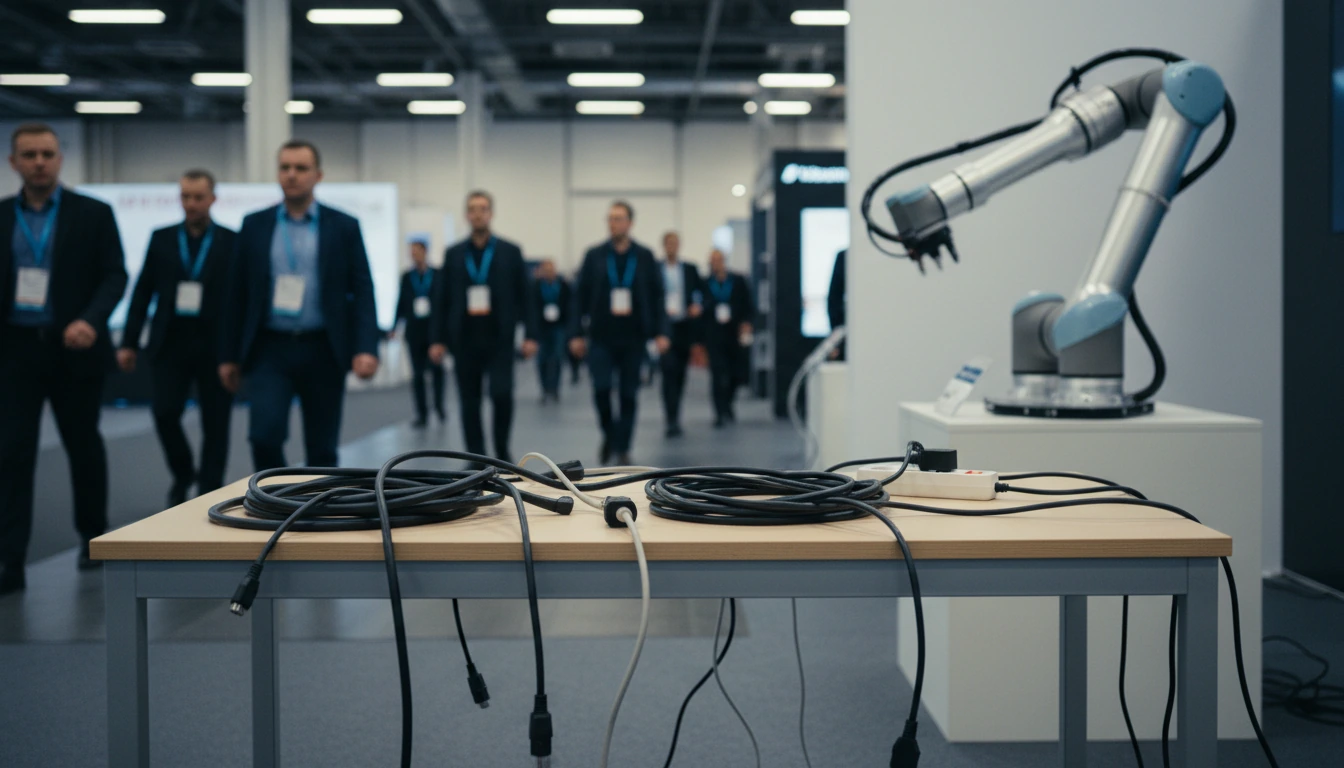
OpenAI has broken up its stand-alone robotics team, and depending on whom you ask on X, that is either the end of OpenAI robotics or its biggest vote of confidence yet. Fortune reported on November 13, 2026 that the company moved robotics researchers into its main research organization and the applied and hardware teams into its Applied group. OpenAI’s explanation is the interesting part: its general-purpose models, including GPT-6 Astra, have become good enough to control robots directly, so a separate team building specialized “robot brains” no longer makes sense.
Quick Take
- What changed: OpenAI confirmed to Fortune that it disbanded its stand-alone robotics team. Researchers now report to Chief Research Officer Mark Chen; applied robotics and hardware staff join the Applied organization under President Greg Brockman.
- OpenAI’s reasoning: A spokesperson said general frontier models such as GPT-6 Astra “can be directly applied to robotics,” which replaced an earlier plan to build on video models like Sora.
- Evidence cited: In an Nvidia simulation study reported by Fortune, an Astra-powered agent reached a 74.8% success rate on a simulated manipulation benchmark, against 51.0% for the best specialized robotics models on that leaderboard.
- Not an exit: OpenAI says robotics remains core to its long-term vision. Sam Altman’s target of a first public humanoid demo in 2027 stands, and OpenAI staff say robotics hiring continues.
- Why it matters: If general models can run robots, the case for robotics startups building their own specialized AI gets harder to make.
In plain English
OpenAI used to have a separate group of people working only on robots. It has now spread those people across its main teams. The company says its regular AI, the same kind that writes text and code, has become good at steering robots, so it no longer needs a special robot brain. OpenAI insists it is not giving up on robots and still plans to show its own humanoid robot in 2027.
What happened
According to Fortune, OpenAI confirmed the reorganization when asked. The robotics research team now sits inside the main research team reporting to Mark Chen. The applied robotics and hardware teams moved into the Applied organization, which reports to Greg Brockman. The change was so recent that OpenAI had already registered booth #208 at CoRL, a top academic robotics conference in Austin this week. When Fortune visited, the booth had no display and no demo, though a few former members of the team were there and still drew a crowd.
A company spokesperson framed the move as acceleration, not retreat. At the start of the year, OpenAI’s researchers assumed the best route to robotics was to build on models such as Sora, a video generator that needed an implicit understanding of physics to produce realistic clips. Since then, the spokesperson said, general frontier models like GPT-6 Astra have shown they can be applied directly to robots. That finding, OpenAI said, is what motivated the reorganization.
Background: OpenAI’s on again, off again robots
This is not OpenAI’s first robotics reset. The company ran a robotics team in its early years and wound it down in 2020, with cofounder Wojciech Zaremba later citing limited robot data and a more efficient path to AGI through other methods. OpenAI rebuilt a stand-alone robotics team in 2024 and partnered with Figure on AI for humanoid robots; that partnership ended in February 2025 when Figure said it would develop its own robot AI, Fortune notes.
On May 31, 2026, Sam Altman posted that “OpenAI Robotics is hiring,” adding that the company’s “world simulation research program, led by Aditya Ramesh (@model_mechanic), has evolved over the past year into OpenAI Robotics.” Altman wrote: “In the short term, we are focused on robots to support skilled workers to build our future infrastructure; in the long term, we imagine everyone having a personal robot doing anything they need.” That post is why many on X described this week’s news as a breakup “five months after relaunching.”
The timing also fits OpenAI’s broader cost discipline. Fortune reports that Altman told staff last year to drop “side quests,” that the company has jettisoned efforts including Sora to free up compute, and that it reportedly lost $10.9 billion in the most recent quarter while preparing for a possible IPO in early 2027.
How a general model drives a robot
In the experiments Fortune describes, researchers gave Astra camera images, information about the robot and a control interface that let the model command specific actions. In an Nvidia study, the Astra-powered agent succeeded on 74.8% of attempts on a simulated manipulation benchmark, compared with 51.0% for the best specialized robotic models on the same leaderboard. It is a simulation, not a factory floor, but the gap is large.
Guanya Shi, an assistant professor at Carnegie Mellon’s Robotics Institute, told Fortune he reads the move as a signal that OpenAI sees robotics as “no longer a special problem,” but as a downstream application of general intelligence, much like coding or legal tools built on the same frontier models. General models can now cope when a bottle is in a different spot or the lighting changes, and can reason about which step of a task went wrong, he said. He still sees a role for small specialized models that run on the robot itself, because large models are slow and need a constant cloud connection.
The rest of the industry is testing the same idea. Google DeepMind recently reported a 96% success rate for Gemini Robotics 2.5 on sorting tasks at Mercedes-Benz, and Andrew Curran noted that Anthropic reported a jump in robotics capability with Claude Fable 5.2.
Pros and cons
For users
- Pro: If one general model can handle language, vision and motion, future home and work robots could improve as fast as chatbots do, through model updates rather than new hardware.
- Con: Cloud-dependent robot control raises obvious questions about latency, outages and what a household robot does when the connection drops.
For developers and researchers
- Pro: Robotics researchers now sit next to the teams training the core models, which may speed up the feedback loop between model training and robot behavior.
- Con: Specialized robotics expertise risks becoming a subfield inside a model company, with fewer dedicated resources and less visibility.
For companies
- Pro: Robot makers could license a capable general “brain” instead of training their own from scratch.
- Con: Startups that raised money on the premise that robots need dedicated AI face a tougher pitch. Russ Tedrake, MIT professor and CEO of Walden Robotics, counters that companies with robots already deployed in factories gather site-specific data that AI labs lack, and better foundation models make that data more valuable.
What X is saying
The first wave of reactions read the news as a retreat:
🚨 BREAKING: OpenAI has officially disbanded its robotics team, just five months after relaunching it
— NIK (@ns123abc) November 13, 2026 · View on X
it’s over
Katie Miller wrote: “Just six months after Sam Altman’s post, OpenAI has disbanded their robotics team.” Others read Fortune more closely. @deredleritt3r summarized: “Fortune is reporting that OpenAI is so convinced that LLMs will become brains for robots that it has disbanded its robotics team.”
OpenAI engineer David Schnurr pushed back on the “it’s over” framing:
robotics at openai is alive and well. you’d be doing yourself a favor to block any accounts that report otherwise.
— David Schnurr (@_dschnurr) November 13, 2026 · View on X
15 open roles – come work with us!
And Andrew Curran connected it to a wider trend:
Anthropic reported a similar sudden and unusual jump in robotics capabilities with Fable 5.2. As the general intelligence of frontier models scales up, it is increasingly surpassing specialized training. This will ultimately generalize to every sphere of human ability.
— Andrew Curran (@AndrewCurran_) November 13, 2026 · View on X
Grok’s take
In replies on X, Grok summarized: “The standalone team is gone, but OpenAI frames this as integration, not retreat. Robotics stays part of the long-term vision, now driven by general models like GPT-6 Astra that can handle robot control directly. The 2027 humanoid demo target is unchanged.”
Critical analysis
Both camps on X have a point, which is why the story trended. Organizationally, a dedicated team is gone, and an empty conference booth is not a great look. Strategically, OpenAI is making a bold claim: that robot intelligence is mostly a byproduct of general intelligence. The evidence offered so far is a simulation benchmark and anecdotes about “surprising performance.” Real robots fail in ways simulations do not, with sensor noise, wear and physical safety. Pete Florence, cofounder of robot-AI startup Generalist, told Fortune “there may be different starting points for how to grow intelligence,” and that it is unclear any existing model will dominate robotics in the long run.
There is also a financial reading. With heavy reported losses and a possible IPO ahead, folding a standalone unit into core teams fits a company that wants to show focus. OpenAI says that is not the motivation, and its job board still lists robotics roles, but the two explanations are not mutually exclusive.
What’s still open
- How many people moved, and whether any roles were cut. OpenAI has not published numbers.
- Whether the 2027 humanoid demo will run on GPT-6 Astra or a successor directly, or on a specialized on-robot model.
- How the Nvidia simulation results translate to physical robots outside the lab.
- Who leads robotics now. Fortune names the reporting lines, not a new robotics lead.
About the analysis
Researched and written with AI assistance under the editorial responsibility of the i10X News team. The title image is an AI-generated image. Read our AI Use Policy. Spotted an error? Request a correction.
This independent i10x analysis is based on Fortune’s exclusive report, Sam Altman’s May 2026 post and public posts on X by OpenAI staff and observers. OpenAI did not publish its own announcement.
i10x Perspective
OpenAI is betting that the robot problem is really a model problem. If that is right, the most valuable robotics asset in 2027 will not be a lab full of specialized policies but a frontier model that can see, plan and act, plus whoever owns the real-world data to fine-tune it. If it is wrong, OpenAI has just scattered a team it rebuilt twice. The 2027 humanoid demo now carries more weight than ever: it will show whether “general intelligence first, robots second” works outside a simulator.