Quick Take
Have you felt the shift yet? The era of conversational AI is rapidly yielding to agentic AI, as tech giants and open-source frameworks race to deploy LLMs capable of planning, using tools, and acting autonomously. But as enterprises eagerly wire these agents into production, a critical infrastructure gap is emerging around cost governance, reliability, and security.
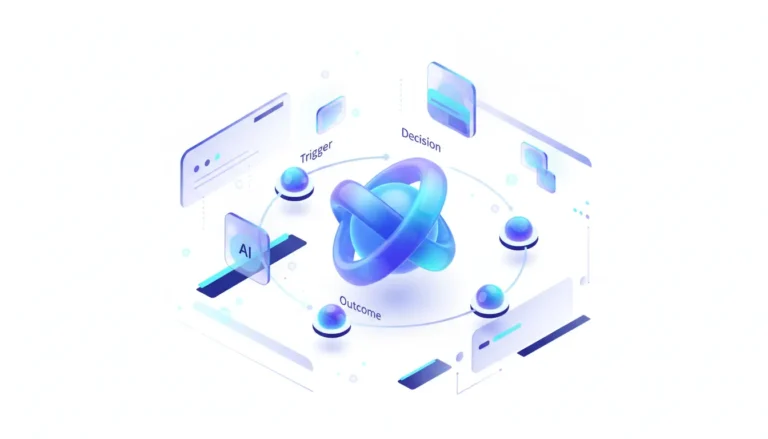
From what I’ve seen, the ecosystem for AI agents is exploding, bridging the gap between passive LLM outputs and autonomous task execution. While major players like OpenAI, NVIDIA, and developer frameworks like LangChain and AutoGen push tool-calling and multi-agent workflows into the mainstream, the tooling for containing and evaluating these systems is severely lagging. We are witnessing a massive transition from “chatbots” to “agents” across the stack. OpenAI has formalized its Assistants API, LangChain and Microsoft’s AutoGen have released production-grade multi-agent frameworks, and enterprise vendors like IBM and NVIDIA are aggressively packaging agentic workflows for enterprise consumption.
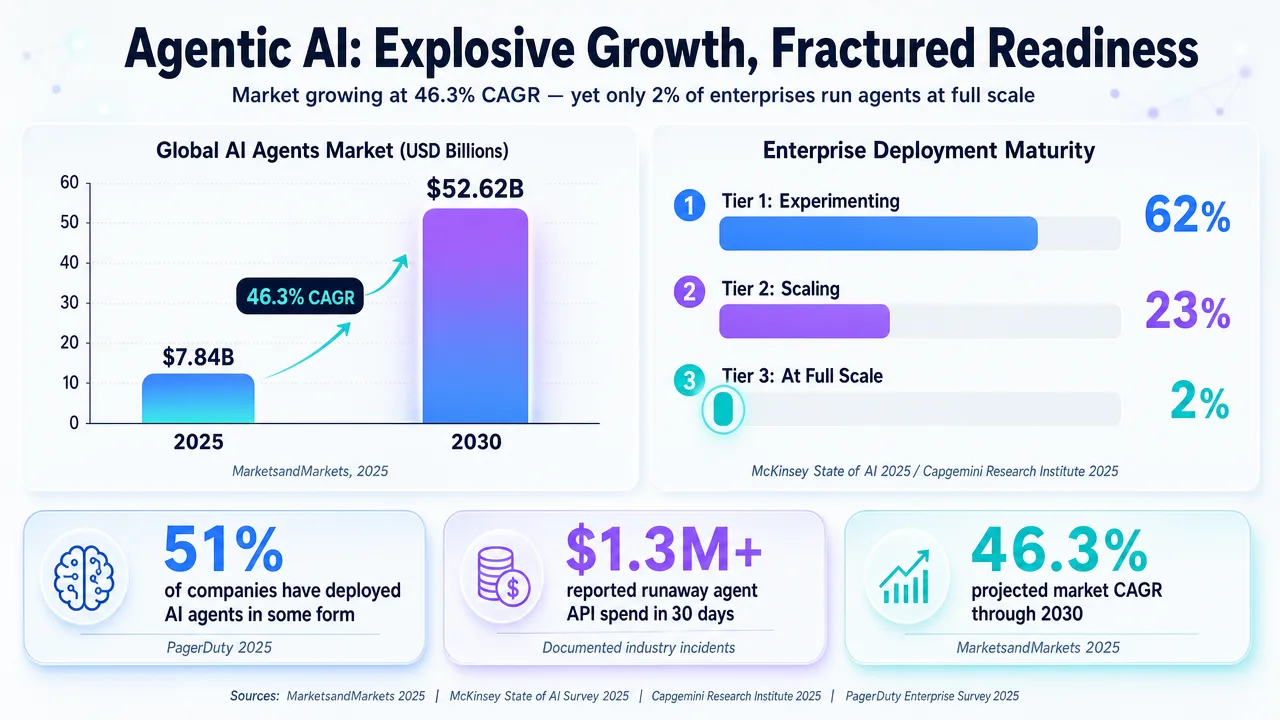
That said, the real pressure point is here now. As models grow more capable of reasoning and planning, the bottleneck shifts from model intelligence to infrastructure and orchestration. Enterprises aren’t just managing prompts anymore; they are managing autonomous state machines that can execute API calls, alter databases, and – crucially – run up infinite loops of compute if left unchecked. Engineering leadership, FinOps teams, and enterprise architects feel this most. They must now weigh the pressure to deploy autonomous AI against the immediate risks of runaway API spend, security vulnerabilities, and unpredictable failure cascades.
The under-reported angle keeps nagging at me. While the market fixates on agent capabilities, the real impending crisis is cost and risk governance. Publicized incidents of coding agents burning through $1.3M in OpenAI API credits in 30 days foreshadow a critical need for “Agent FinOps” – circuit breakers, hard token budgets, and sandboxing infrastructure.
Deep Dive
To understand the current state of AI agents, you have to look at the widening gap between what developer docs promote and what enterprise reality demands. We are moving from a paradigm of ReAct prompting (Reason and Act) in isolated scripts to complex, multi-agent architectures using frameworks like LangGraph, AutoGen, and CrewAI. These systems employ planner-executor dynamics, group chats, and hierarchical swarms to solve problems autonomously. Yet a look across the digital landscape reveals a fractured narrative: consumer tools like Zapier promise no-code magic, developer hubs offer complex API wrappers, and hardware giants like NVIDIA pitch executive-friendly productivity leaps.
What almost no single source addresses is the infrastructure required to keep these autonomous loops from driving workloads off a cliff. If a traditional web app fails, it crashes and returns a 500 error. If an AI agent with tool access fails, it might hallucinate a loop, repeatedly ping a paid API, and silently rack up massive cloud bills. The industry is currently building race cars without brakes.
This introduces the concept of “Agent FinOps,” an emerging but severely under-discussed layer of the AI infrastructure stack. Runaway spend incidents – where inadequately constrained autonomous dev agents have racked up multi-million dollar bills in a matter of weeks – highlight the desperate need for strict cost-governance modules. Enterprises looking to implement agents need more than just LLMs and vector databases; they require rate limits, transactional tool sandboxing, and hard automated kill switches.
Furthermore, the evaluation of these systems is shifting away from traditional LLM leaderboards. As agents begin to interact with live software, static benchmarks become obsolete. The industry is pivoting toward dynamic evaluation frameworks like SWE-bench (for code generation) and GAIA (for general AI assistance), measuring task success rate and tool-call accuracy over pure linguistic fluency. We are shifting from measuring “how well does it talk” to “how reliably does it execute.”
Because an agent is only as secure as its least-privileged tool, deployment paradigms are being strictly reimagined. Moving an AutoGen or LangChain prototype from a local laptop to enterprise production requires containerized execution, PII redaction, audit logging, and Human-In-The-Loop (HITL) approval gates. As the abstraction layer moves up from the model to the agent, the entire software engineering stack – from CI/CD to observability – must be reinvented to accommodate non-deterministic software.
Stakeholders & Impact
| Stakeholder / Aspect | Impact | Insight |
|---|---|---|
| AI / LLM Providers | High | Shifting focus from raw token generation to function-calling accuracy and native orchestration (e.g., OpenAI Assistants API). |
| Enterprise IT & FinOps | Critical | Exposed to unprecedented cost risks from autonomous API loops. Requires new “circuit breaker” tools and spend dashboards. |
| Developers & Architects | High | Forced to choose between competing multi-agent frameworks (LangGraph, AutoGen, CrewAI) and design new state-management patterns. |
| Risk & Compliance (CISO) | Significant | LLMs taking actions (database writes, emails) break traditional RBAC models; requires rigorous tool sandboxing and audit logs. |
About the analysis
Researched and written with AI assistance under the editorial responsibility of the i10X News team. The title image is an AI-generated illustration. Read our AI Use Policy. Spotted an error? Request a correction.
This is an independent, research-based analysis tracking search intent, developer documentation, and market-gap data across top-ranking AI agent resources (including OpenAI, NVIDIA, and LangChain docs). Engineered for CTOs, FinOps leaders, and AI architects, it cross-references current capabilities with the emerging pain points of production deployment, cost governance, and evaluation benchmarking.
i10x Perspective
The narrative surrounding AI has permanently shifted from model scale to system architecture. Over the next 24 months, the sheer intelligence of an underlying LLM will matter less than the reliability of the agentic framework surrounding it. We are about to see a massive shakeout in the orchestration layer, where enterprises quickly abandon fragile, unbounded agent setups in favor of governable, supervisor-worker models with integrated FinOps.
Ultimately, the companies that win the next phase of the AI race won’t be those that grant their agents the most autonomy – they will be the ones that perfect the science of constraining them.