Agent-to-Agent Hiring: Breaking the AI Recruiting Doom Loop
⚡ Quick Take
Summary: The enterprise HR software market is quietly shifting from traditional AI screening tools to a new paradigm of autonomous agent-to-agent (A2A (autonomous agent-to-agent)) hiring workflows.
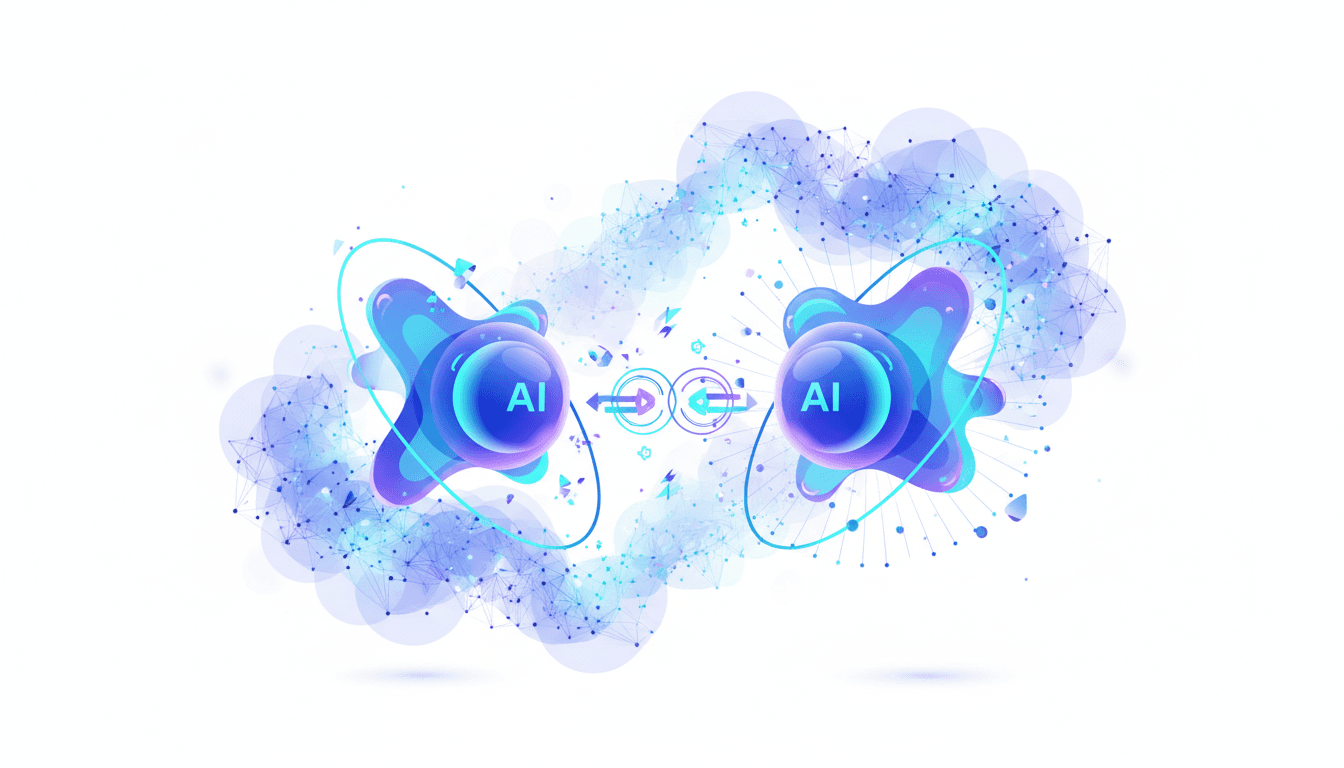
What happened: A new wave of AI recruiting software is moving beyond simple resume parsing and chatbot scheduling. Recruiter agents are now built to hold structured, autonomous conversations directly with candidate-deployed AI agents, negotiating job fit based on grounded evidence.
Why it matters now: Candidates are using LLMs to hyper-optimize applications and flood job boards. Enterprise systems are countering with their own AI filters, creating an "AI hiring doom loop" that breaks traditional talent acquisition. Resolving this arms race requires fundamentally new, inference-heavy AI infrastructure capable of auditing synthetic interactions at scale.
Who is most affected: Talent acquisition leaders, HR tech vendors (like Paradox, Eightfold, and HireVue), AI infrastructure providers scaling conversational inference, and job seekers navigating an increasingly opaque, synthetic screening layer.
The under-reported angle: Behind the enterprise software buying guides lies a massive unresolved tension: the rise of candidate-side agents. The real frontier is not whether AI can screen a resume, but how companies will govern, compute, and audit live negotiations between corporate recruiter agents and candidate proxy agents without hallucinating qualifications or amplifying bias.
🧠 Deep Dive
Have you ever wondered why applying for jobs feels more like shouting into a void these days? The enterprise recruitment ecosystem is saturated with "AI Recruiting" tools that promise to fix high-volume hiring friction. Look across the market, and most attention still lands on procurement: platforms like Paradox handle early-stage chatbot screening, HireVue leads in video assessments, and Eightfold and SeekOut focus on talent intelligence matching. Yet while teams optimize for software selection and workflow integration, a deeper architectural shift is underway in how intelligence actually meets the labor market.
The central pain point is what many in the industry now call the "AI hiring doom loop." LLMs have made application spam trivial. Candidates deploy AI to generate hyper-optimized, keyword-stuffed resumes and cover letters for thousands of roles in minutes. HR teams respond by leaning harder on AI filters to parse and reject the synthetic flood. The result is an adversarial optimization race where human intent gets lost, and the whole process turns into a contest of which LLM can out-prompt the other.
To break this loop, recruiting is moving toward structured, agentic workflows. Instead of scanning static forms, the next generation of recruiting agents is designed to interact directly with candidate agents. In this emerging A2A model, a corporate AI recruiter does not simply hunt keywords. It queries a candidate's AI proxy for grounded, evidence-based answers about real experience. The traditional resume starts to give way to a dynamic, cryptographic proof of work mediated by autonomous agents.
That said, shifting from keyword extraction to continuous agent-to-agent screening demands a major leap in infrastructure. Running thousands of applicants through multi-turn synthetic interviews moves the bottleneck from HR headcount to GPU inference capacity. The foundation models involved need tight optimization for latency and context retention, or they risk hallucinating skills and generating false positives.
This shift also brings serious governance and compliance questions. Platforms like Pinpoint and Juicebox are already positioning around "auditable" and "explainable" AI to satisfy regulators and risk teams. If an autonomous agent rejects a candidate, or if a candidate's agent inflates a qualification, the liability trail has to be clear. The move to agentic hiring will require robust human-in-the-loop frameworks before it can scale in enterprise settings.
📊 Stakeholders & Impact
- AI / LLM Providers — Impact: High. Insight: Multi-turn agent-to-agent interviews require massive, low-latency inference scaling, driving demand for cost-effective enterprise compute.
- HR Tech Vendors — Impact: High. Insight: Traditional ATS platforms must transition from static databases to active agentic orchestration to avoid becoming obsolete in the "doom loop."
- Candidates / Job Seekers — Impact: High. Insight: The rise of recruiter agents necessitates the adoption of personal AI proxies to manage complex, continuous application dialogues at scale.
- Regulators & Policy Makers — Impact: Significant. Insight: Urgent need for frameworks dictating AI disclosure, auditability of synthetic hiring decisions, and protections against algorithmic bias.
✍️ About the analysis
This is an independent, research-based analysis synthesizing current HR technology search intents, software positioning benchmarks, and market sentiment data. It is designed for CTOs, AI infrastructure builders, and enterprise operations leaders tracking the commercial impact of agentic workflows.
🔭 i10x Perspective
The emergence of the AI recruiter feels like a canary in the coal mine for the wider agentic economy. What we are seeing in talent acquisition — corporate AIs negotiating directly with consumer AIs to bypass a broken static data format — will likely replicate across procurement, sales, and legal negotiations. For foundational model builders and infrastructure providers, this points to a future where inference demand comes less from human-to-machine chatting and more from autonomous machine-to-machine consensus building. The ultimate winner in the AI hiring race will not simply be the platform with the best screening algorithm, but the one offering the most secure, auditable infrastructure for agents to trust one another.
Related News

OpenAI Daybreak: Automating Cybersecurity Patching at Machine Speed
OpenAI’s Daybreak and Defense Factory models let enterprises automate vulnerability patching from weeks to minutes. See how Block and Cloudflare use AI for machine-speed security fixes. Discover the shift.

OpenAI Engineer Arrested for Planting Hidden Recorder
A Saudi national and OpenAI engineer was arrested for allegedly installing a hidden audio device in an executive conference room. This case reveals shifting threats from cyber to physical espionage in AI labs. Learn more.
Responsible AI: From Principles to Enterprise Compliance Tools
See how Responsible AI has moved from ethical statements to operational dashboards and compliance stacks at Microsoft, AWS, and Google. Understand impacts on finance, healthcare, and regulators under the EU AI Act. Explore practical risk management strategies.