“We are witnessing the end of the traditional ‘AI bot’ era. The market is aggressively pivoting from passive conversational interfaces to autonomous, multi-step agentic workflows-breaking existing enterprise security models and open-source governance along the way.”
Quick Take
- Summary: While mainstream tech glossaries still define AI bots merely as “conversational simulators,” the frontier of AI development has already moved toward complex, LLM (Large Language Model)-powered autonomous agents capable of wielding tools and writing code.
- What happened: A widening gap has emerged between legacy chatbot deployments (rule-based customer service) and modern agentic systems using Retrieval-Augmented Generation (RAG), persistent memory, and multi-agent orchestration frameworks like LangChain.
- Why it matters now: This architectural leap fundamentally changes the infrastructure math, shifting the bottleneck from simple API calls to intensive compute requirements for agentic planning, while simultaneously introducing severe new threat vectors like prompt injection and data exfiltration.
- Who is most affected: Enterprise architects attempting to scale AI securely, open-source maintainers drowning in AI-generated code contributions, and AI infrastructure providers scaling inference capacity to meet the demands of continuous agentic loops.
- The under-reported angle: The collision between autonomous bots and open-source governance. Real-world policy battles, such as the Debian project’s consultation on regulating AI-generated contributions, signal a massive shift in how automated intelligence is authenticated, trusted, and regulated in collaborative ecosystems.
Deep Dive
If you search the web for “AI bots,” you will be met with a wall of legacy definitions from vendors like IBM, Salesforce, and HubSpot. These articles remain stubbornly focused on customer service deflection, CRM integration, and basic NLP pipelines. From what I’ve seen, though, the concept of the “chatbot” is already dead for most AI developers and infrastructure architects. We are in the middle of a massive replatforming, moving from static conversational UIs to active, autonomous agents that execute multi-step workflows.
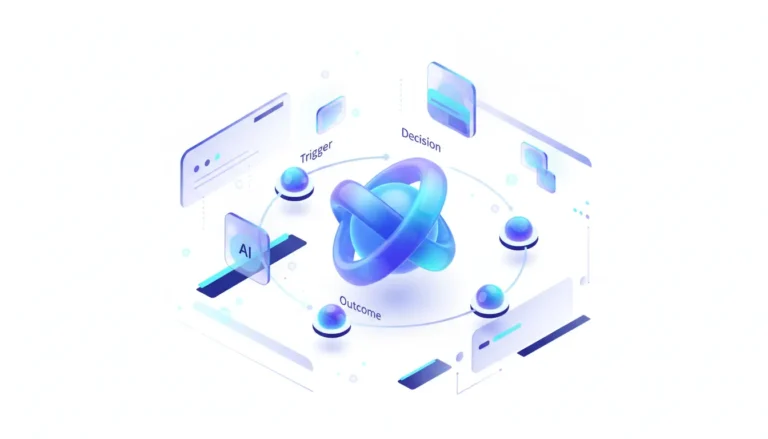
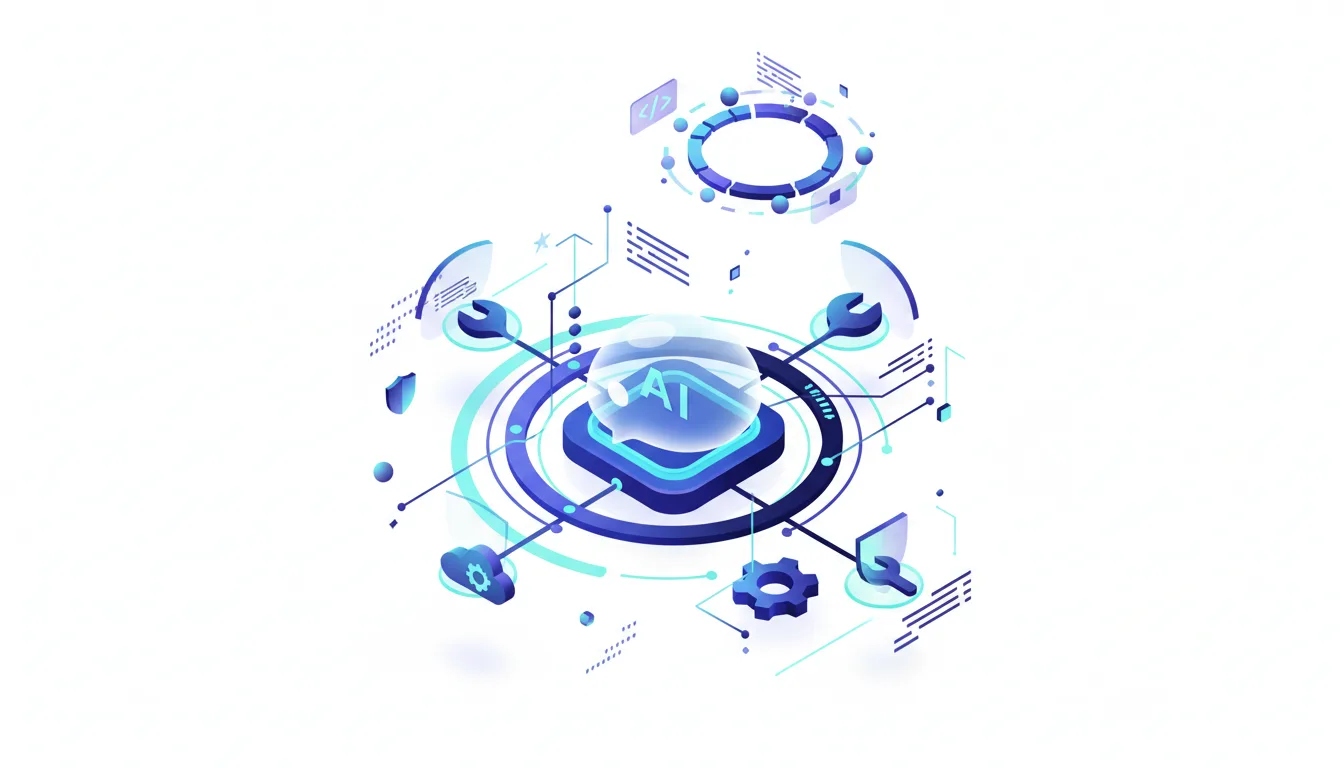
This shift from “talking to software” to “software taking action” demands an entirely different technical stack. Modern AI bots are no longer just passing text to a massive cloud LLM and printing the response. They rely on Retrieval-Augmented Generation (RAG) for proprietary data grounding, utilize complex memory architectures to maintain state across weeks of interaction, and use tool-calling to manipulate external software. The result is higher compute demands, since agents require recursive inference loops-generating a plan, observing the result, and correcting course-which taxes AI infrastructure far beyond a standard chat completion.
Yet as the architecture becomes more agentic, security and evaluation are lagging. An LLM agent wired into a corporate database is highly susceptible to prompt injection attacks, jailbreaks, and unintended data exfiltration. Enterprises are discovering that they cannot simply “deploy a bot”; they must build comprehensive security sandboxes, implement rigorous evaluation frameworks (like HELM or MT-Bench), and establish hard boundaries for what an autonomous system is permitted to execute without HITL (human-in-the-loop) approval.
Perhaps the most fascinating friction point is happening outside the corporate firewall, in the realm of governance. As AI bots graduate from customer support to active digital participants, they are crashing into established community standards. Take the open-source community as a canary in the coal mine: the Debian project recently launched consultations on how to handle AI-generated code and documentation contributions. When bots can autonomously generate pull requests, the fundamental mechanics of trust, copyright, and maintainer bandwidth are challenged, forcing new compliance-by-design frameworks.
Ultimately, the future of the AI bot will be dictated by infrastructure economics and edge computing. Running massive, cloud-hosted models for every automated task is proving too expensive and latency-heavy for ubiquitous deployment. To solve this, developers are increasingly looking toward on-device and edge chatbots powered by highly optimized SLMs (Small Language Models). This bifurcates the market: massive cloud agents for complex, secure enterprise orchestration, and hyper-efficient edge bots for privacy-sensitive, real-time consumer interactions.
Stakeholders & Impact
| Stakeholder / Aspect | Impact | Insight |
|---|---|---|
| AI Model & Infra Providers | High | Shifting from standard API pricing to agentic token consumption patterns; increased demand for RAG caching and low-latency inference chips. |
| Enterprise Architects / Security | High | Severe need for new guardrails against prompt injection and data egress as bots move from “read-only” chat to “read-write” autonomous actions. |
| Open-Source Maintainers | Significant | Forced to draft new governance policies (e.g., Debian) to manage the influx of AI-bot-generated code and ensure liability/copyright compliance. |
| End Users / Consumers | Medium | A fractured experience: high friction when dealing with legacy rule-based bots, but rapid enablement when using localized, edge-based AI assistants. |
About the analysis
Researched and written with AI assistance under the editorial responsibility of the i10X News team. The title image is an AI-generated illustration. Read our AI Use Policy. Spotted an error? Request a correction.
This independent analysis synthesizes current search landscape data, vendor market positioning, and emerging technical signals to bridge the gap between mainstream chatbot definitions and actual AI infrastructure trends. It is designed for CTOs, AI product leads, and enterprise architects who need to navigate the transition from conversational UI to autonomous agentic workflows.
i10x Perspective
Within five years, the term “chatbot” will sound as antiquated as “cyberspace.” We are currently laying the infrastructure for a digital workforce of autonomous agents, which means the next major bottleneck won’t be model intelligence, but rather the governance, security, and inference costs required to manage them at scale. Keep a close watch on the tension between massive cloud-based agent orchestration (dominated by OpenAI, Google, and Anthropic) and the push for localized, privacy-first edge agents running on dedicated neural silicon. The companies that solve the security and cost-optimization equations for multi-agent workflows will own the next decade of enterprise software.