Agentic AI and Payments: Define–Prove–Revoke for Financial Agents
⚡ Quick Take
As autonomous AI agents move beyond drafting code and into handling actual payments, the push for smarter systems is running headlong into banking rules. The real issue isn’t just making agents cleverer—it’s figuring out how to hand them financial power safely, prove who they are, and shut them down fast if something goes wrong.
From what I’ve seen, the race to build “agentic AI” has left a glaring hole in how money actually moves. Major providers are giving agents the ability to call tools and trigger transfers, yet the financial world is still scrambling to create guardrails that fit existing compliance frameworks.
Tech companies like Google and OpenAI have made tool-using agents feel normal, and libraries such as LangChain have made it easier for developers to chain them together. Banks, however, now face the harder task of adding cryptographic controls before these agents touch live payment systems.
The shift matters because “read-only” chatbots carry one kind of risk, while “read-write” agents that can spend money carry another entirely. Without clear authorization layers, a prompt injection could move funds at machine speed. Fintech teams, bank risk officers, and regulators updating rules like PSD2/3 are feeling the pressure most.
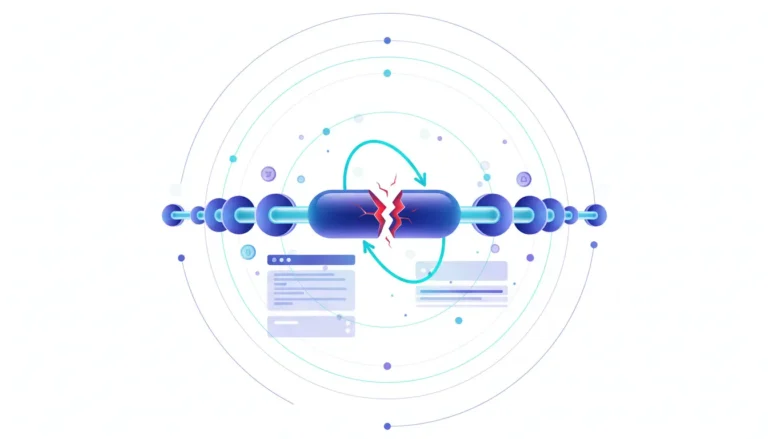
The part that gets less attention is the full “define–prove–revoke” cycle. Missing pieces include policy engines that can compose rules on the fly, cryptographic proofs that an agent is who it claims to be, and reliable kill-switches across different payment rails.
🧠 Deep Dive
The AI world is stepping into tricky territory. Providers are rolling out agents that plan, remember, and act on their own. Once those agents start touching real bank accounts and moving capital, the gap between Silicon Valley’s speed and finance’s caution becomes impossible to ignore.
Right now the conversation feels scattered. Consumer platforms talk up custom GPTs and broad safety ideas. Developer tools focus on prompting tricks and tracing calls. Meanwhile, executives are mainly worried about hiring and org charts. What’s missing is a single framework that ties an LLM’s probabilistic output to the strict, deterministic world of payment rails.
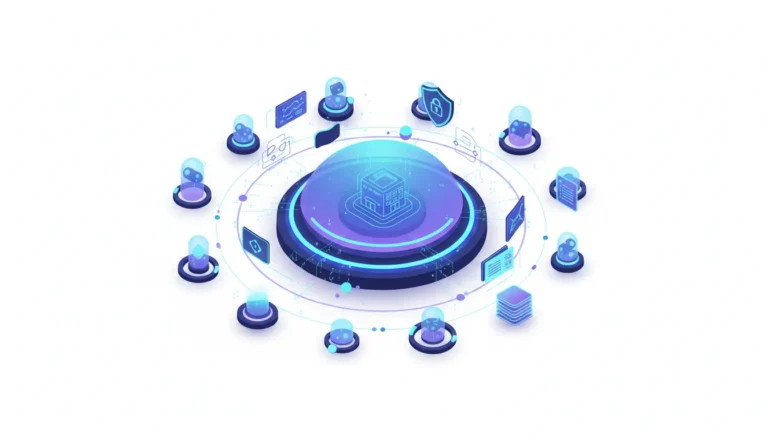
To close that gap, the infrastructure layer needs a clear “define–prove–revoke” process built for agents. They can’t just borrow user logins; they need signed permissions that spell out exactly what they can do and how much they can spend. That means mapping agent workflows to standards like OAuth2, GNAP, and FAPI so every payment call carries proof of its limits.
The practical headaches show up quickly. If a bank can’t verify whether an agent is staying inside its bounds, a compromised model—hit by a supply-chain flaw or a clever prompt—could fire off transfers before anyone notices. The fix involves policy engines that sit at the edge and enforce spend caps, velocity rules, and approved merchants, overriding whatever the model might hallucinate.
Perhaps the most important piece is the kill-switch. When a multi-agent setup misbehaves or a tool fails, banks and PSPs need a way to revoke credentials instantly across every rail. Linking these technical controls to rules like PSD2/3, Strong Customer Authentication, and DORA will shape how far agentic AI can actually go in finance. The advantage will go to whoever can give an agent a wallet without losing the ability to take it back.
📊 Stakeholders & Impact
| Stakeholder / Aspect | Impact | Insight |
|---|---|---|
| AI / LLM Providers | High | Forced to build deeper sandbox constraints, verifiable tool-calling, and prompt-injection defenses natively into models to mitigate liability. |
| Banks & Payment Rails | Critical | Must upgrade core systems to support delegated agent consent, real-time policy enforcement, and instant credential revocation (kill-switches). |
| Developers & Fintechs | High | Navigating the widening gap between rapid LLM orchestration and strict compliance APIs; required to implement cryptographic attestations. |
| Regulators (FCA, EU) | Significant | Challenged to map existing liability models and consumer protection laws (e.g., PSD3, DORA) to actions taken by non-human algorithms. |
✍️ About the analysis
Researched and written with AI assistance under the editorial responsibility of the i10X News team. The title image is an AI-generated illustration. Read our AI Use Policy. Spotted an error? Request a correction.
This independent, research-based analysis synthesizes platform capabilities, developer documentation, and financial compliance frameworks. It is designed for CTOs, product managers, and fintech risk leaders who need to bridge the gap between LLM orchestration and enterprise-grade payment infrastructure.
🔭 i10x Perspective
Agentic finance will test whether AI safety measures actually hold up under pressure. If the industry can’t cryptographically bind an agent’s financial power and revoke it on demand, extending the same approach to higher-stakes areas like energy grids or defense systems stays out of reach.
Over the next five years the split looks clear: open consumer agents will stay limited to read-only work, while tightly controlled, bank-issued financial agents handle real capital movement.