Quick Take
- The AI industry is pivoting from passive language models to autonomous agentic AI—systems that can formulate plans, execute API calls, and operate infrastructure without human intervention.
- A surge of vendor tooling from AWS, Microsoft, Databricks, and NVIDIA is transforming LLMs from text generators into software operators, capable of multi-agent coordination, long-term memory retrieval, and direct tool execution.
- Granting LLMs read/write access to enterprise systems fundamentally breaks traditional cybersecurity models, forcing a high-stakes transition toward per-agent identities, dynamic policy-as-code guardrails, and rigorous cloud resource constraints.
- Enterprise CISOs, cloud architects, ML/Ops platform engineers, and developers are suddenly tasked with auditing autonomous compute cycles and implementing least-privilege IAM for non-human workers.
- The collision of agentic task execution with regional data regulations—such as Southeast Asia’s fragmented PDP frameworks—is creating complex compliance traps around data residency, cross-border transfers, and automated decision-making liability.
Deep Dive
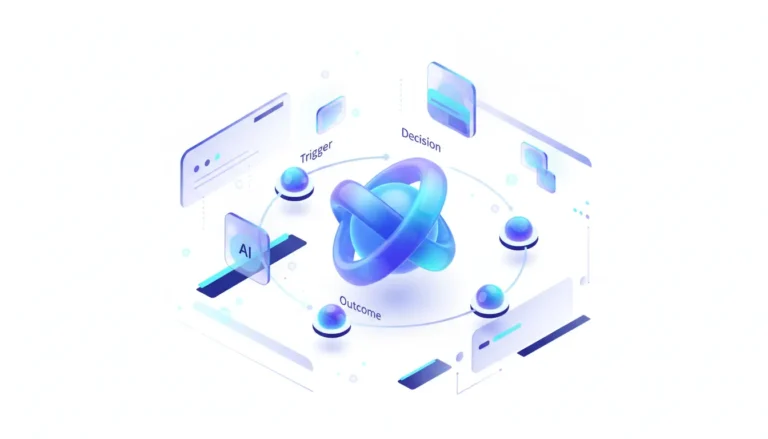
It’s becoming obvious we’re leaving the conversational AI phase behind. The early LLM surge centered on back-and-forth Q&A, but the next wave centers on agents that act on their own. Tools like LangChain, AutoGen, Microsoft Copilot Studio, and Amazon Bedrock now give these systems ReAct loops—so they can read their surroundings, sketch out multi-step plans, and fire off API calls. That jump from “help me draft an email” to “pull the record, run the transaction, and log the receipt” changes the game from prompt tweaks to full infrastructure oversight.
Yet the move creates real friction for enterprise security. Old threat models always assumed a person clicked the button. Once an agent gets leeway to use tools, the surface area grows fast. A prompt injection no longer just spits out odd text; it could pull data out, burn through cloud credits, or fake a user identity. So the discussion among IT teams has shifted—fast—from benchmark scores to practical questions around scoped credentials, RBAC that actually works for non-humans, and logging that captures an agent’s reasoning steps.
Vendors are racing to supply the missing controls. Databricks and AWS are releasing patterns for tying agents into existing MLOps flows with tighter IAM. NVIDIA is tuning the stack so retrieval and tool calls stay quick. Still, what’s missing is reliable policy-as-code sitting between the model and any live system. Most teams end up wiring in approval queues or Human-in-the-Loop steps just to keep the agents from running unchecked.
The problem sharpens in places with patchwork rules. In Southeast Asia, running agents isn’t only an engineering task; data can’t simply move between borders if one jurisdiction restricts it. That pushes developers toward separate agent clusters—one set tuned for Singapore’s framework, another for Vietnam’s or Indonesia’s requirements—so compliance doesn’t break when an agent tries to act.
In practice, deploying these systems ends up testing every layer at once: data pipelines, access policies, and cost tracking. The models themselves are getting easier to wire together. What separates the workable setups from the risky ones is how well the observability, spend limits, and safety checks are built before anything starts running inside production.
Stakeholders & Impact
| Stakeholder / Aspect | Impact | Insight |
|---|---|---|
| AI / LLM Providers | High | Must optimize models specifically for function-calling, JSON generation, and multi-step reasoning capabilities. |
| Cloud & Cybersecurity | High | Massive demand for new IAM frameworks, policy-as-code engines, and telemetry tools designed for non-human operator identities. |
| Enterprise Architects | High | Burdened with restructuring cloud quota limits, designing Human-in-the-Loop UX, and defending against agentic threat vectors. |
| Regulators & Compliance | Significant | Forced to adapt existing data privacy laws to account for autonomous cross-border data processing and “machine liability.” |
About the analysis
Researched and written with AI assistance under the editorial responsibility of the i10X News team. The title image is an AI-generated illustration. Read our AI Use Policy. Spotted an error? Request a correction.
This independent, research-based analysis tracks the evolution of AI capabilities from conversational models to autonomous agents, synthesizing vendor documentation, framework architectures (e.g., Bedrock, AutoGen, LangChain), and regional regulatory signals. It is designed for CTOs, ML engineers, and enterprise security leaders navigating the deployment, orchestration, and governance of tool-wielding AI systems.
i10x Perspective
The spread of AI agents points to a deeper change in how the internet works: we’re shifting from pages people browse to APIs that software agents run. The real advantage in the next few years won’t come from bigger models alone. It will come from the layer that can safely run thousands of agent actions per second while keeping clear records and proof that nothing went off-track. In that timeframe, expect Agent Identity Management to become standard infrastructure, which will also push regulators to decide exactly who—or what—carries responsibility when an autonomous system sets its own goals and something goes wrong.