AI Agent Gateway: Securing Autonomous Enterprise AI
⚡ Quick Take
As enterprise AI shifts from static chatbots to autonomous workflows, a new infrastructure layer—the AI Agent Gateway—is rapidly emerging to stop developers from hardcoding enterprise credentials directly into AI agents.
What happened:
A specialized market of AI Agent Gateways has formed, with players like Okta, open-source disruptor Tuskira, and cloud-native frameworks like agentgateway.dev launching dedicated control planes to govern Model Context Protocol (MCP) traffic, Agent-to-Agent (A2A) communication, and LLM routing.
Why it matters now:
Giving an autonomous agent direct access to backend systems historically required exposing API keys in local configurations—a massive security risk. Gateways solve this by centralizing policy, tracking token spend, and securely injecting credentials on a per-request basis.
Who is most affected:
Platform engineering and enterprise security teams who must govern autonomous systems, as well as AI developers who need a unified way to swap LLM providers without constantly rewiring their agent architectures.
The under-reported angle:
Traditional API gateways are structurally ill-equipped to handle AI-native traffic patterns. The rise of MCP and A2A protocols is forcing a hard fork in infrastructure tooling to address unique threat models like prompt-injected tool calls and context-window exfiltration.
🧠 Deep Dive
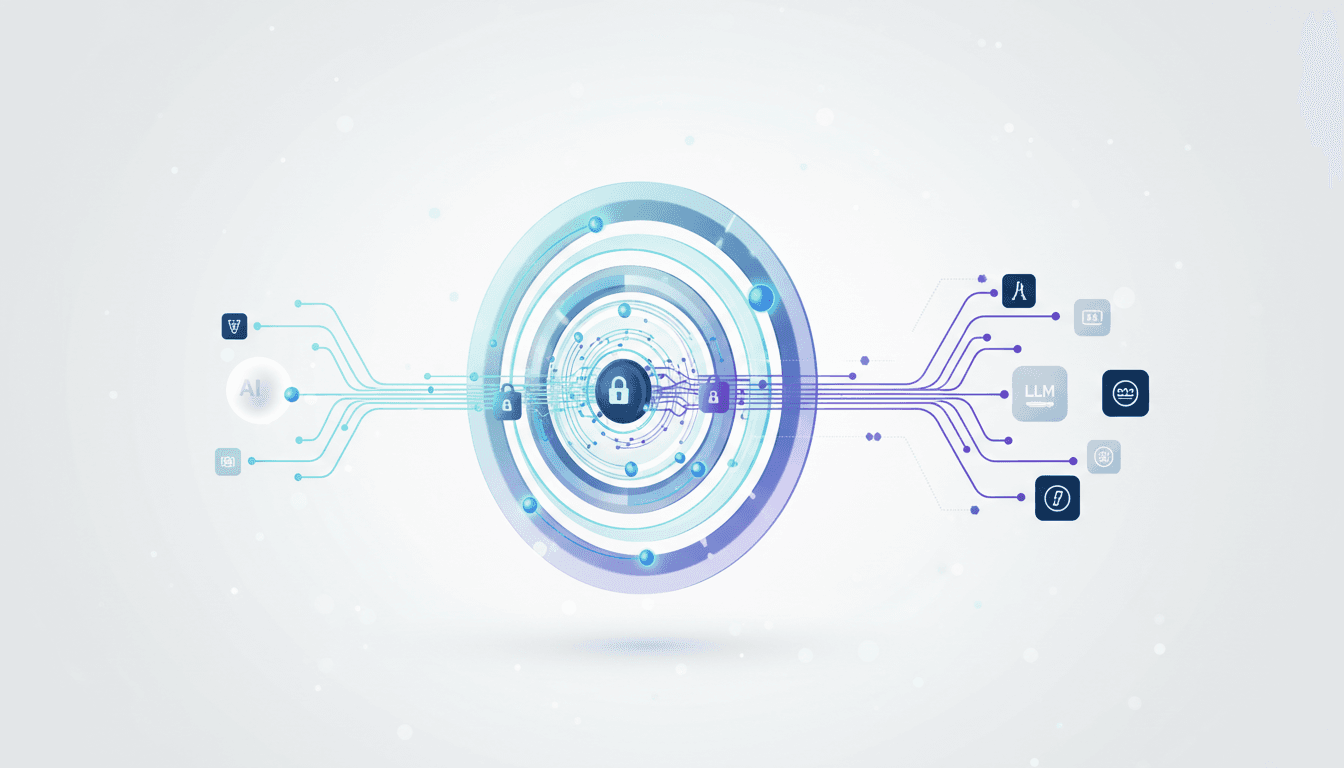
Have you ever stopped to think about what happens when an agent starts reaching out to your internal tools on its own? The move from passive LLMs to active, tool-wielding agents has exposed a real weak spot in the AI stack: credential management. Until recently, developers building agents with Claude Code, Cursor, or custom frameworks had to store downstream credentials right inside the agent's configuration. That left an overly ambitious (or maliciously prompt-injected) agent with unrestricted access to enterprise systems. The AI Agent Gateway has stepped in to close that gap, acting as a required proxy between AI agents, LLMs, and enterprise tools.
Under the hood, these gateways change how agent-to-tool requests actually travel. Instead of an agent holding a Jira or AWS API key, the agent sends an uncredentialed request to the gateway. The gateway authenticates the agent, checks profile-based scoping rules, pulls the necessary secret from an encrypted vault, and injects it into the MCP tool call on the fly. If the request breaks policy—or if a prompt-injection attempt tries to force an unauthorized database drop—the gateway blocks it before it reaches the backend.
A land grab is playing out as vendors map their own architectures onto this space. Okta is positioning its Agent Gateway as an "identity-native proxy," with heavy emphasis on enterprise compliance, unified audit trails, and Okta-secured downstream credential injection. Tuskira, by contrast, is courting developers and the open-source crowd with a single-binary, self-hosted gateway built to handle LLM routing, track token spend natively, and manage model aliases so teams can swap Gemini for Claude without touching agent code.
Cloud-native projects like agentgateway.dev are pushing back against fragmentation, offering one HTTP/gRPC data plane that handles both traditional API traffic and AI-native MCP and A2A federation. By plugging straight into the OpenTelemetry stack, these platforms aim to deliver a single observability view across logs, metrics, traces, and LLM latency.
This shift shows the AI infrastructure ecosystem maturing. The focus is moving from "how to build an agent" to "how to safely unleash an agent." As long as enterprises worry about credential exfiltration, runaway token spend, and opaque agent activity, the AI Agent Gateway is likely to become as essential to Agentic AI as the API Gateway was during the microservices era.
📊 Stakeholders & Impact
- Enterprise Security & IAM — Impact: High. Insight: Shifts agent tool access from an untrackable shadow-IT problem to a governed, identity-enforced architecture with unified audit trails.
- Platform & MLOps Teams — Impact: High. Insight: Provides a centralized control plane for routing LLM traffic, tracking per-agent token spend, and monitoring A2A latency without touching agent code.
- AI Developers — Impact: Medium. Insight: Removes the friction of managing secrets locally, though it introduces a new dependency for registering MCP servers and configuring tool scopes.
- API Gateway Vendors — Impact: Significant. Insight: Legacy providers (e.g., Kong, Apigee) face immediate pressure to build native MCP, LLM proxying, and A2A support or risk being bypassed by AI-native alternatives.
✍️ About the analysis
This is an independent, research-based analysis of the emerging AI Agent Gateway ecosystem, drawing on competitive SERP data, open-source repository documentation, enterprise product releases, and architectural models. It is designed for CTOs, platform engineers, and AI developers navigating the operationalization and security of autonomous agent infrastructure.
🔭 i10x Perspective
The sudden crystallization of the AI Agent Gateway category proves that the enterprise AI bottleneck is no longer model intelligence, but deployment scaffolding. From what I've seen, we are witnessing the birth of the "Service Mesh for Agents"—a necessary step if multi-agent systems and A2A communication are to scale safely inside corporate networks. Watch for major cloud providers (AWS, Azure, GCP) to either aggressively acquire these early gateway startups or build their own managed MCP control planes within the next 12 to 18 months to capture the telemetry and token-routing layer.
Related News

Healthcare AI: Private GenAI Validation Meets Public DPI
The healthcare AI ecosystem splits between private GenAI output safety and public digital infrastructure governance. Learn how DPI sets the rules for safe LLM deployment in global health systems.
OpenAI $122B Funding Round Analysis: $852B Valuation
OpenAI closed a $122 billion funding round at an $852 billion valuation with Amazon, Nvidia, and SoftBank. Discover the infrastructure, stakeholder impacts, and coalition strategy behind this historic AI investment.
Anthropic Claude Startups: Free Credits and AI Tools
Anthropic expands Claude Startups with a free year of Team access, $1,000 API credits, and partner discounts. Learn how early-stage founders gain production support and ecosystem tools. Explore the analysis.