Quick Take
- Summary: The AI security perimeter is rapidly expanding from sanitizing chat outputs to containing autonomous agents that can trigger workflows, execute code, and spend capital.
- What happened: Major cybersecurity players and frameworks (OWASP, MITRE ATLAS, NIST) are scrambling to set baselines for LLM applications. At the same time, a new set of threats aimed at multi-step agentic loops has surfaced. This has pushed localized regulatory efforts, like China’s incoming guidance on autonomous agents, to treat AI agents as legally and technically distinct.
- Why it matters now: AI is crossing from read-only tools such as RAG (retrieval-augmented generation) into systems that can write and execute. A successful prompt injection no longer just produces a toxic response; it can weaponize tools to exfiltrate data, alter cloud environments, or drain API budgets.
- Who is most affected: Cloud and AI infrastructure providers scaling execution environments, enterprise CISOs managing supply chain risks, and developers wiring models to APIs through platforms like LangChain or LlamaIndex.
- The under-reported angle: While most of the industry stays fixated on preventing prompt injection (an unsolvable problem in its pure form), the most advanced AI platform teams have quietly shifted toward blast-radius management. That usually means heavy use of execution sandboxes (WASM, VMs) plus tight financial and permission token budgeting for machine identities.
Deep Dive
Have you ever stopped to consider what happens when an LLM moves beyond a chat window? When an LLM hallucinates in a chat interface, it creates a customer-service headache. When an LLM agent hallucinates (or gets hijacked) while holding live database access, the result is a systemic breach. The move toward agentic AI is reshaping threat modeling in ways that feel sudden, even if the underlying changes have been building for a while. Filtering inputs and outputs is no longer enough; the real work now sits at the execution layer itself.
Frameworks like the OWASP Top 10 for LLMs, Google’s SAIF, and Microsoft’s Azure GenAI guidance give solid footing for data leakage and basic input manipulation. Yet once developers let LLMs chain multiple tools together, those frameworks leave an operational gap that traditional approaches struggle to fill. MITRE ATLAS-style mapping, for instance, was not built for loops where an agent decides on its own which third-party plugin to call next. Security teams are finding that conventional RBAC breaks down fast when the “user” is a non-deterministic model that can invent its own attack paths.
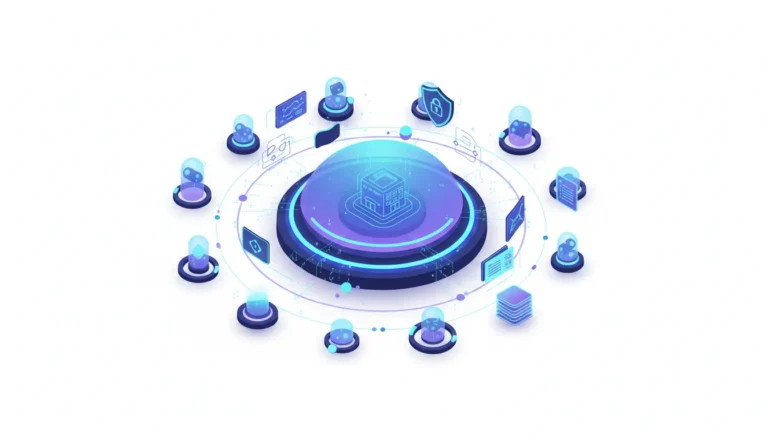
Because blocking prompt injection through system instructions alone is mathematically unreliable, attention has turned to containment. The practical pattern showing up everywhere is least-privilege sandboxing: running agent-generated code inside short-lived environments such as WebAssembly or container jails that keep the host network out of reach. At the same time, teams are adding agent-specific budgets, hard caps on compute, API calls, and spending per session, so that a compromised agent effectively runs out of resources before it can cause real harm.
- Least-privilege sandboxes such as WebAssembly runtimes or container jails.
- Agent-specific budgets and hard resource/spend caps per session.
- Short-lived machine identities and tight permission tokens.
- Signed tool manifests and provenance tracking for third-party plugins.
These technical choices are already bumping into new policy signals. The US continues with voluntary risk frameworks (NIST AI RMF), the EU is rolling out its broader AI Act, and China has started publishing rules aimed squarely at autonomous agents. The shift matters because it treats agents not just as software but as semi-autonomous actors that need distinct observability, hardware-level tracking, and algorithmic kill switches. For global enterprises, that means an agent’s auditability, its immutable record of why it took each action, is becoming as important as the model’s accuracy.
In practice, the infrastructure that will support agents at scale must deliver more than inference speed. It has to underpin trust. Today’s orchestration layers, many of them built on unverified open-source plugins, carry a sizable supply-chain exposure. Closing that gap will require signed tool manifests, stronger provenance tracking, and a new set of observability tools built specifically to surface the reasoning and execution paths of non-human identities.
Stakeholders & Impact
| Stakeholder / Aspect | Impact | Insight |
|---|---|---|
| AI Infrastructure & Cloud Providers | High | A noticeable pivot toward ephemeral, zero-trust compute environments (WASM/MicroVMs) tuned for secure agent execution loops. |
| Enterprise Security / CISOs | Critical | Moving past standard data-loss prevention toward defining agent identity scopes, tool allowlists, and incident-response playbooks that account for multi-step autonomous behavior. |
| AI Developers (LangChain, etc.) | High | The emphasis shifts from prompt engineering to policy engineering: spelling out human-in-the-loop gates and configuring least-privilege access for every connected API. |
| Regulators & Policy Makers | Significant | Following China’s recent autonomous-agent guidance, global regulators are likely to apply strict liability models and required audit trails to multi-agent systems. |
About the analysis
Researched and written with AI assistance under the editorial responsibility of the i10X News team. The title image is an AI-generated illustration. Read our AI Use Policy. Spotted an error? Request a correction.
This independent analysis draws on leading cross-industry frameworks (OWASP, Google SAIF, NIST, MITRE ATLAS) and early regulatory signals to assess how mature AI agent security has become. It is written with CTOs, AI platform architects, and security leaders in mind—those who are actually building and governing large-scale autonomous-agent systems.
i10x Perspective
Over the next five years, AI agent security looks set to become its own dedicated infrastructure layer. It will resemble modern zero-trust networks but will be shaped around non-human, hyper-scalable identities. The real competitive edge for the next generation of cloud and silicon providers will not be raw compute density or GPU supply alone. It will be the ability to deliver provably secure, legally compliant sandboxes where autonomous intelligence can move quickly without putting the wider enterprise at risk. Models think; the surrounding infrastructure still has to govern.