AI Agent Videos: The Operator-First Education Gap
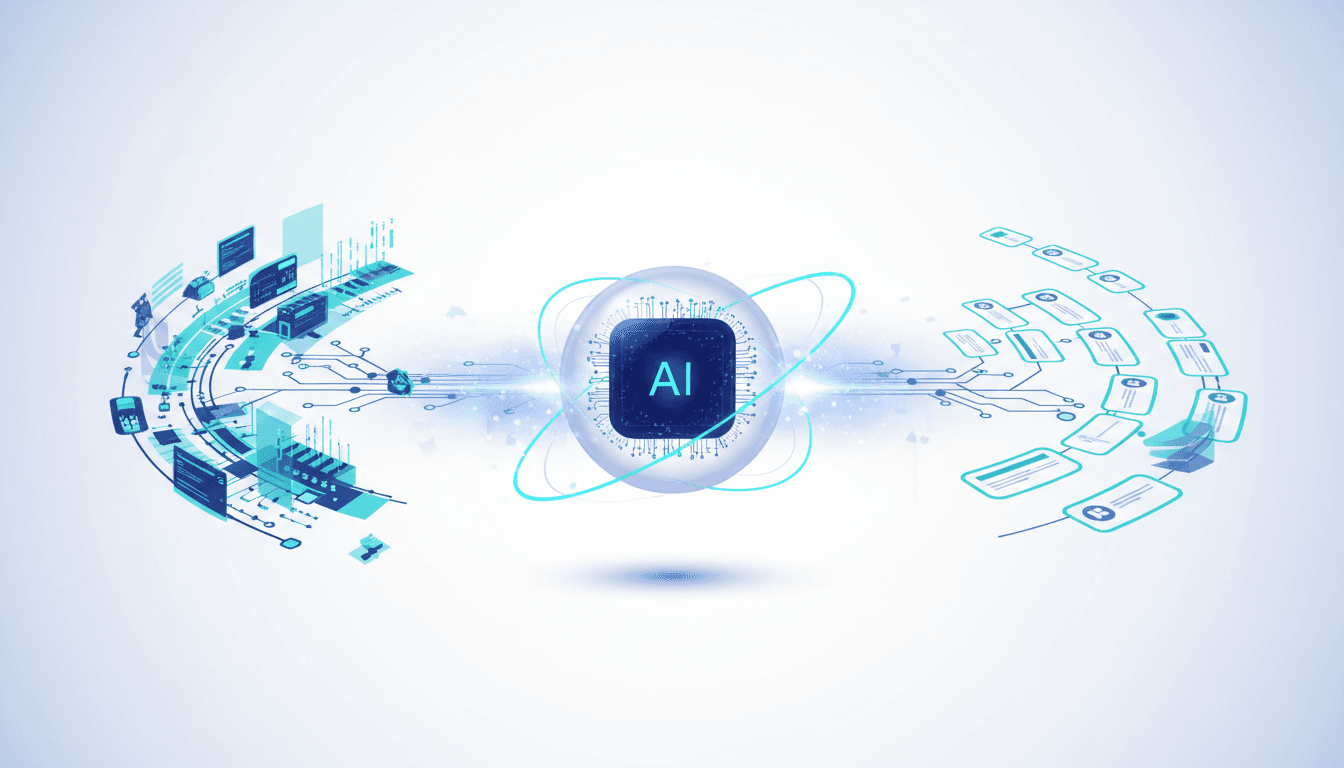
The search ecosystem for AI agent videos has fractured into a stark divide between heavy engineering tutorials and executive hype. This split reveals a real bottleneck in how enterprises are actually adopting the technology.
From what I've seen, a review of top-ranking educational and commercial video media shows the same pattern: developer platforms push deep technical courses on Model Context Protocol (MCP) and LLM orchestration, while everyday knowledge workers sift through abstract business news clips and royalty-free stock footage.
Industry leaders like Box CEO Aaron Levie are predicting AI agents will be the biggest tech shakeup since the App Store. Yet the lack of operator-first, no-code educational material threatens to stall widespread deployment of autonomous workflows. Non-technical knowledge workers, business operators, and enterprise managers feel this gap most sharply—they want to deploy LLM agents but keep hitting coding-centric barriers.
🧠 Deep Dive
If you want to understand exactly where the artificial intelligence industry is currently bottlenecked, look at what happens when the market searches for "AI agent videos." Instead of a unified educational pathway, the search intent splinters into a chaotic mix of deep-cut developer courses, high-level business news hype, and royalty-free stock footage attempting to visualize the invisible. This fragmentation mirrors the current state of agentic AI: the builders are moving at lightspeed, but the operators are being left behind.
On the builder side, the technical ecosystem is accelerating rapidly. Developer communities and technical publishers like O'Reilly and DEV are heavily indexing on the infrastructure of autonomy. Their content is laser-focused on Model Context Protocol (MCP), the Claude Agent SDK, persistent memory, and complex multi-agent orchestration. For software engineers and technical product builders, the resources to connect LLMs to real-world APIs are abundant and highly structured.
However, a massive translation gap exists for the rest of the enterprise. As executives publicly forecast that AI agents will represent a platform shift on par with the App Store, the actual users of this "App Store"—sales directors, HR managers, and research leads—are hitting a wall. When they look for practical guides on how to automate their workflows, they are bombarded with Python scripts, SDK integrations, or vague corporate cheerleading, rather than actionable use cases.
This void is giving rise to a new "operator-first" movement in AI adoption, championed by independent consultants and non-technical founders on platforms like LinkedIn. They are actively pushing back against the idea that deploying an LLM-based agent requires a technical team. Instead, they reframe AI-agent creation as an organizational design exercise. In this paradigm, you don't write code; you write a job description. You define the agent's role, supply the necessary context, map out the required tools, and establish a clear review loop.
Ultimately, bridging this gap is the next great frontier for AI tooling. While platforms like Mastra are beginning to offer workshops that transition no-code agents into production code, the true unlock for enterprise LLM scaling will require a fundamental shift in how we teach AI. The market needs role-specific, plain-language video libraries that train business users to stop treating frontier models like simple chatbots and start managing them like digital coworkers.
📊 Stakeholders & Impact
Stakeholder / Aspect | Impact | Insight |
|---|---|---|
LLM / Agent Framework Providers | High | Model adoption relies on users actually building with them. If non-coders cannot figure out how to deploy agents, API volume and token usage will plateau. |
Enterprise Knowledge Workers | High | Stand to gain massive productivity boosts through automated workflows, but are currently blocked by a lack of "operator-first" educational material. |
Developer & Engineering Teams | Medium | Overburdened by requests to build basic workflow automations that non-technical staff should theoretically be able to orchestrate themselves using no-code tools. |
Education & Content Platforms | Significant | Massive commercial opportunity exists to capture the "middle market"—users who need more than abstract stock footage but less than an MCP developer course. |
✍️ About the analysis
This independent, research-based analysis evaluates the semantic and commercial intent behind AI-agent media queries to identify current adoption bottlenecks in the market. It is designed for enterprise managers, CTOs, and technical product builders navigating the industry's rapid transition from conversational LLM interfaces to fully autonomous, agentic workflows.
🔭 i10x Perspective
The fragmentation of AI agent education signals a critical pivot: AI is transitioning from a raw engineering challenge into an organizational design problem. The companies that dominate the "agent race" over the next five years will not necessarily be the ones with the most advanced MCP integrations, but the ones who successfully abstract that complexity into intuitive, job-description-based interfaces. We are witnessing the death of "prompt engineering" as a technical hack, and the birth of "AI workforce management" as a core corporate competency.
Related News

Mistral Large 4: Europe's Top Open-Weight Model
Mistral Large 4 launches as a 1T-parameter MoE model optimized for enterprise coding and cybersecurity. See how it compares to leading Chinese open-weight models and why it matters for buyers. Explore the guide.

AI Leadership: Why Human EQ Now Outweighs Expertise
Frontier LLMs are automating leadership tasks, raising the stakes for human emotional intelligence and accountability. Learn how organizations can protect core leadership skills while integrating AI.
Anthropic OSS Scanner: Free AI Security Audits for Open Source
Anthropic's OSS Scanner provides free AI-driven security audits for open-source projects using Claude models. Receive detailed reports with reproducers and fixes. Learn more about protecting the supply chain.