AI Agents and Agent Reliability Engineering
Overview
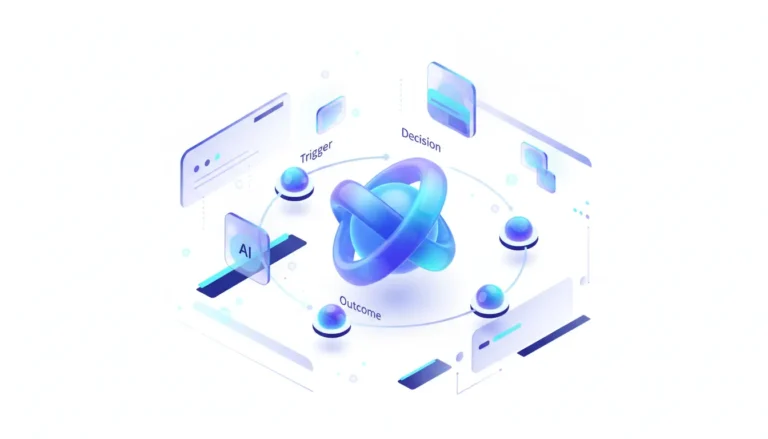
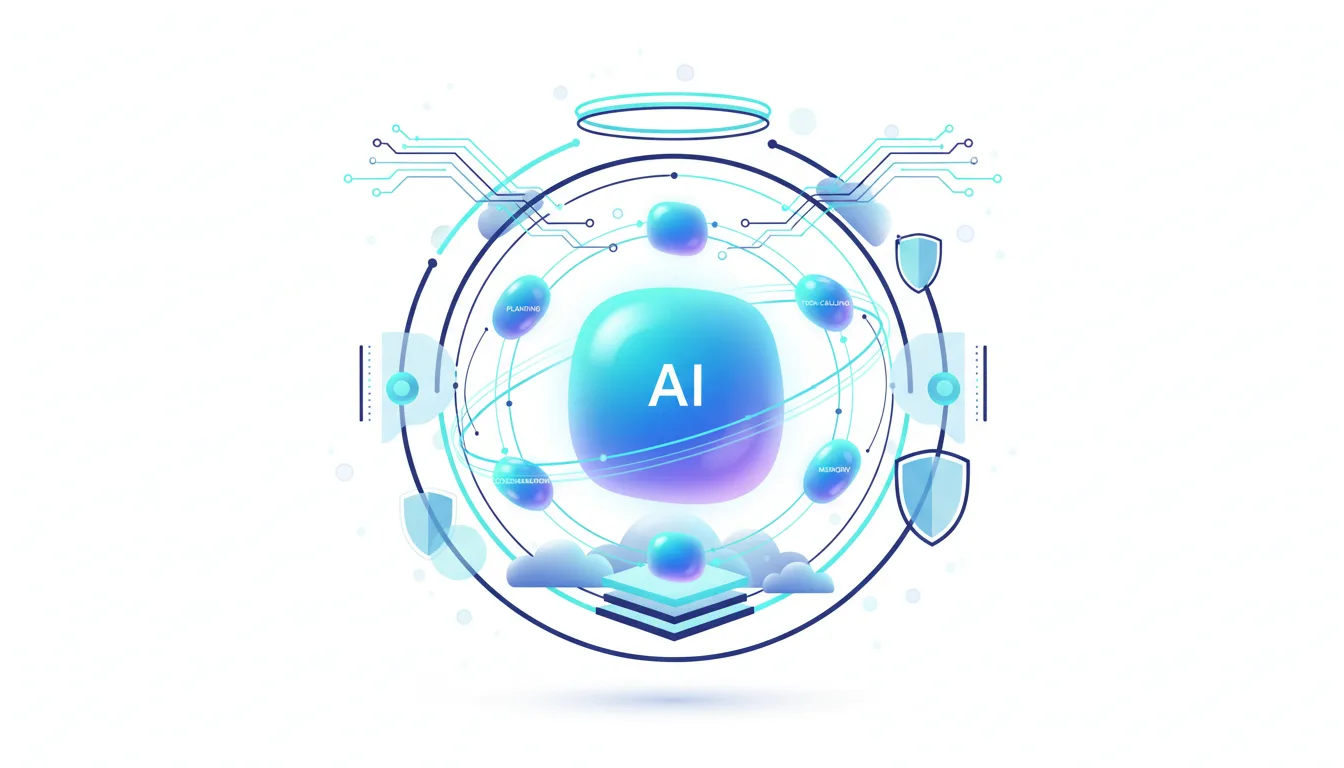
A massive shift is underway across the AI ecosystem. Cloud giants like AWS and Google, hardware leaders such as NVIDIA, and open-source frameworks including LangChain and AutoGen are all racing to shape the infrastructure for “AI Agents.” This moves LLMs beyond passive chatbots into systems that can actually carry out tasks on their own.
The timing matters because top-tier models have reached a point where their reasoning and function-calling abilities trigger an explosion in “agentic workflows.” Still, putting these to work demands an entirely new layer of infrastructure—one that can handle stateful memory, multi-step planning, and the messy reality of legacy API orchestration.
AI platform teams, enterprise architects, and operations leaders (CTOs and CIOs in particular) feel this most directly. They are being asked to move past building simple RAG applications and instead design structures for human-agent teaming while securing autonomous execution pipelines.
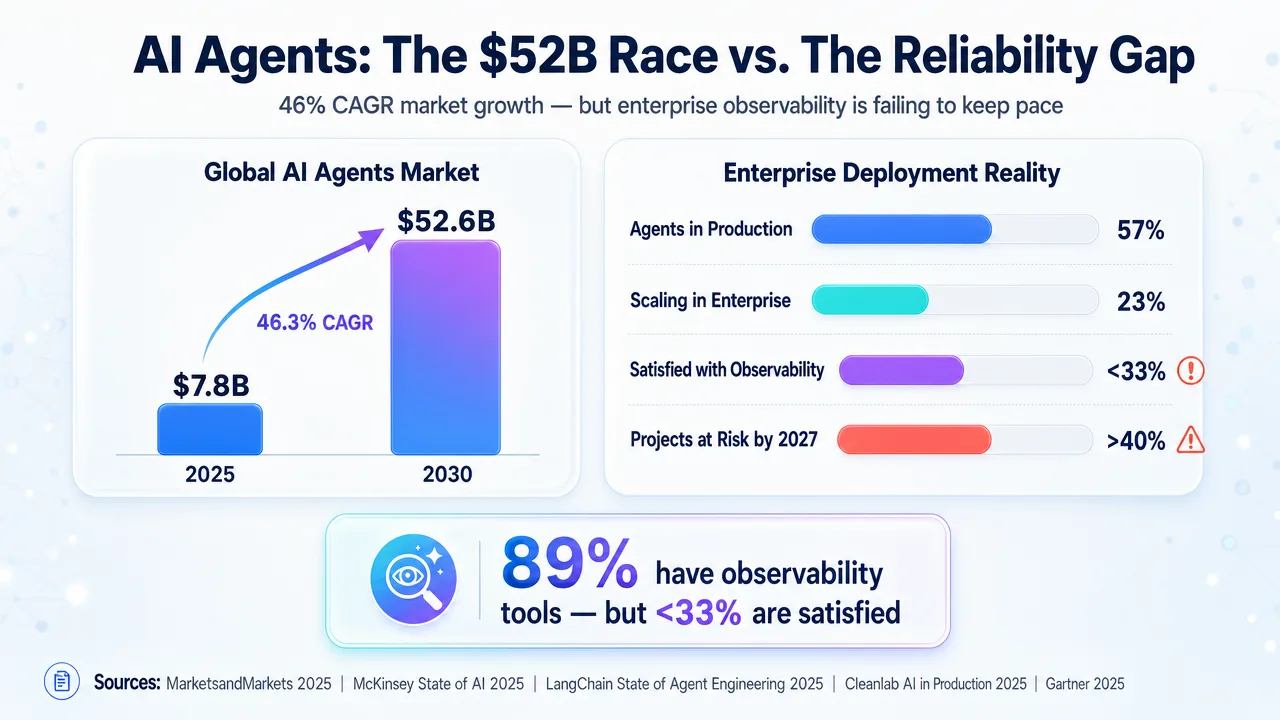
The under-reported angle: Agent Reliability Engineering (ARE). The ecosystem is full of basic developer tutorials and open-source demos, yet the real gap lies in enterprise observability—tracing, telemetry, and deterministic guardrails for probabilistic multi-agent systems.
🧠 Deep Dive
Have you ever watched an impressive demo and wondered what it would actually take to run that same system at scale? The conversation around AI is already moving from content generation to operations execution. Search trends and enterprise deployments point to a clear step up from chatbots and copilots toward autonomous “AI Agents.”
Academic ideas of agents have been around for decades, based on frameworks like PEAS. What is new is the LLM-driven version that pairs reasoning protocols such as ReAct with live tool-calling, letting natural language drive real system actions.
This shift is setting off a fresh platform competition. Open-source tools like LangChain, Microsoft’s AutoGen, and CrewAI are popular among developers experimenting with multi-agent “crews” that break down tasks and assign them to specialized models. At the same time, hyperscalers are working to control the production layer. Google Cloud’s Vertex AI and Amazon Bedrock are pushing managed agent services with built-in IAM controls and data-grounding features, while NVIDIA focuses on hardware and software that can keep multi-turn agent loops responsive.
From what I’ve seen, the distance between an AutoGen demo and a production deployment is wider than most teams expect. Enterprises are facing hard questions about organizational design and security. Adding an AI agent is less a software update and more an organizational capability challenge that requires a new RACI matrix for zero-trust human-agent teaming. Existing security protocols are also unprepared for threats such as prompt injection that could lead to API abuse or data exfiltration.
Ultimately this points to the emergence of Agent Reliability Engineering (ARE). Crossing from pilot projects to scaled use will require more than raw model power. It will depend on observable integration patterns, disciplined evaluation harnesses such as SWE-bench or GAIA, and stateful orchestration tools like LangGraph that can manage exceptions, detect drift, and trigger fallbacks when an agent loses its way mid-task.
📊 Stakeholders & Impact
| Stakeholder / Aspect | Impact | Insight |
|---|---|---|
| AI / Model Providers | High | Training algorithms are shifting heavily toward native function-calling and long-horizon reasoning to support Plan-and-Execute multi-agent architectures. |
| Cloud & Infra Vendors | High | AWS, GCP, and NVIDIA are racing to commoditize the orchestration layer, offering secure sandboxes and observability tooling for enterprise LLM ops. |
| IT Ops & Security | Very High | Forced to invent new threat models and compliance guardrails for autonomous actors interacting with legacy systems (ERPs, CRMs). |
| Enterprise Operations | Significant | Shifting from treating AI as a “tool” to treating AI as a “collaborator,” requiring fundamental job redesigns and new escalation protocols. |
✍️ About the analysis
Researched and written with AI assistance under the editorial responsibility of the i10X News team. The title image is an AI-generated illustration. Read our AI Use Policy. Spotted an error? Request a correction.
This independent analysis synthesizes current search intent, open-source documentation, cloud vendor ecosystems, and enterprise advisory reporting to map the commercialization of AI agents. It is designed for CTOs, AI platform engineers, and digital operational leaders tracking the evolution of autonomous AI infrastructure.
🔭 i10x Perspective
The rise of AI agents marks a real decoupling of digital intelligence from constant human prompts. Over the next five years, competitive advantage for both businesses and cloud providers will hinge less on owning the strongest base LLM and more on superior Agentic Infrastructure—robust memory, clean tool registries, and reliable multi-agent orchestrators. The tension worth watching is the one between fast-moving open-source execution and the strict, deterministic security requirements of enterprise networks.