Quick Take
“We are moving from asking neural networks for answers to handing them toolbelts and credit cards. But the transition from single queries to autonomous loops is causing an unprecedented compute explosion, turning inference into a continuous, compounding burn.”
Quick Take — Key Points
Summary
AI agents are being rapidly adopted by enterprises, but emerging data shows a massive architectural flaw: agentic workflows can be over 1,300 times less efficient than standard LLM queries. As vendors push frameworks for multi-step reasoning, the failure to bound these loops is triggering severe cost and energy crises.
What happened
Recent benchmark analyses reveal that AI agents-systems that use planning, memory, and external tools to accomplish tasks-consume drastically more energy than conventional single-shot AI. The overhead comes from recursive planning loops, retries, and API orchestration rather than the base model inference itself.
Why it matters now
The AI industry is pivoting hard from simple RAG (Retrieval-Augmented Generation) to “agentic AI.” If inference demand scales geometrically with every autonomous retry and reflection loop, cloud compute budgets and already-strained data center grids will hit a wall much faster than anticipated.
Who is most affected
CTOs, AI developers, and enterprise architects who are deploying agents without observability controls, as well as the infrastructure and utility providers tasked with powering an unexpected surge in continuous inference operations.
The under-reported angle
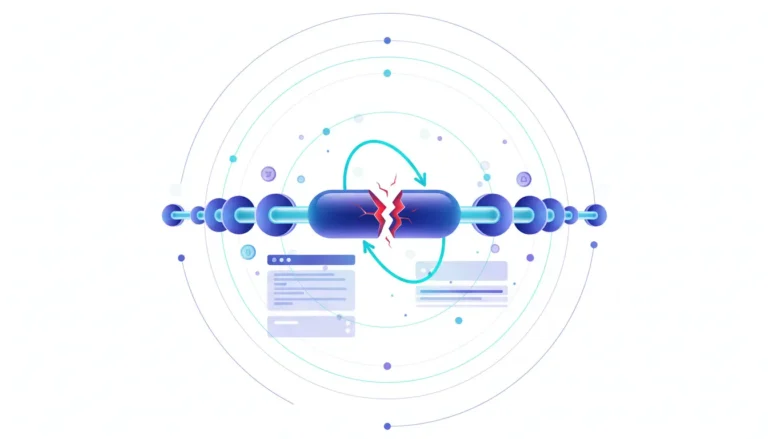
The true bottleneck for AI agents won’t be model intelligence, but “runaway loops.” Standard agent frameworks currently lack default energy-per-task telemetry and circuit breakers, enabling flawed agent loops to burn through tokens and kilowatts unchecked.
🧠 Deep Dive
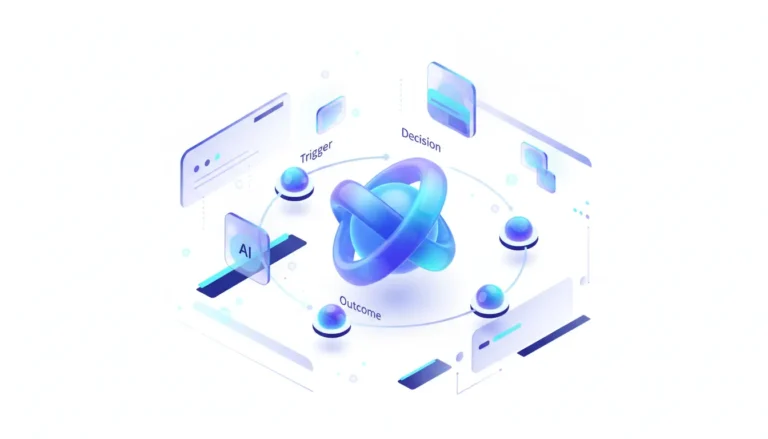
Have you ever wondered what happens when we stop treating AI like a quick search and start letting it wander on its own? The AI industry is undergoing a fundamental architectural shift. Instead of waiting for a user query and firing back a single response, AI models are now being wrapped in autonomous scaffolding. As defined by major players like NVIDIA and IBM, these “AI agents” utilize deliberative planning, memory storage, and external function calling to navigate multi-step goals. We are treating LLMs less like encyclopedias and more like operating systems. But this shift obscures a critical pain point that threatens to derail enterprise adoption: the astronomical energy and compute tax of agency.
Recent benchmarking highlights a shocking delta-agentic workflows can be up to 1,365 times less efficient than conventional generative AI queries. Why? Because agents operate on a “think, act, reflect, repeat” paradigm. A standard LLM call requires one forward pass on a GPU. An agent tasked with researching a competitor might script a plan, call a search API, hit a firewall, read the error, rewrite its query, summarize the result, and finally generate an output. Each micro-step in this loop demands fresh context windows and new inference cycles.
From what I’ve seen, the market narrative is deeply fragmented. Hardware titans and enterprise vendors frame AI agents as the ultimate productivity unlock, pushing taxonomies and starter kits that prioritize capabilities over costs. Meanwhile, academic researchers and infrastructure watchdogs are sounding the alarm over the hidden carbon footprint of these systems. There is an urgent, widening gap between building an agent that can solve a problem and building one that makes financial sense to deploy at scale.
The immediate solution space-largely missing from mainstream vendor documentation-centers on energy-aware agent design. Developers must abandon open-ended “try until you succeed” prompts in favor of bounded loops, adaptive depth, and semantic caching. Not every problem requires an autonomous agent; many can still be solved with a well-engineered, standard RAG pipeline. Establishing a strict decision matrix for when to deploy prompt-only vs. tool-using vs. multi-agent architectures will become the defining skill for AI engineering teams in the next 12 months.
This represents a new stress test for AI infrastructure. Data centers that were previously tuned for sharp, bursty inference queries must now adapt to long-horizon, continuous compute workloads as agents “think” in the background for hours or days. Without robust energy-per-task telemetry and hardened orchestration frameworks, agentic AI risks becoming a financial and environmental black hole for the enterprise.
📊 Stakeholders & Impact
| Stakeholder / Aspect | Impact | Insight |
|---|---|---|
| AI / LLM Providers | High | Base models must be heavily optimized for native tool-calling and reasoning efficiency to lower the token overhead of agentic loops. |
| Enterprise CTOs & Devs | High | Risk of severe “bill shock.” Teams will need to prioritize observability tools that measure energy, cost, and latency per task, not just per token. |
| Infrastructure & Utilities | High | Agents transform inference from a short burst into a continuous, background compute load, changing data center power profiles and grid demands. |
| Sustainability & Regulators | Significant | As agent compute compounds, the push for transparent carbon accounting (PUE, operational emissions) linked specifically to AI task complexity will intensify. |
✍️ About the analysis
Researched and written with AI assistance under the editorial responsibility of the i10X News team. The title image is an AI-generated illustration. Read our AI Use Policy. Spotted an error? Request a correction.
This analysis synthesizes independent research, industry benchmarks, and vendor taxonomies (including comparative data from engineering journals alongside enterprise frameworks from NVIDIA and IBM) to map the evolving architecture of AI agents. It is designed for CTOs, AI developers, and infrastructure decision-makers who must navigate the trade-offs between autonomous AI capabilities and their unprecedented compute costs.
🔭 i10x Perspective
The narrative that “models will just get smarter” is missing the point of the agent era; models must specifically get cheaper to loop. Over the next five years, the competitive moat for AI labs won’t simply be raw intelligence, but the creation of architectures designed explicitly for energy-efficient reasoning budgets. We will see the rise of edge-quantized agents and custom silicon tailored to slash the latency of context-switching and tool calls. If the industry fails to build guardrails against compounding inference costs, “agentic AI” will remain a luxurious experiment rather than the backbone of enterprise automation.