Quick Take
The AI industry is pivoting sharply from conversational chatbots to autonomous AI Agents, sparking a massive infrastructure race among cloud giants while grassroots developers push agentic commerce to the edge.
Summary: The definition of AI is shifting from passive knowledge retrieval to active execution. The rapid productization of AI agents has triggered a gold rush for infrastructure providers, who are now scrambling to build the guardrails, memory, and routing systems required to let LLMs safely interact with real-world APIs.
What happened: Cloud behemoths like Azure, AWS, and Databricks are aggressively rolling out managed agent services focused on enterprise security and evaluation. At the same time, edge deployment is accelerating in the wild. A recent case in South Africa showed a developer bypassing traditional apps to orchestrate a local food delivery (Mr D) entirely through a WhatsApp-based AI agent.
Why it matters now: Agents fundamentally alter the AI stack. LLMs are no longer just generating text; they are acting as reasoning engines that orchestrate external tools. This shift demands new infrastructure optimized not just for raw training compute, but for continuous planning loops, low-latency function calling, and stateful memory.
Who is most affected: Enterprise software architects, MLOps engineers, and compliance teams who must secure unpredictable agentic workflows. Consumer brands are also on notice, as autonomous chat agents threaten to disintermediate traditional mobile apps.
The under-reported angle: While the PR focus is heavily on B2B automation and Microsoft/AWS platform lock-in, the most disruptive frontier is low-bandwidth chat commerce. Deploying agentic workflows on platforms like WhatsApp creates a completely new, “app-less” interface for emerging markets, bypassing traditional OS ecosystems entirely.
Deep Dive
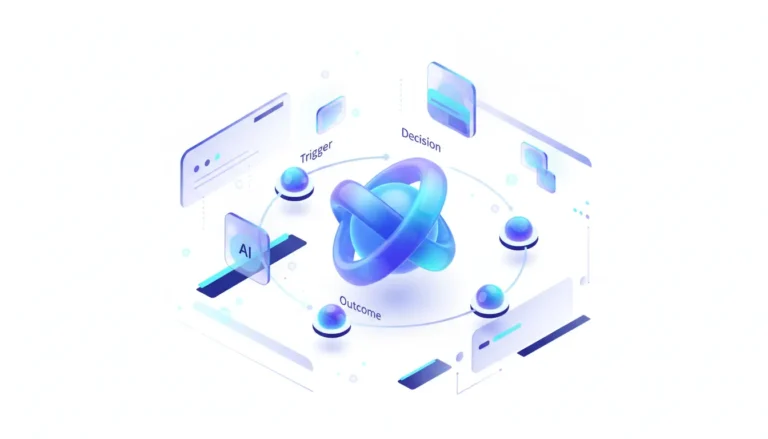
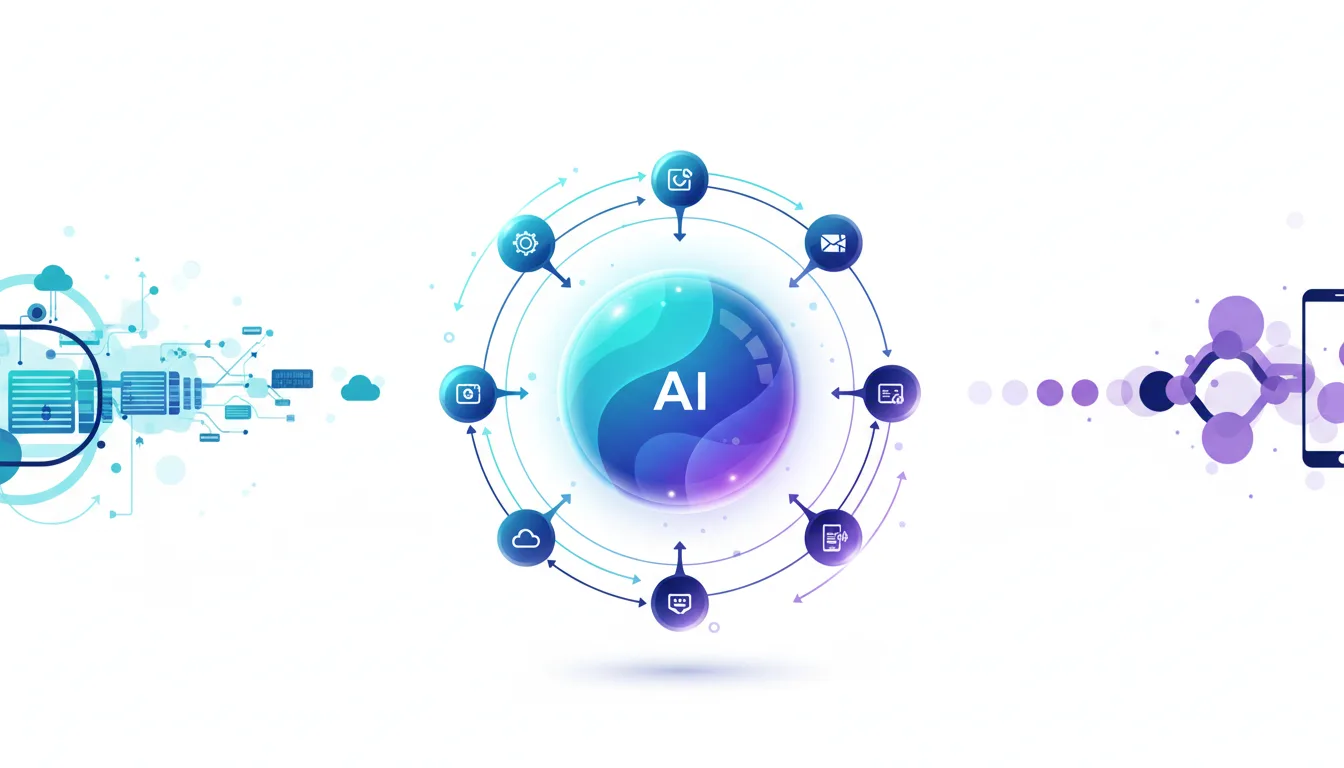
Have you ever wondered why chatbots suddenly feel limited? The pivot toward “agentic AI” represents the most significant architectural shift since the debut of the Transformer. For the last two years, the AI market has been dominated by chatbots—systems constrained by a single text-in, text-out paradigm. Now the ecosystem is moving toward planner-executor models. In this framework, the LLM acts as the central cognitive engine, breaking down complex user intents, querying vector databases (RAG (retrieval-augmented generation)) for context, and triggering third-party tools to achieve a goal. It is the leap from artificial knowledge to artificial action.
This evolution is fundamentally rewiring AI infrastructure. From what I’ve seen examining the current landscape, a stark divide has emerged in how this transition is being managed. On one side, cloud giants are building heavy, top-down fortresses. AWS Bedrock and Azure AI Agent Service are not merely selling inference; they are selling control. Their messaging heavily indexes on operational pain points: security, governance, hallucination mitigation, and rigorous evaluation frameworks. For an enterprise to deploy an agent, they need sandboxed environments, reversible action guardrails, and deep telemetry—features that DIY open-source frameworks like LangChain or AutoGen struggle to guarantee at scale.
On the other side of the spectrum is the bottom-up, edge-driven reality of agent deployment. A prime example surfaced recently in South Africa, where a software engineer wired a WhatsApp agent to autonomously orchestrate an order from Mr D (a local food delivery service). This localized case study strips away the enterprise bloat and proves a vital concept: consumer agentic AI will likely happen where the users already live. By marrying LLM reasoning with the WhatsApp Business API and local payment integrations, developers are creating frictionless, app-less commerce.
Yet a massive content and tooling gap remains between these two extremes. The industry is flooded with high-level definitions of what agents are, but severely lacks rigorous blueprints on the total cost of ownership (TCO) for continuous agent loops. When an LLM has to “think, act, observe, and adjust,” it multiplies inference calls exponentially. CTOs are currently flying blind regarding the latency and compute-cost tradeoffs of running multi-agent swarms versus monolithic managed services. Furthermore, edge-deployments in chat interfaces face complex, localized compliance hurdles—such as POPIA in South Africa or GDPR in Europe—regarding how autonomous agents handle and redact PII in real-time.
Ultimately, the rise of agents is forcing a hardware and model realignment. Model providers like OpenAI, Google, and Anthropic are rapidly optimizing for function-calling reliability over sheer creative writing. As agents require faster time-to-first-token to keep the “reasoning loop” fluid, the pressure flows directly downstream to AI chipmakers. NVIDIA and its competitors must now optimize silicon and networking infrastructure not just for batch training, but for the highly stateful, iterative, and low-latency inference demands of a billion agents talking to a billion APIs.
Stakeholders & Impact
| Stakeholder / Aspect | Impact | Insight |
|---|---|---|
| AI Model & Cloud Providers | High | Shifting revenue models from simple token generation to managed orchestration, memory storage, and agent telemetry (Azure, AWS). |
| Enterprise IT & Security | High | Forced to design new permission architectures; granting tools and APIs to probabilistic models introduces severe compliance and security risks. |
| Consumer Brands & Retail | Medium–High | The rise of chat-commerce (e.g., WhatsApp agents) threatens traditional app ecosystems, reducing friction but abstracting brand interfaces. |
| Hardware & Infra Teams | Significant | Agentic loops cause unpredictable spikes in inference demand, forcing data centers to optimize for low-latency tool-calling and continuous state management. |
About the analysis
Researched and written with AI assistance under the editorial responsibility of the i10X News team. The title image is an AI-generated illustration. Read our AI Use Policy. Spotted an error? Request a correction.
This is an independent, research-based analysis synthesizing current enterprise documentation, search intent data, and localized real-world deployments. It is designed for CTOs, AI developers, and infrastructure leaders navigating the transition from static LLMs to autonomous agent architectures.
i10x Perspective
The mainstreaming of AI agents signals the beginning of the end for the traditional graphical user interface. If intelligent agents become the default routing layer between human intent and digital services, the companies that control the underlying agent orchestration platforms and API gateways will capture the internet’s next monopoly. Over the next decade, watch for a fierce ecosystem war between closed, hyper-regulated cloud agent environments and open, decentralized multi-agent swarms operating directly on consumer devices.