Lead
Enterprises are officially bridging the gap between software tooling and human capital, as next-generation LLMs are being spun up, onboarded, and managed as autonomous “AI Employees.”
Summary
- What happened: AI vendors like UiPath and Automation Anywhere are pushing “digital workers,” while mainstream thought leaders (NYT, MIT, HBR) are documenting a surge of companies assigning explicit department roles, KPIs, and decision rights to agentic LLM setups.
- Why it matters now: This transition is stress-testing enterprise infrastructure and management theory. Models are no longer just drafting text—they are executing workflows across SaaS platforms. This demands an intelligence architecture that supports persistent memory, role-based access control (RBAC), and continuous hallucination monitoring.
- Who is most affected: CIOs, Ops/HR leaders, and line managers who must invent ways to “manage” non-human direct reports, as well as AI infrastructure providers racing to build enterprise-grade agent orchestration layers.
- The under-reported angle: While the media focuses heavily on cultural anxiety and job displacement, the real operational bottleneck is “AI HR” mechanics—enterprises completely lack standardized infrastructure for AI identity lifecycle management, incident response playbooks for agent failures, and precise model-vs-human cost benchmarking.
Deep Dive
Have you ever stopped to wonder what it actually means when an AI stops being a tool and starts showing up on the org chart? The era of the “copilot” is rapidly evolving into the era of the “coworker.” Driven by advancements in LLM reasoning capabilities and multi-step orchestration frameworks, enterprises are no longer just buying AI software—they are functionally “hiring” AI employees. From autonomous SDRs to digital compliance analysts, these agents operate continuously, triggering an urgent clash between traditional human resources and AI infrastructure management.
From what I’ve seen covering these shifts, the market narrative remains fractured. Vendors like Automation Anywhere and UiPath aggressively market ready-to-deploy digital workers, promising rapid ROI and back-office automation. At the same time, management experts and the mainstream press (like MIT Sloan and the NYT) are flagging the ensuing organizational chaos: low trust in agent autonomy, friction with human coworkers, and a glaring lack of accountability when AI makes a systemic error.
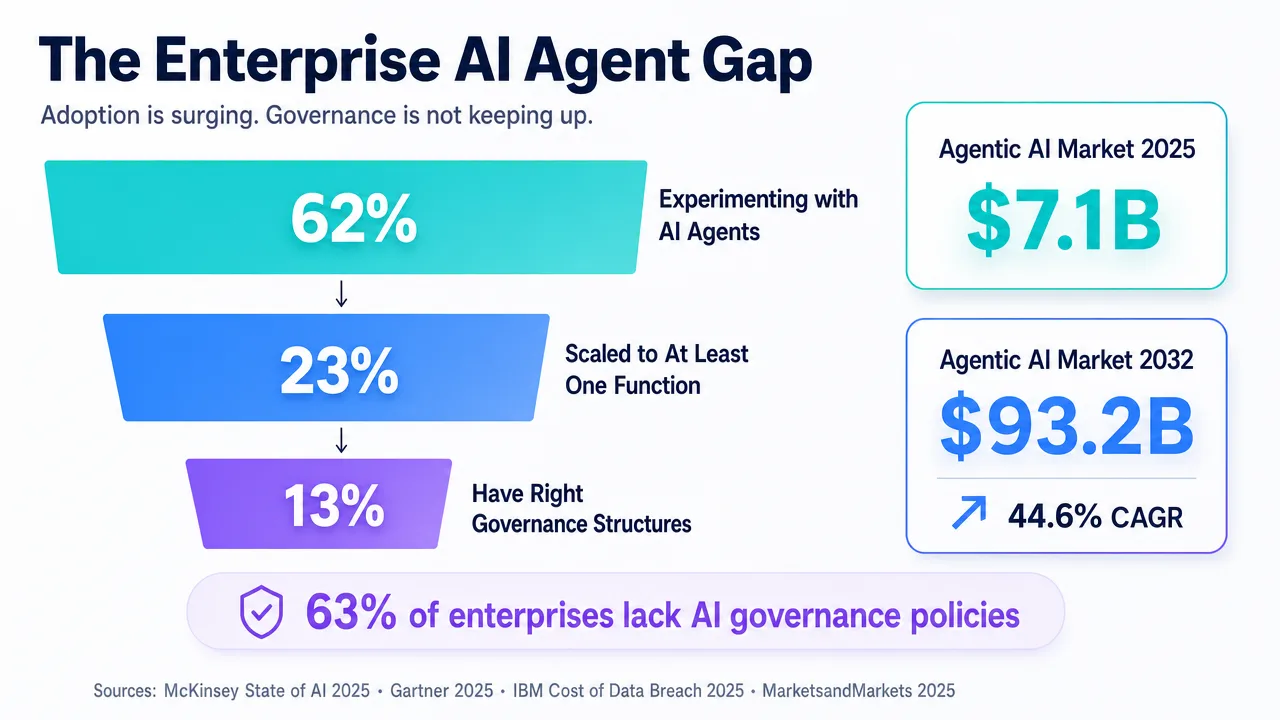
The core friction blocking scale isn’t the intelligence of the LLM; it’s the governance. You cannot simply hand a highly capable API an enterprise login. Integrating an AI employee requires rigid RACI (Responsible, Accountable, Consulted, Informed) matrices to establish when an agent must escalate a decision to a human-in-the-loop. Without stringent explainability mechanisms and evaluation harnesses, a hallucinating agent doesn’t just return a bad prompt—it breaks an operational workflow.
Furthermore, a significant content gap exists in the enterprise AI playbook: the technical mechanics of “AI lifecycle management.” How do managers conduct an AI performance review? How do you securely provision and rotate software secrets for an agentic identity? And most importantly, what is the protocol for “firing” (offboarding and rolling back) an AI employee when its performance inevitably drifts from its training baseline?
For the broader AI ecosystem, this movement signals a massive infrastructure shift. Models (like GPT-4o, Claude 3.5 Sonnet, or Gemini 1.5 Pro) are now competing not just on benchmark scores, but on enterprise trust. The winners will be the ecosystems that offer robust observability, seamless identity access management integrations, and sandboxed, red-team-proven environments where AI employees can safely operate within strict corporate boundaries.
Stakeholders & Impact
| Stakeholder / Aspect | Impact | Insight |
|---|---|---|
| AI / LLM Providers | High | Force-multiplying the need for robust API observability, stateful memory features, and built-in governance tools to win enterprise agent contracts. |
| CIOs & IT Operations | High | Overhauling Identity and Access Management (IAM) architectures to securely provision, monitor, and revoke access for non-human workers. |
| Line Managers & HR | High | Forced to develop new management frameworks, dual KPIs (human-AI teaming), and incident playbooks for when AI agents fail or require retraining. |
| Regulators & Legal | Significant | Wrestling with emerging definitions of corporate liability: who is legally accountable when an autonomous “AI employee” breaches data compliance or acts with bias? |
About the analysis
Researched and written with AI assistance under the editorial responsibility of the i10X News team. The title image is an AI-generated illustration. Read our AI Use Policy. Spotted an error? Request a correction.
This independent, research-based analysis synthesizes perspectives from enterprise management journals, top-tier business media, and AI automation vendor ecosystems. It is designed for CTOs, IT operations leaders, and AI strategists tasked with safely integrating autonomous agentic workflows into traditional corporate hierarchies.
i10x Perspective
We are witnessing the early stages of “Workforce as a Service” (WaaS), where the traditional boundaries separating software procurement, IT infrastructure, and human resources dissolve. Over the next five to ten years, the competitive moat for foundational AI models won’t be pure intellect—it will be auditability and compliance. As intelligence infrastructure becomes deeply intertwined with organizational structure, the enterprises that win won’t just be the ones deploying the smartest agents, but those that master the invisible plumbing of AI identity, risk containment, and algorithmic oversight.