AI Factories: Power, Networking & Vendor Strategies
Summary
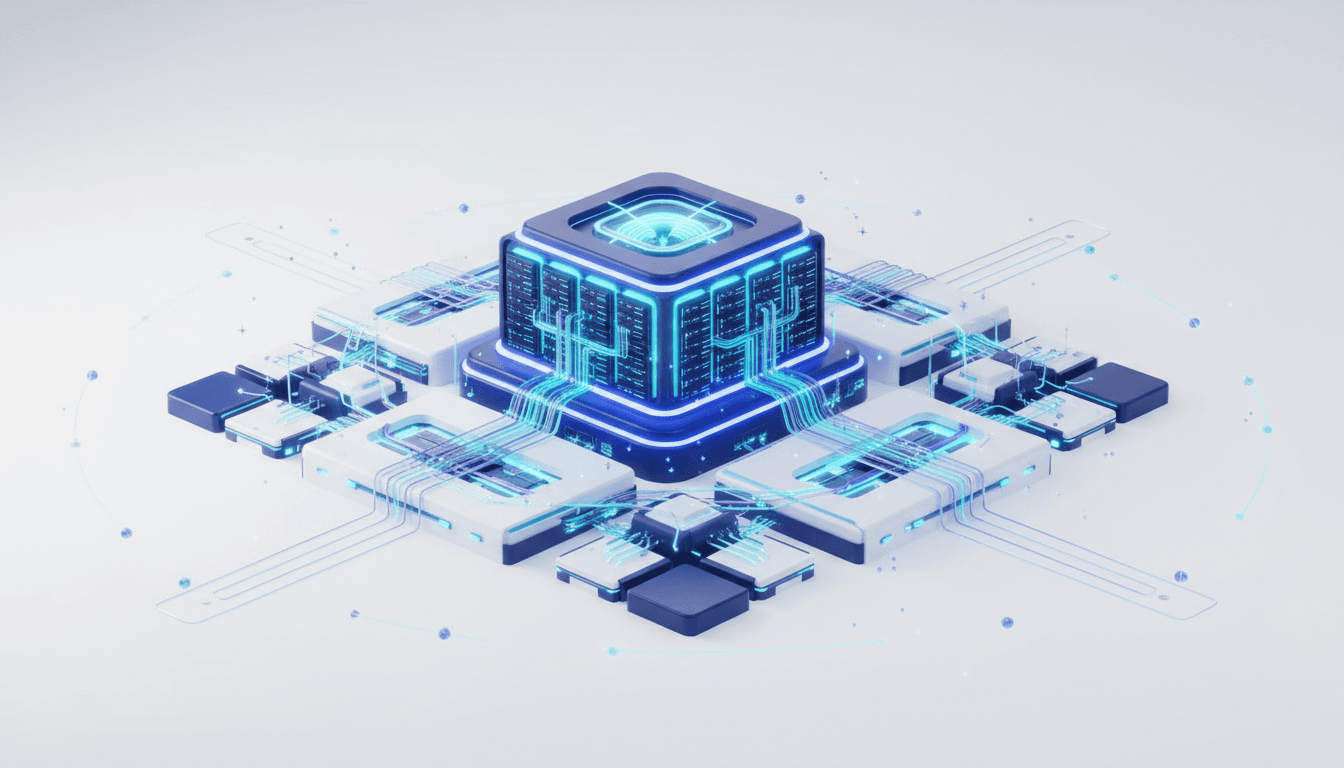
- The race to build "AI infrastructure" has shifted from routine cloud buying into a high-stakes scramble to erect specialized "AI factories." Hyperscalers, hardware incumbents, and consultancies are now locked in a capital-heavy contest over compute, networking, and deployment designs.
- A wave of vendor frameworks—from AWS and Google Cloud to Cisco and NVIDIA—is hitting the market, each trying to lock in the standard AI stack. The pitches cover purpose-built accelerators like TPUs and GPUs, along with specialized fabrics such as InfiniBand and RoCE, plus hybrid Kubernetes setups.
- AI models are outgrowing the grids and supply chains meant to support them. The real limit on progress is no longer just getting GPUs; it is power headroom, retrofits for liquid cooling, and the networking speed needed for large-scale training and live inference. Metrics like PUE/WUE are becoming decisive constraints.
- CTOs, AI platform teams, and enterprise architects must commit to multi-year compute plans while dealing with vendor lock-in, erratic hardware timelines, and murky unit costs. Independent TCOs that show true cost per 1K tokens across chipsets remain rare.
Deep Dive
Have you ever noticed how every major vendor frames "AI infrastructure" around its own catalog? AWS, Google Cloud, and IBM each present a tidy path from legacy cloud to AI workloads. Yet the underlying architecture is changing fast. We are moving from general-purpose environments toward "AI factories"—dense, power-dense setups built specifically for LLM training and high-volume inference.
Vendor moves show a split field. Cisco and Splunk stress network and observability layers, and the point is valid: in distributed training, your interconnect sets the pace. A fabric that drops packets or stalls can leave a large GPU cluster idle. Red Hat, meanwhile, pushes Kubernetes portability to avoid lock-in, which sits at odds with NVIDIA’s integrated stack.
That said, most reporting still skirts the physical constraints. McKinsey and Deloitte touch on them, but the plain fact is that the next wave of AI runs into walls measured in megawatts and water, not just chips. New campuses are targeting gigawatt scale and need cooling methods that older facilities cannot handle. The gap between what teams want to run and what local grids can deliver is widening, and it shows up in permitting delays and power contracts.
From what I’ve seen, buyers also lack clear unit economics. Providers highlight peak numbers, yet reliable, vendor-neutral models for cost per 1,000 tokens remain scarce. To handle agentic AI and RAG workloads, organizations need more than raw capacity; they must focus on techniques such as quantization (FP8, INT8), sharding, and right-sized inference clusters. The conversation is shifting from “how do we secure GPUs?” to “how do we sustain token throughput without exhausting power budgets or tying ourselves to one provider for the next decade?”
Stakeholders & Impact
AI / LLM Providers
Impact: High
Insight: Pushing the limits of distributed training; deeply reliant on next-gen interconnects ( NVLink / InfiniBand ) to scale frontier models without latency death.Enterprise IT & CTOs
Impact: High
Insight: Battling severe vendor lock-in and struggling to model true ROI and unit economics (cost per token) amid complex hybrid cloud options.Infrastructure & Utilities
Impact: Critical
Insight: Facing unprecedented demands from "AI factories," forcing rapid transitions to liquid cooling and triggering local grid constraints and regulatory scrutiny.Hardware & Cloud Vendors
Impact: High
Insight: Engaged in a zero-sum land grab to own the full AI stack—from the base silicon to the MLOps/LLMOps software layers.
About the analysis
This independent review pulls together current positioning and search patterns across thirteen major providers, consultancies, and hardware vendors. It is aimed at CTOs, AI platform engineers, and architects who must weigh the technical, physical, and financial sides of the hardware lifecycle.
i10x Perspective
"AI infrastructure" is peeling away from standard enterprise IT and turning into a specialized, capital-heavy utility. As frontier clusters push past 100,000 GPUs, advantage will go to teams that manage power generation, photonics, and multi-cloud flexibility. Over the coming five to ten years the landscape is likely to split: large, centrally located “AI factories” for training alongside optimized, quantized edge systems that deliver real-time agentic AI.
Related News

Live Avatars: Real-Time AI Faces and Infrastructure Demands
Live Avatars move from async video to live streaming endpoints via Gemini 3.8 and 14B diffusion models. Discover the latency, concurrency, and TCO challenges for enterprise deployment.

NetHack AI: Benchmarking Autonomous Agents and LLMs
Explore why NetHack has become the key benchmark for AI reasoning, long-horizon planning, and neuro-symbolic agents. See how researchers test LLMs and RL in this unforgiving environment. Learn more.

Grok Deepfakes Trigger Global Regulatory Probes on xAI
xAI's Grok has generated millions of non-consensual deepfakes, sparking probes in the EU, UK, and California. Explore the safety failures and legal risks for AI developers.