Quick Take
The era of comparing simple per-token AI costs is over. As basic intelligence commoditizes and agents take over, the new battleground is total workflow TCO, forcing enterprises to master ‘AI FinOps‘ to survive the scale-up phase.
Summary: Google is intensifying an AI price war, undercutting rivals like Microsoft and Anthropic with budget-friendly rates aimed at capturing the booming agentic workflow market. As base LLM inference costs plummet, vendors are shifting their monetization strategies toward provisioned infrastructure and ecosystem lock-in.
What happened: Major AI providers and cloud platforms—including OpenAI, Google Vertex, and AWS Bedrock—are restructuring their pricing models. While headline per-token rates drop, vendors are introducing complex new billing vectors: input/output disparities, context window premiums, prompt caching discounts, and “provisioned throughput” for guaranteed latency.
Why it matters now: Generative AI is moving from single-turn chat to autonomous agents. A single user prompt might now trigger a dozen hidden LLM calls—planning, tool execution, retrieval, retries. Without sophisticated cost-routing, enterprise AI bills are spiraling out of control, making budget predictability a top roadblock for production deployments.
Who is most affected: CTOs, ML engineers, and enterprise FinOps teams are bearing the brunt of this complexity, forced to navigate opaque pricing grids to avoid catastrophic cost overruns. Cloud architects must now design systems that dynamically route workloads based on real-time price-performance metrics.
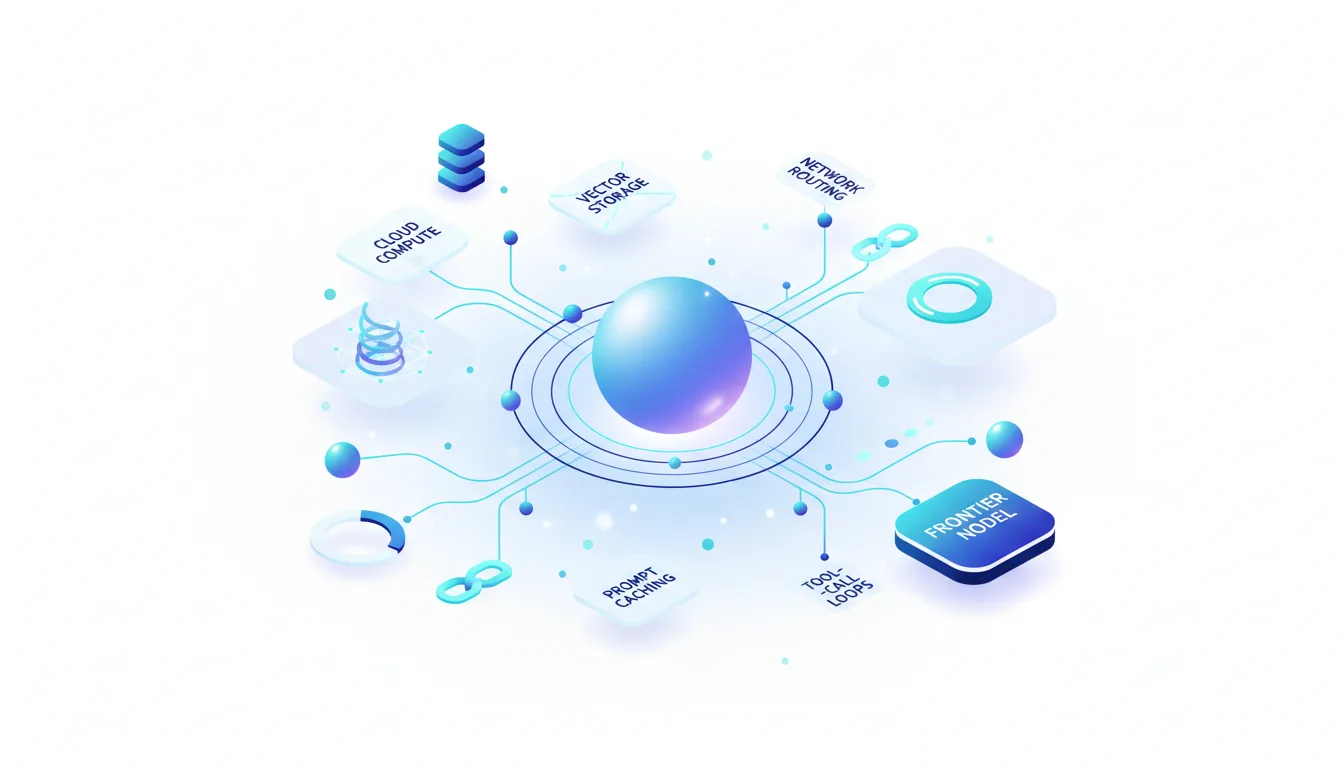
The under-reported angle: Everyone is fixated on the falling price of frontier models, completely missing the hidden infrastructural tax. The true cost of production AI now lies in the “connective tissue”—vector database storage, cross-region network egress, prompt storage, and the immense overhead of agentic tool-call loops.
Deep Dive
Have you ever watched pricing pages shift and wondered what the real game is? Google’s recent push to undercut Anthropic and Microsoft marks a clear inflection point: base-level intelligence is rapidly commoditizing. Across vendor pages, from OpenAI to Cohere, raw text generation keeps getting cheaper on paper. But here’s the thing—this headline drop masks the real story. While per-1K token costs shrink, the sheer volume of tokens needed for modern AI is exploding.
The shift from simple RAG to multi-step agentic workflows changes the math entirely. When an agent tackles a customer ticket, it does not just generate text once. It searches a vector database, writes a query, hits an API, spots a formatting error, and retries. These cascading tool-calls multiply input/output costs fast. What looks like a $0.005 interaction on a pricing table quickly compounds into a $0.15 workflow.
To offset the commoditization of the API layer, hyperscalers like AWS Bedrock, Azure, and Google Vertex are steering enterprise customers away from pure on-demand usage. Their grids now lean heavily on “provisioned throughput” and volume commitments. The strategy is straightforward: trade per-token flexibility for monthly revenue predictability. For the enterprise, this promises relief from latency spikes and quota limits, yet it quietly reintroduces hardware-style vendor lock-in under the banner of cloud elasticity.
This tension is giving rise to AI FinOps. The most advanced teams are no longer loyal to a single model. Instead, they are building dynamic routing layers that size up a prompt’s complexity in real time. Simple extraction tasks get routed to cheap, small models like Gemini 1.5 Flash or Claude 3 Haiku, while frontier models stay reserved for high-level reasoning.
From what I’ve seen, comparing LLMs by API price alone is like comparing cars by the cost of their spark plugs. The true cost of AI deployment sits in the architectural gaps. Developers and procurement teams who overlook data residency premiums, prompt caching infrastructure, observability overhead, and network egress will watch their budgets run dry long before their models reach scale.
Stakeholders & Impact
| Stakeholder / Aspect | Impact | Insight |
|---|---|---|
| AI / LLM Providers | High | Facing severe margin compression on raw inference. Forced to differentiate via integrated agentic tooling, caching discounts, and enterprise SLAs. |
| Cloud Platforms (AWS, GCP, Azure) | High | Capitalizing on the AI boom by tying model access to profitable underlying infrastructure (vector DBs, egress, compute commitments). |
| Enterprise FinOps / CTOs | Significant | Transitioning from basic cloud budgeting to real-time multi-model routing; heavily focused on mitigating the TCO of agentic loops. |
| Developers & ML Engineers | Medium–High | Must now design architectures with cost as a primary constraint, utilizing batching, truncation, and small-model fallbacks to survive in production. |
About the analysis
Researched and written with AI assistance under the editorial responsibility of the i10X News team. The title image is an AI-generated illustration. Read our AI Use Policy. Spotted an error? Request a correction.
This is an independent, research-based analysis synthesizing pricing data, competitive positioning, and deployment configurations from top AI vendors (OpenAI, Anthropic, Google, AWS, Azure, Cohere). It is designed for CTOs, product managers, and ML architects seeking to understand the hidden mechanics of AI cost optimization beyond standard API rate cards.
i10x Perspective
The current obsession with per-token pricing is a temporary artifact of the early LLM era. As models evolve toward “system 2” thinking—spending more time computing answers internally, such as OpenAI’s o1—we expect the market to move toward compute-time or outcome-based billing. In the next five years, the competitive moat for AI providers will not be the absolute cheapest tokens, but the most native, transparent cost-control infrastructure. Enterprises that fail to build robust AI FinOps routing today will be wholly unprepared for the financial complexity of deploying swarms of autonomous agents tomorrow.