Quick Take
The definition of an AI power user is shifting fast. It used to center on clever prompt hacks, but now it’s about orchestrating customized, multi-model workflows. As vendors roll out more sophisticated controls, everyday LLM use is starting to look a lot like micro-infrastructure management.
Platforms such as OpenAI, Anthropic, and Microsoft have quietly moved their guidance away from basic chat tips toward system-level setups. The emphasis now falls on custom instructions, structured few-shot frameworks, and tighter enterprise tenant controls.
Raw zero-shot capabilities are hitting a plateau for most business tasks. The real edge comes from context orchestration, verification loops, and learning how to adjust parameters like temperature and top_p to cut down on hallucinations.
Knowledge workers, enterprise IT teams managing data loss prevention (DLP), and the middleware tools that link raw models to everyday software are the most affected. True power users are no longer loyal to one platform—they’re routing tasks dynamically (Claude for coding, Gemini for large context windows, local open-weight models for sensitive data), which undercuts the lock-in strategies of the big labs.
Deep Dive
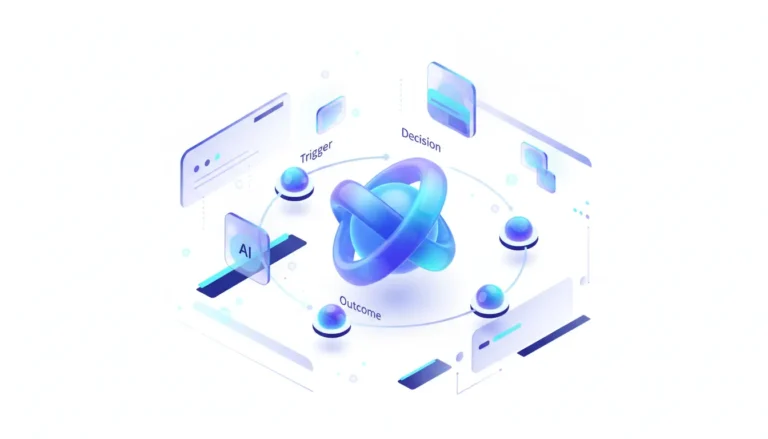
The idea of “prompt engineering” as some kind of secret skill is fading. Looking at the latest guidance from the major platforms, it’s clear the modern AI power user is less about typing the right words and more about building small-scale systems. As teams move from quick experiments to production use, the priorities have become reproducibility, clear constraints, and automation.
Each provider is pushing its own approach. OpenAI leans on persistent Custom Instructions and memory features to keep tone and preferences consistent for a smoother personal experience. Microsoft Copilot, by contrast, focuses on enterprise compliance—layering in safety rules, tenant controls, and data grounding tied to Office 365. Anthropic targets the more technical user, offering structured prompt formats with XML tags, explicit rules, and chain-of-thought steps to make chat interfaces behave more like reliable APIs.
That said, most tutorials still overlook the practical reality of multi-model routing. No single model handles every job well. Power users are quietly acting as manual routers: sending data analysis to GPT-4o, feeding long regulatory documents into Gemini 1.5 Pro, and turning to Claude 3.5 Sonnet for careful, stylistic work.
This shift also changes how output gets used. Automation platforms show outputs moving straight into CRMs or codebases via webhooks instead of staying on screen. The speed is useful, but it raises the stakes. Users are responding with self-checks—prompting a model to review its own output or running a second model as a judge to catch issues before anything reaches production.
Underneath it all sits a practical tension between efficiency and privacy. Some are starting to handle sensitive data locally on-device while reserving cloud models for heavier reasoning. It’s the same trade-off enterprises face, just scaled down to one laptop.
Stakeholders & Impact
| Stakeholder / Aspect | Impact | Insight |
|---|---|---|
| AI / LLM Providers | High | Providers risk losing ecosystem lock-in as power users increasingly adopt multi-model workflows, forcing labs to compete on API interoperability and tool integrations. |
| Enterprise IT & Security | High | Must balance strict tenant controls and compliance with power users who demand access to external, non-sanctioned models for specialized tasks. |
| Knowledge Workers | High | Transitioning from raw content creators to AI workflow managers; the skillset shifts from drafting to system design, prompting, and output verification. |
| Automation Tooling | Significant | Platforms bridging APIs and daily apps become the critical glue layer, capturing massive value by turning isolated AI queries into automated enterprise pipelines. |
About the analysis
Researched and written with AI assistance under the editorial responsibility of the i10X News team. The title image is an AI-generated illustration. Read our AI Use Policy. Spotted an error? Request a correction.
This independent, research-based analysis synthesizes platform guidelines, developer documentation, and automation trends across the major AI vendors. It is designed for CTOs, product managers, and enterprise leaders looking to transition their teams from casual AI experimentation to governed, high-ROI workflows.
i10x Perspective
The current phase of hands-on “AI power user” work feels like a bridge. In the next three to five years, much of the manual tuning, rubric writing, and cross-model routing will likely be handled by smarter routing layers and agentic systems. Until then, the teams that get comfortable with this kind of orchestration will shape how enterprise AI actually gets used, pushing the foundational labs toward better interoperability instead of betting everything on single-model performance.